Showing posts with label literature. Show all posts

Friday, March 06, 2020

Slaying Like the Queen of Swords: Recommendations for Women's History Month 2020

I can be like a raging storm
Don't go asking me for apologies
Ill sing 'till you hear my song
This time you better believe that there's
No way I'm holding back anymore
I'm slaying like the queen of swords
-Idina Menzel, Queen of Swords

My dear readers,


    Here's another round of recommendations for Women's History Month. Again, please note the age rating for each medium and beware of some spoilers.


idina. by Broadway Actress and Singer Idina Menzel⚔️
Age Rating: All

    Famous for her roles as Maureen from Rent, Elphaba from Wicked, and Elsa from Frozen, actress and singer Idina Menzel never ceases to captivate audiences with her unique vocals. Back in 2016, she released this eponymous studio album containing one of my favourite songs, Queen of Swords.
    This album is a must-have for fans.

Source: Amazon.com

    If you're still not convinced, watch this music video for Queen of Swords.


Hair Love: An Oscar-Winning Short Film๐Ÿง‘๐Ÿฟ‍๐Ÿ‘ฉ๐Ÿฟ‍๐Ÿ‘ง๐Ÿฟ
Age Rating: All

    "And remember, the road ahead might look rough, but you can make the journey with a little bit of work and a whole lot of love."
-Angela

    Back in 2017, African American director Matthew A. Cherry launched a Kickstarter campaign that brought to life an Oscar-winning animated short film which you can either read as a picture book or watch online for free.
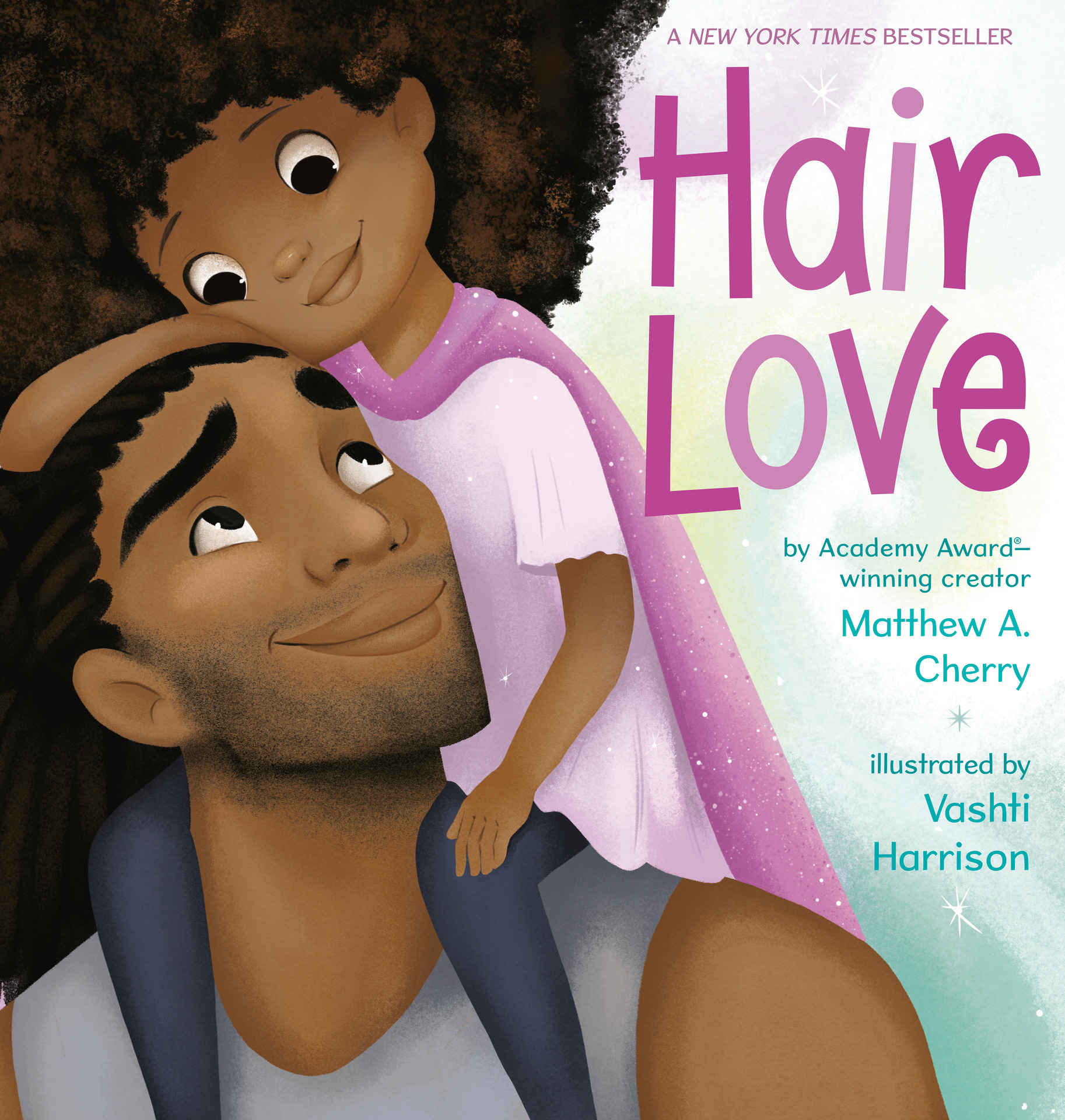


Written by the director and illustrated by Vashti Harrison

    It's a big day for little Zuri, so her father, Stephen, attempts to style her hair by watching a tutorial video on Hair Love, a blog made by a very special woman named Angela (Issa Rae).


High-Five to the Hero: 15 Favourite Fairytales Retold with Boy Power by Vita Murrow๐Ÿคด๐Ÿป๐Ÿคด๐Ÿผ๐Ÿคด๐Ÿฝ๐Ÿคด๐Ÿพ๐Ÿคด๐Ÿฟ
Age Rating: 5+

    In this follow-up to Power to the Princess, Vita Murrow and Julia Bereciartu have teamed up once more to retell and illustrate fifteen more fairy tales, this time with the heroes in non-stereotypical roles.

    Join King Arthur, Jack, Anansi, Hercules, and other leading men, including Prince Charming, as they show you how a heart of gold is all it takes to save the day.
    This book is for anyone who has read Power to the Princess and wants a new and different take on the classic stories.
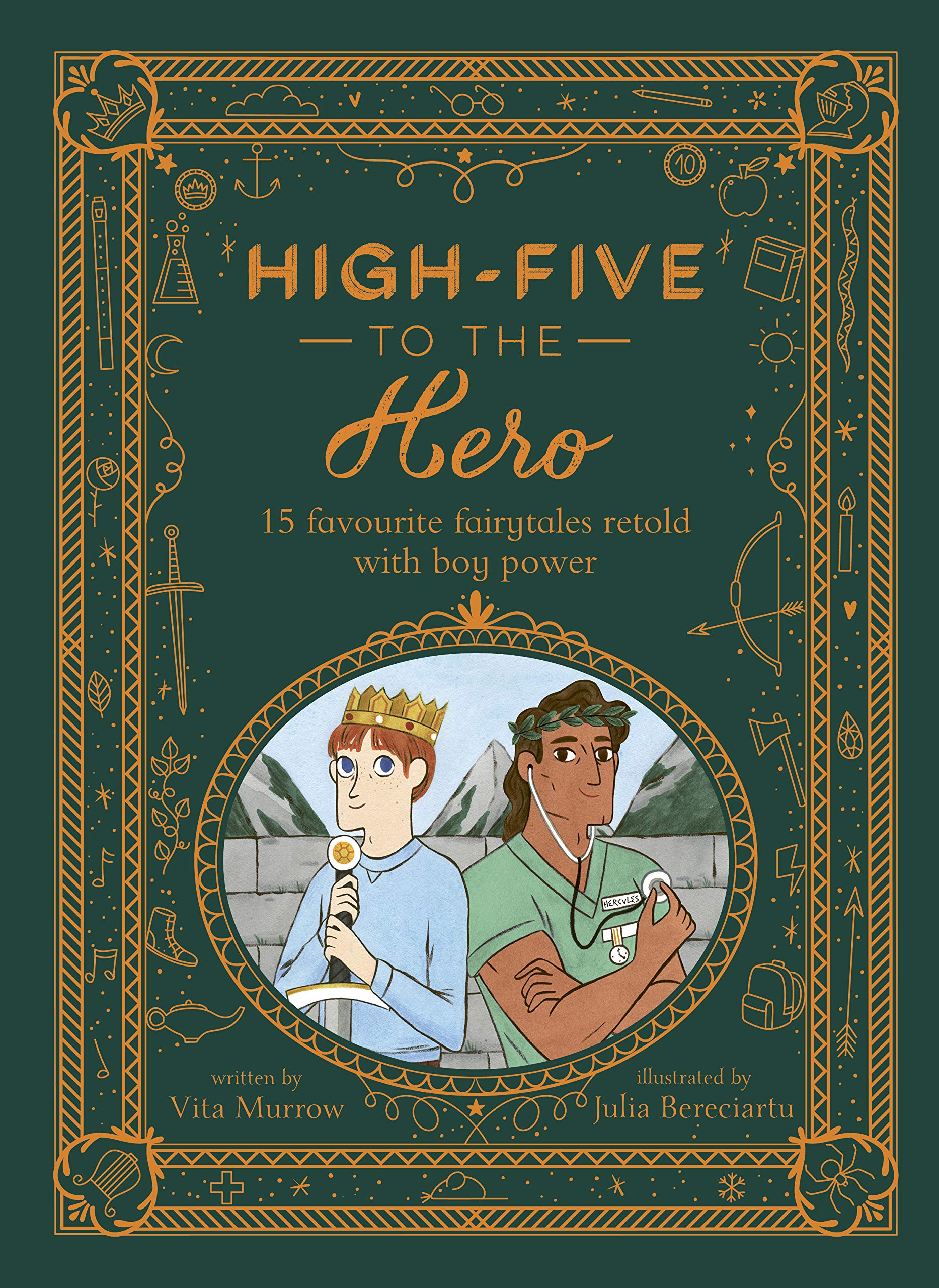


Noughts & Crosses by Malorie Blackman๐Ÿง‘๐Ÿป‍๐Ÿค‍๐Ÿ‘ฉ๐Ÿฟ
Age Rating: 15+

    In 2015, Ian Edginton and artist John Aggs adapted British author Malorie Blackman's book Noughts and Crosses into a graphic novel.
    When she published Noughts and Crosses back in 2001, Blackman answered the question: What if it was the Africans who colonized Europe and enslaved the Caucasians?
    boy named Callum McGregor and a girl named Sephy Hadley are childhood friends. However, their families and society disapprove of their relationship. Why? Because the Hadleys are Crosses, the dark-skinned upper-class that rules the nation. The McGregors, on the other hand, are Noughts, the light-skinned lower-class constantly denied by the Crosses of their rights. As their segregated homeland descends into persecution and rebellion, Callum and Sephy become more than friends... and suffer the consequences.
    Listed as one of the best novels published in the 21st century, Noughts & Crosses (AKA Black & White in the US) is the most entertaining and unique anti-racist stories since Harper Lee's To Kill a Mockingbird.
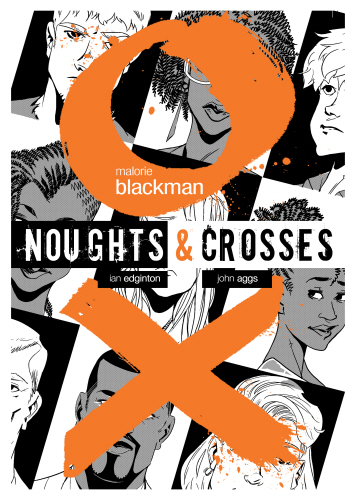

    After two years in the making, the BBC has aired a six-episode TV adaptation starring Jack Rowan (Peaky Blinders, Born to Kill) as Callum and Masali Baduza as Sephy.


The Baby-Sitters Club by Ann M. Martin☎️

Age Rating 9+

    In 1986, American author Ann M. Martin launched The Baby-Sitters Club. Consisting of books that have sold over 100 million copies,  a TV series, and a film adaption, the franchise has gained a following for generations and is the author's best known work.

    Since 2006, Scholastic has been reprinting the classic books for new readers and adapting them into graphic novels, first illustrated by Smile author Raina Telgemeier, and currently by Gale Galligan.
    Stoneybrook, Connecticut is home to four girls who run a local baby-sitting service called the Baby-Sitters Club, or BSC for short. With Kristy Thomas as President, Claudia Kishi as Vice President, Mary Anne Spier as Secretary, and Stacey McGill as Treasurer, the girls baby-sit their neighbours' children, and deal with all sorts of events that come with their job. Whether it's diabetes, rivals, bossy siblings, strict parents, or naughty children, the baby-sitters aren't afraid to tackle them because they are what they are: best friends.
    Wishing for nostalgia? Read this series.
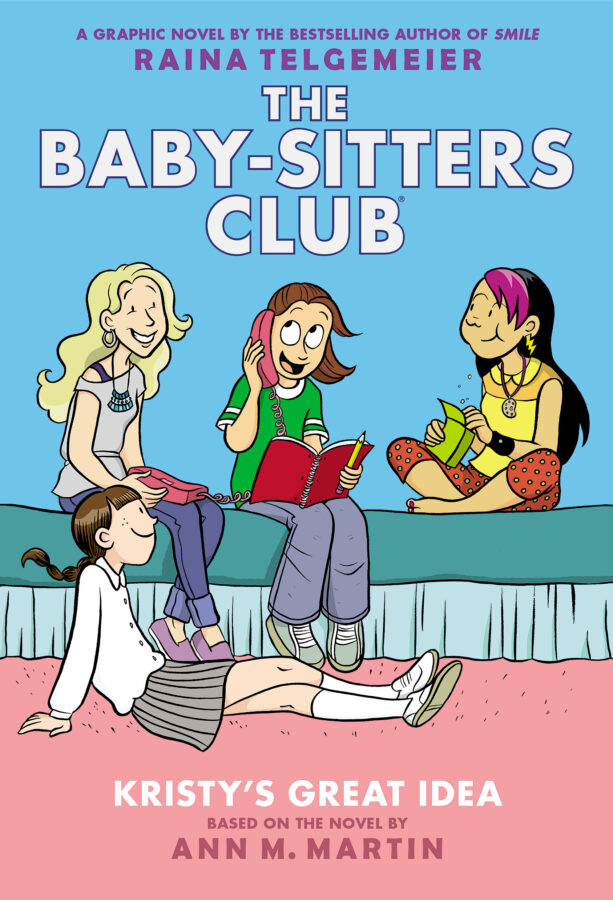

The graphic novel adaptation of the book that started it all.

Kristy Thomas: "The Baby-Sitters Club. I'm proud to say it was totally my idea, even though the four of us worked it out together. "Us" is Mary Anne Spier, Claudia Kishi, Stacey McGill, and me."
Age Rating: 13+

"I don't know if I should even be writing this... Maybe it'd be better if all this just died with me. But I thought you should know about your family. And the history you're a part of."

-Edith Finch

    After her mother died, 17-year-old Edith Finch inherits her childhood home to which she returns for the first time in years. Towering above her like a giant, the house, built by her great-grandparents, seems happy to have her back. Casting her fears aside, Edith enters the abode to discover her family history.

    Exploring the rooms via secret passageways, Edith documents five generations of family members' names, careers,... and deaths. For over five centuries, the Finches have had a family curse: every generation, one child outlives their siblings who die in freak accidents. Then after they've had grown up and had their own children, the Finch parent also meets an untimely demise. And young Edith herself is the last Finch alive.
    Full of stunning graphics, fun interactions, and deep quotes, What Remains of Edith Finch is a beautiful video game about how storytelling affects a family as it learns about the past, lives in the present, and wonders about the future.
    This generational saga is perfect for anyone who has read One Hundred Years of Solitude or watched American Pop.


Belonging: A German Reckons with History and Home by Nora Krug๐ŸŒ
Age Rating: 13+

    In her illustrated memoir, German immigrant Nora Krug returns to her homeland to research on her family members' possible roles in the Holocaust. Along the way, she comes to terms with what defines a home, and how people continue to be affected by events that happened years before they were born.
    If you want something new to read after Anne Frank's diary or Art Spiegelman's Maus, this book will do just that.

Nora Krug: "How do you know who you are, if you don't understand where you come from?"


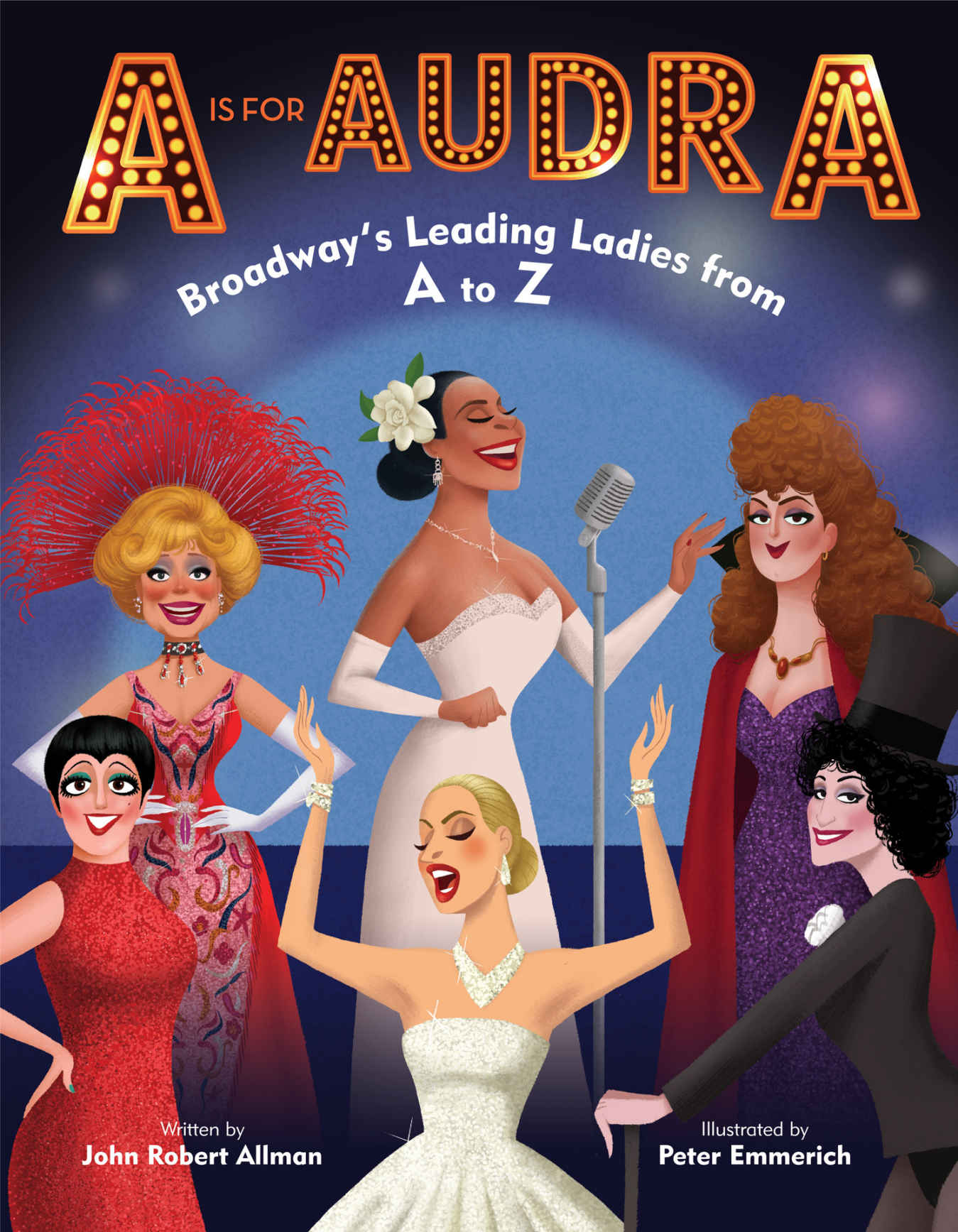
    This children's book, written by John Robert Allman and illustrated by Peter Emmerich, introduces young (and old) readers to nearly seventy actresses who have wowed critics and audiences with their performances on the Broadway stage.
    From Audra McDonald to Liza with a "Z," you'll be singing, dancing, and demanding for an encore.
    This book is the perfect gift for theatre fans, as recommended by the stars themselves!


E. M. Carroll, Horror Comics Artist๐Ÿ˜ฑ


    Since 2010, Canadian comics artist E.M. Carroll has been shocking readers with their (NSFW) horror stories which can be found on their website.
    If you are interested, you can order the graphic novels they published.
           Age Rating: 10+

    A quintet of short stories explaining why you shouldn't enter the woods... ever.
 "It came from the woods. Most strange things do."


           Age Rating: 10+

    Estranged from her widowed father and missing her late grandmother, a young woman named Masha decides to be an assistant to the famous witch from Russian folklore.
    Always be careful what you wish for, kids.
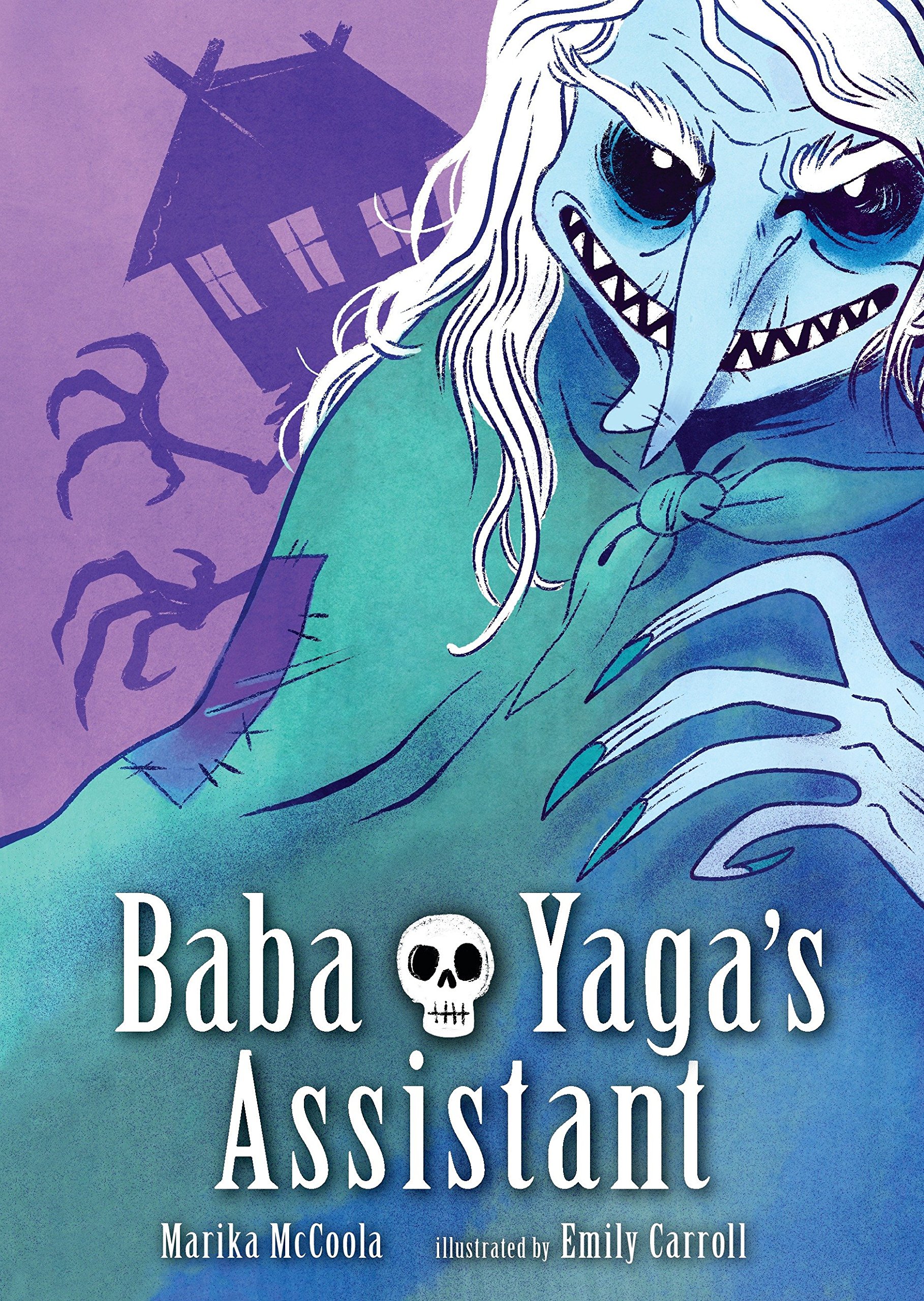
Baba Yaga: “I am a witch, after all.”

           Age Rating: 13+

    In this adaptation of the groundbreaking YA novel, high school freshman Melinda must find the courage to speak about the night she got sexually assaulted before she gets silenced forever. 
    This book is for all who support the #MeToo movement.

"Speak up for yourself—we want to know what you have to say."

Fatal Throne: The Wives of Henry VIII Tell All; Edited by Anne Schwartz๐Ÿฐ

Age Rating: 15+

"But these women had lives of their own. They had dreams and hopes. Ideas. Opinions. Ambitions. They were fighters. Thinkers. Politicians. Strategists."

-Jennifer Donnelly

    From 1509 to 1547, England was ruled by Henry VIII (M.T. Anderson), a king who was so desperate to have a son that he married six times and initiated the English Reformation.


“Humble and Loyal”

    The first wife was Katharine of Aragon (Candace Fleming); a devout Roman Catholic and mother of Mary I, the king had their twenty-four year marriage annulled and banished her from the court.

“The Most Happy”

    The second wife was Anne Boleyn (Stephanie Hemphill); the mother of Elizabeth I, she was beheaded on charges of adultery and incest.

“Bound to Obey and Serve”

    The third wife was Jane Seymour (Lisa Ann Sandell); the king called her his “true wife” because she gave birth to his long awaited son, Edward VI.

“God Send Me Wel to Kepe”

    The fourth wife was Anna of Cleves (Jennifer Donnelly); her marriage to the king was annulled after only seven months.

“No Other Will Than His”

    The fifth wife was Catherine Howard (Linda Sue Park); a teenage bride, her infidelity resulted in her suffering the same fate as her cousin, Anne Boleyn. 

“To Be Useful in All I Do”

    The sixth and last wife was Kateryn Parr (Deborah Hopkinson); she was a Protestant author of devotional works, a kind stepmother to her stepchildren, and the most-married English queen.

    Written by a septet of popular American authors, Fatal Throne is a YA historical fiction novel that retells the lives of King Henry VIII and his six wives, and transports readers back to the Tudor era, a time of religious persecution, corruption, drama, and death.
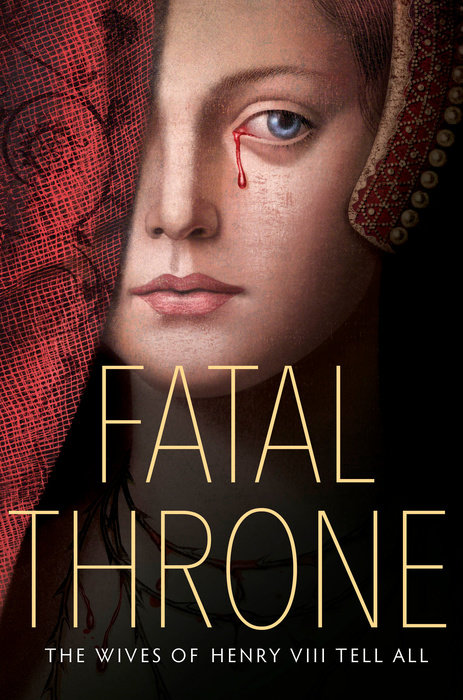


Anne Schwartz: “The world in the 1500s was shockingly similar to what’s happening today.”

Six: The Musical by Toby Marlow and Lucy Moss๐Ÿ‘‘๐Ÿ‘‘๐Ÿ‘‘๐Ÿ‘‘๐Ÿ‘‘๐Ÿ‘‘

Age Rating: 15+

"Welcome to the show; to the historemix

Switching up the flow as we add the prefix
Everybody knows that we used to be six wives
Get your hands up! Get this party buzzin'!
You want a queen bee? Well there’s half a dozen
Everybody knows that we used to be six wives…!
... But now we’re ex-wives!"
-Full Company

    Similar to Fatal Throne, Six is an Olivier-nominated British musical that retells the lives of King Henry VIII’s wives, but with a modern twist.
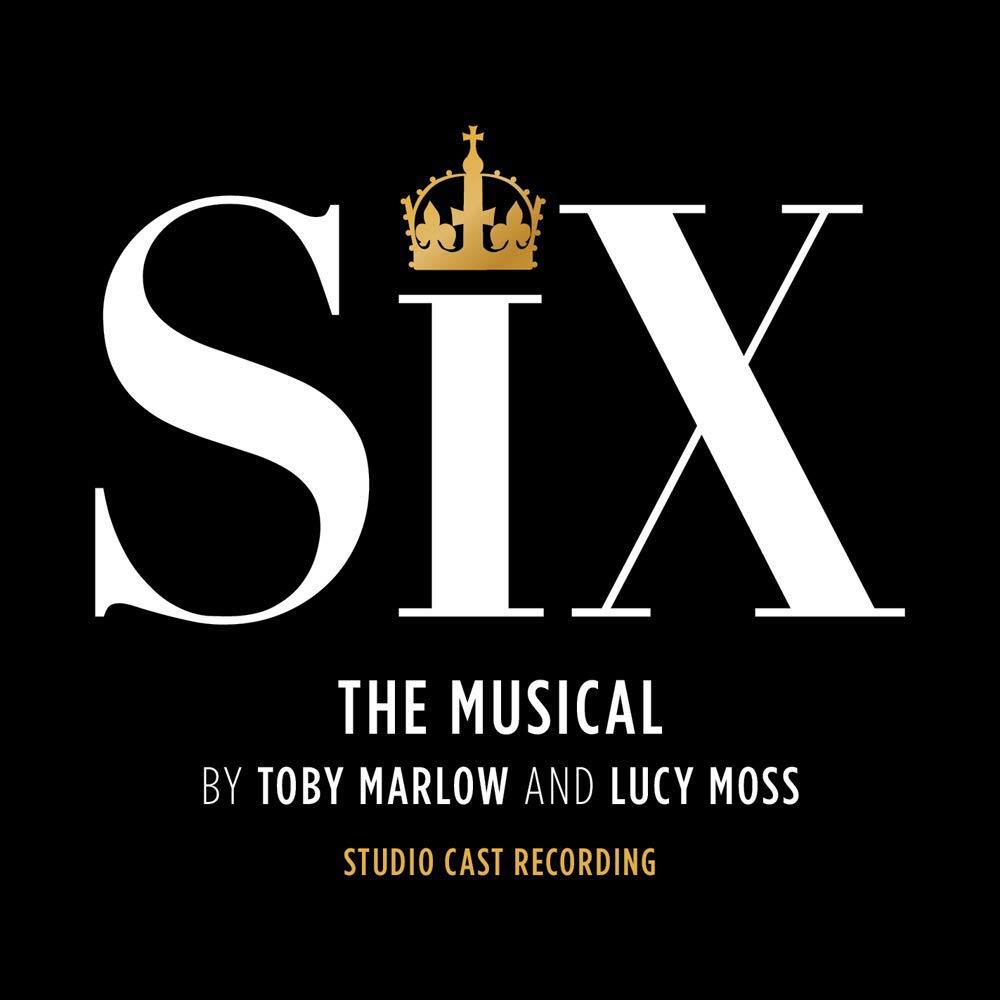


Source: Amazon.co.uk

    The six queens compete to form a pop girl group with the role of lead singer to be awarded to the one who had the worst experience being Henry VIII’s wife. During the contest, the ladies tell the audience their side of history, and show why they’re more than just ex-wives.

    Listen to the opening number to get yourself moving.


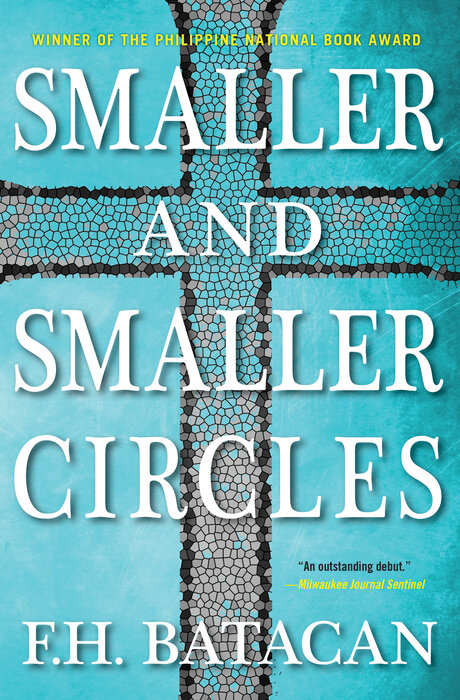
Smaller and Smaller Circles by F.H. Batacan๐Ÿ•ต๐Ÿพ‍♂️๐Ÿ•ต๐Ÿพ‍♂️
Age Rating: 15+

    There are no serial killers in the Philippines, right? Fathers Gus Saenz and Jerome Lucero, Jesuit priests and protagonists of F.H. Batacan’s novel, beg to differ.

    For the past several months, the faceless corpses of impoverished boys have been found in a dumpsite in Payatas. Fathers Gus and Jerome, and investigators race against time to catch the murderer before he ends another innocent life.
    Full of action, thrills, and twists, Smaller and Smaller Circles is a crime novel for those familiar with the goings on in Philippine politics, religion, and journalism.

The Serial Killer: "We are all powerless in face of evil. No, no, that’s not true.”

    In 2017, the novel was adapted into a live action film starring Nonie Buencamino as Father Gus and Sid Lucero as Father Jerome.


The Testaments by Margaret Atwood♀️
Age Rating: 15+

    In light of recent political events, Margaret Atwood has published The Testaments, the long-awaited sequel to her bestselling novel The Handmaid's Tale.
    More than fifteen years after Offred stepped into the unknown, things have gone from bad to worse in the Republic of Gilead, a fundamentalist nation that was formerly the United States of America.
    Agnes is a Gileadian girl whose stepmother has aranged for her marry a Commander old enough to be her grandfather. To escape such a terrible fate, she has one option: become an Aunt.
    Daisy is a rebellious teenager living in Canada with her overprotective parents. When she expresses her hatred for the corruption that is Gilead, she opens a Pandora’s box.
    Aunt Lydia is a formidable force in Gilead and Handmaid trainer. Unbeknownst to the men who literally rule her life, she is a woman with two lives.
    As three seemingly different women testify, a battle begins for the future, a time that will be brought about by anger, war, lies, secrets, and hope.


Margaret Atwood: "Dear Readers: Everything you've ever asked me about Gilead and its inner workings is the inspiration for this book. Well, almost everything! The other inspiration is the world we've been living in."

The Great List of Everything: a Canadian Web Series

Age Rating: 12+

           
Based on a popular comic book, best friends Cathon and Iris discuss the facts and their opinions about the Great List of Everything. Did you know that the first cell phone took over ten hours to charge? Or that the first fishing rod lacked a hook? Or that women were jailed for wearing pants? Or that Thomas Edison didn’t invent the light bulb? Or that the art of stamp collecting is called philately?          
           This year’s blog post on women’s month recommendations is done, but remember: Don't believe everything you hear.


-A. Eleazar


Women’s March by Shyama Golden

References:

  1. Allman, J. R. (2019). A is for Audra: Broadway's Leading Ladies from A to Z. New York City, New York: Doubleday Books for Young Readers.
  2. Anderson, L. H. (2018). Speak: The Graphic Novel. New York City, New York: MacMillan Publishers.
  3. Annapurna Interactive. (2018, December 10). What Remains of Edith Finch | Accolades Trailer [Video file]. Retrieved November 21, 2019, from https://www.youtube.com/watch?v=A-8OcHFlF4A
  4. Atwood, M. (1985). Handmaid's Tale, The. Toronto, Canada: McClelland & Stewart.
  5. Atwood, M. (2019). Testaments, The. Toronto, Canada: McClelland & Stewart.
  6. Batacan, F.H. (2002). Smaller and Smaller Circles. Diliman, Quezon City: University of the Philippines Press.
  7. BBC. (2020, February 14). Noughts + Crosses: Trailer - BBC [Video file]. Retrieved February 14, 2020, from https://www.youtube.com/watch?v=xTEJ4KJh4Ug
  8. Blackman, M. (2001). Noughts & Crosses. United Kingdom: Random House.
  9. Blackman, M. (2015). Noughts & Crosses: Graphic Novel. United Kingdom: Penguin UK.
  10. Boudreau, I. & Papillon, F. (Directors). (2019). Great List of Everything, The [Web series]. Montreal, Canada: National Film Board of Canada.
  11. Carroll, E. M. (2014). Through the Woods. New York City, New York: Simon & Schuster.
  12. Cherry, M. A. (2019). Hair Love. United States: Kokila.
  13. Fallik, M. & Nelson, A. (Producers), & Dallas, I. (Director). (2017). What Remains of Edith Finch [Video game]. West Hollywood, California: Annapurna Interactive.
  14. Foxe, K. J. (Producer), & Martin, R. (Director). (2017). Smaller and Smaller Circles [Motion picture]. Philippines: TBA Studios.
  15. Golden, S. (2018). Women’s March [Image file]. Retrieved November 9, 2019, from https://shyamagolden.com/womens-march
  16. Knobel, J. (Producer), & Adom, K. & Holmes, J. (Directors). (2020). Noughts + Crosses [Television series]. United Kingdom: BBC.
  17. Krug, N. (2018). Belonging: A German Reckons with History and Home. New York City, New York: Scribner
  18. Marlow, T. & Moss, L. (2018). Six: The Musical. London, England: West End.
  19. Marlow, T. & Moss, L. (2019). Six: The Musical (Studio Cast Recording) [Audio CD]London, England: Absolute.
  20. Martin, A. M. (1986). Baby-Sitters Club, The. New York City, New York: Scholastic, Inc.
  21. McCoola, M. (2015). Baba Yaga's Assistant. Somerville, Massachusetts: Candlewick Press.
  22. Menzel, I. (2016). Idina. [Audio CD]. Los Angeles, California: Warner Brothers Records.
  23. Menzel, I. (2016, August 16). Idina Menzel - “Queen Of Swords” [Video file]. Retrieved October 18, 2019, from https://www.youtube.com/watch?v=aqwHmdrR-Gs
  24. Murrow, V. (2019). High-Five to the Hero: 15 Favourite Fairytales Retold with Boy Power. United States: Quarto Knows. 
  25. Newton, S. et al. (Producers), & Cherry, M. A. (Director). (2019). Hair Love [Motion picture]. Culver City, California: Sony Pictures Animation.
  26. NFB. (2020, February 21). Great List of Everything (Trailer), The [Video file]. Retrieved February 29, 2020, from https://www.youtube.com/watch?v=9CJfxhvxjds
  27. Schwartz, A. (Ed.). (2018). Fatal Throne: The Wives of Henry VIII Tell All. New York City, New York: Schwartz & Wade Books.
  28. Six. (2018, August 8). Ex Wives - Audio Only [Video file]. Retrieved October 27, 2019, from https://www.youtube.com/watch?v=e_KY9iVWpI0
  29. Sony Pictures Animation. (2019, December 5).  Hair Love | Oscar®-Winning Short Film (Full) | Sony Pictures Animation [Video file]. Retrieved March 2, 2020, from https://www.youtube.com/watch?v=kNw8V_Fkw28
  30. TBA Studios. (2017, September 29). Smaller and Smaller Circles - Official Trailer [Video file]. Retrieved November 8, 2019, from https://www.youtube.com/watch?v=0gsy18f6VbI
  31. Underlined. (2018). Meet the Editor of Fatal Throne: The Wives of Henry VIII Tell All! Retrieved October 23, 2019, from https://www.getunderlined.com/perks/meet-the-editor-of-fatal-throne-the-wives-of-henry-viii-tell-all/

Wednesday, November 06, 2019

Ten Little Killers: An Analysis of Agatha Christie's And Then There Were None๐Ÿ’‚๐Ÿฟ‍♂️๐Ÿ’‚๐Ÿฟ‍♀️๐Ÿ’‚๐Ÿฟ‍♂️๐Ÿ’‚๐Ÿฟ‍♂️๐Ÿ’‚๐Ÿฟ‍♀️๐Ÿ’‚๐Ÿฟ‍♂️๐Ÿ’‚๐Ÿฟ‍♂️๐Ÿ’‚๐Ÿฟ‍♂️๐Ÿ’‚๐Ÿฟ‍♂️๐Ÿ’‚๐Ÿฟ‍♀️

Blogger's note: This post is dedicated in memory of Dame Agatha Christie (1890-1976). 

My dear readers,
    If you're interested, I recommend the following biographical graphic novel to learn more about the Queen of Crime.


-A. Eleazar


About the Author


    Dame Agatha Christie was born Agatha Mary Clarissa Miller on September 15, 1890, in Torquay, Devon. At a young age, she had shown an interest in reading and a talent in writing. After her father died, Agatha and her mother became close and often travelled around the world.
    In 1912, Agatha met Colonel Archibald "Archie" Christie, a Royal Flying Corps aviator. During World War I, Archie was in France and Agatha volunteered as a nurse. They got married on Christmas Eve 1914. Their daughter, Rosalind, was born on August 5, 1919.
    In 1920, Agatha began writing mystery novels and short stories. She was inspired by the poisons she studied as a nurse, the exotic places she visited, and the people she met along the way. Many of Agatha's books feature plot twists and popular fictional sleuths such as Hercule Poirot, Miss Jane Marple, and Tuppence and Tommy Beresford. Agatha's published works became best-sellers, loved by fans and adapted for radio, theatre, and screen, sealing her fate as the Queen of Crime.
    However, amidst her success, Agatha experienced tragedies. Shortly after her mother died, Archie confessed to having an affair and asked for a divorce. Agatha was so overwhelmed that she disappeared on December 3, 1926, prompting a nationwide search party. Although she was found at a hotel 11 days later, Agatha never revealed to her family and friends what happened during that time. Nevertheless, she continued writing, doing her favourite hobbies, and followed a course of psychiatric treatment. She and Archie divorced in 1928.
    In late 1928, Agatha met archaeologist-in-training Max Mallowan. They were married on September 11, 1930.
    When World War II broke out, Max got a wartime job in Cairo. Agatha remained in England, resuming her career and spending time with her family. Rosalind married Hubert Prichard and on September 21, 1943, gave birth to a son named Mathew.
    By 1945 and Max's return with the end of the war, Agatha became less prolific and in her mid-50s enjoyed a slower pace of life.
    In 1971, Agatha was made a dame for her contribution to literature.
    After a successful career and a happy life, Dame Agatha Christie died peacefully on January 12, 1976. She is buried in the churchyard of St Mary's, Cholsey, near Wallingford.

Summary of the novel

    On August 8, eight people travel to Sticklehaven, Devon by train and by car. All of them have been invited by a married couple named Ulick Norman and Una Nancy Owen, or Mr and Mrs U.N. Owen, to their home on Soldier Island. Justice Lawrence Wargrave, a judge, is going to meet his old friend, Lady Constance Culmington. Vera Claythorne, a gym teacher, has been hired to be Mrs Owen's secretary. Captain Philip Lombard, a mercenary, has been hired for his skills by Mr Owen's attorney Isaac Morris. Emily Brent, a conservative spinster, has been invited by a woman she thinks she remembers from a previous holiday. General John MacArthur has been invited by Mr Owen to a reunion with some old military friends. Dr Edward Armstrong has been summoned to care for Mrs Owen. William Blore, a former detective, has been hired by Mr Owen to protect Mrs Owen's jewels. Anthony Marston recklessly drives his sports car towards the Devon coast, believing his friend Badger Berkely's message that there will be a fabulous party with rich and famous people.
    The Owens' eight guests then board the boat that will take them to Soldier Island. The captain, Fred Narracott, thinks that they are a strange group and not the young rich crowd he had been expecting. The guests arrive on Soldier Island where Thomas and Ethel Rogers, the Owens' manservant and housekeeper, welcome them to their hosts' house and escort them to their rooms. They each discover in their room a framed copy of the Ten Little Soldier Boys nursery rhyme. In addition to the rhyme, Vera finds a bear-shaped clock in her own room. The guests all realise that none of them have actually met their hosts and that the Rogers had only been hired recently.

Ten Little Soldier Boys went out to dine; ๐Ÿ’‚๐Ÿฟ‍♂️๐Ÿ’‚๐Ÿฟ‍♀️๐Ÿ’‚๐Ÿฟ‍♂️๐Ÿ’‚๐Ÿฟ‍♂️๐Ÿ’‚๐Ÿฟ‍♀️๐Ÿ’‚๐Ÿฟ‍♂️๐Ÿ’‚๐Ÿฟ‍♂️๐Ÿ’‚๐Ÿฟ‍♂️๐Ÿ’‚๐Ÿฟ‍♂️๐Ÿ’‚๐Ÿฟ‍♀️
One choked his little self and then there were Nine. ๐Ÿบ

    At dinner, the guests acquaint with one another, even though the Owens are detained in London. In the middle of the dining-room table are figurines depicting the Ten Little Soldier Boys. Later, in the drawing-room, a loud voice accuses the Owens' guests and servants of committing murders and names their victims.
    When the voice ends, Mrs Rogers faints upon hearing it say her name. Armstrong has Mr Rogers give a glass of brandy to his wife. In an adjoining room, the guests find a gramophone with a record titled "Swan Song" on it. When they play the record, they again hear the voice.  Mr Rogers had played the record, but he swears he had only done it on Mr Owen's orders. Meanwhile, Mrs Rogers is taken to her room where Armstrong gives her a mild dose of trional. Each guest then explains how they were invited to the island. Wargrave notes that their hosts' initials "U.N. Owen" are a pun, a play on the word "unknown." The judge suggests that a madman may have invited them to the island.
    The guests then deny the accusations against them, but Marston and Lombard do not.
    Rogers tells the others that the boat will return in the morning with supplies for the island. As he says this, Anthony James Marston (accused by Owen of running over two children named John and Lucy Combes) takes a sip of his drink and chokes to death. The other guests suspect that it must be suicide, although it is as impossible for anyone to tamper his drink unnoticed. As the guests go to bed, Rogers enters the dining-room and is puzzled to find that one of the Ten Little Soldier statuettes is missing.

Nine Little Soldier Boys sat up very late; ‍๐Ÿ’‚๐Ÿฟ‍♀️๐Ÿ’‚๐Ÿฟ‍♂️๐Ÿ’‚๐Ÿฟ‍♂️๐Ÿ’‚๐Ÿฟ‍♀️๐Ÿ’‚๐Ÿฟ‍♂️๐Ÿ’‚๐Ÿฟ‍♂️๐Ÿ’‚๐Ÿฟ‍♂️๐Ÿ’‚๐Ÿฟ‍♂️๐Ÿ’‚๐Ÿฟ‍♀️
One overslept himself and then there were Eight. ๐Ÿ›Œ๐Ÿป

    The guests are unable to sleep well due to the accusations. In the morning, Armstrong is awakened by Rogers who tells him that his wife will not wake up. Armstrong checks on Ethel Rogers to find that she (accused by Owen of being complicit in her husband's crime) has died in her sleep.

Eight Little Soldier Boys travelling in Devon; ๐Ÿ’‚๐Ÿฟ‍♂️๐Ÿ’‚๐Ÿฟ‍♂️๐Ÿ’‚๐Ÿฟ‍♀️๐Ÿ’‚๐Ÿฟ‍♂️๐Ÿ’‚๐Ÿฟ‍♂️๐Ÿ’‚๐Ÿฟ‍♂️๐Ÿ’‚๐Ÿฟ‍♂️๐Ÿ’‚๐Ÿฟ‍♀️
One said he'd stay there and then there were Seven.⛴️

    After breakfast, Armstrong informs the others of Mrs Rogers' passing. MacArthur feels that they will never leave the island. He goes to the beach where he talks in a trance-like state to his late wife, Leslie. Rogers, unaffected by his own wife's death, resumes his duties and discovers that another soldier China figure is missing.
    Miss Brent and Vera discuss the accusations of murder. Miss Brent is sure that the Rogers are guilty of the crime against them. Lombard suggests to Armstrong that Owen has invited them to account for crimes that they cannot be tried for. The two men enlist Blore for his help and they search the island and the house for Owen, but they do not find him.
    The guests begin to accuse each other of conspiring in the deaths. Lombard reveals he brought his revolver to defend himself. Blore insinuates that Armstrong gave Mrs Rogers an overdose. At lunch, the guests notice that a storm is coming to the island. Armstrong goes to the beach and finds John Gordon MacArthur (accused by Owen of having Leslie's lover, Arthur Richmond, killed in action) dead from a blow to the head. As they bring MacArthur's body into the house, the storm breaks and the island is cut off from the mainland. When they return to their meal, they notice that only seven soldier figurines remain.
    Using reason and logic, Wargrave tells the others that Owen is responsible for the deaths and that they are among them. Except the dead, the judge proclaims, no one is exempted from suspicion. The remaining guests sit and discuss who they believe might be the killer. Each has a different theory, mostly based on each guest's characteristics.
    During teatime, Rogers finds that a bathroom curtain has gone missing, and Miss Brent loses a ball of wool. After dinner, all the guests lock their doors, afraid of what might happen during the night. Rogers locks the dining-room so that the murderer will not break off another soldier.

Seven Little Soldier Boys chopping up sticks; ๐Ÿ’‚๐Ÿฟ‍♂️๐Ÿ’‚๐Ÿฟ‍♀️๐Ÿ’‚๐Ÿฟ‍♂️๐Ÿ’‚๐Ÿฟ‍♂️๐Ÿ’‚๐Ÿฟ‍♂️๐Ÿ’‚๐Ÿฟ‍♂️๐Ÿ’‚๐Ÿฟ‍♀️
One chopped himself in halves and then there were Six. ๐Ÿช“

    In the morning, the guests wake up late because Rogers has not woken them up. In the unlocked dining-room, they find that another soldier figure has been broken off. They soon find Thomas Rogers (accused by Owen of depriving his previous employer, Jennifer Brady, of her medication to inherit her money) dead in the woodshed. He had been given a fatal cut to the head while chopping wood.

Six Little Soldier Boys playing with a hive; ๐Ÿ’‚๐Ÿฟ‍♀️๐Ÿ’‚๐Ÿฟ‍♂️๐Ÿ’‚๐Ÿฟ‍♂️๐Ÿ’‚๐Ÿฟ‍♂️๐Ÿ’‚๐Ÿฟ‍♂️๐Ÿ’‚๐Ÿฟ‍♀️
A bumble bee stung one and then there were Five. ๐Ÿ

    After breakfast, the guests, except Miss Brent, go into the drawing-room to resume their investigation. Miss Brent becomes sleepy and feels a pin prick in her neck. Soon, the others return to the dining-room where they find Emily Caroline Brent (accused by Owen of driving her maid, Beatrice Taylor, to suicide for being pregnant out of wedlock) dead from a dose of cyanide injected into her by a syringe. There is also a bee in the room. Armstrong admits that he brought a needle with him as he always does. They find it along with a smashed soldier figure. Wargrave locks away all possible weapons so that no one has access to them. They learn that Lombard's revolver is missing and search the house for it, but they do not find it.

Five Little Soldier Boys going in for law; ๐Ÿ’‚๐Ÿฟ‍♂️๐Ÿ’‚๐Ÿฟ‍♂️๐Ÿ’‚๐Ÿฟ‍♂️๐Ÿ’‚๐Ÿฟ‍♂️๐Ÿ’‚๐Ÿฟ‍♀️
One got in Chancery and then there were Four. ‍๐Ÿ‘จ๐Ÿป‍⚖️

    The remaining survivors become mad. Still, when the power goes out, they agree to always stay together in one room with one person leaving at a time. Vera claims the privilege to take a bath. When she enters her room, she smells the sea, and feels something grab her neck. She screams, and the men run up to her room. They find that it is some seaweed that had grabbed Vera. The men think that they have prevented the next murder. When they return to the drawing-room, however, they find Lawrence John Wargrave (accused by Owen of having an innocent man named Edward Seton executed for the murder of an old woman) outfitted with the missing bathroom curtain and Miss Brent's wool on his head. Armstrong removes the wool and discovers a gunshot wound on the judge's forehead. When they all go to bed that evening, Lombard is surprised to find his revolver returned to the drawer in his bedside table. In her room, Vera notices for the first time a big black hook hanging from the ceiling.

Four Little Soldier Boys going out to sea; ๐Ÿ’‚๐Ÿฟ‍♂️๐Ÿ’‚๐Ÿฟ‍♂️๐Ÿ’‚๐Ÿฟ‍♂️๐Ÿ’‚๐Ÿฟ‍♀️
A red herring swallowed one and then there were Three. 

    Early the next morning, Blore awakens to hear footsteps down the hall. He immediately goes to the other rooms, knowing that the killer must be the person not in theirs. Vera and Lombard both answer their doors, but Armstrong does not. Lombard and Blore search the island but return to tell Vera that Edward George Armstrong (accused by Owen of killing his patient, Louisa Mary Clees, by operating on her while drunk) has disappeared and that another soldier figurine has been smashed.

Three Little Soldier Boys walking in the Zoo; ๐Ÿ’‚๐Ÿฟ‍♂️๐Ÿ’‚๐Ÿฟ‍♂️๐Ÿ’‚๐Ÿฟ‍♀️
A big bear hugged one and then there were Two. ๐Ÿป

    The storm passes, and the survivors attempt to leave the island. They stand on a cliff, flashing S.O.S. signals when Blore returns to the house to have lunch. Vera and Lombard hear a crash and go to the house to find William Henry Blore (accused by Owen of accepting bribes from the Purcell Gang and causing an innocent man named James Stephen Landor to die in prison) dead on the ground. His head has been crushed by the bear clock from Vera's room, fulfilling another verse of the rhyme.
    Vera and Lombard now both believe Armstrong to be the killer, and return to the beach.

Two Little Soldier Boys sitting in the sun; ‍️๐Ÿ’‚๐Ÿฟ‍♂️๐Ÿ’‚๐Ÿฟ‍♀️
One got frizzled up and then there was One. ☀️

    When Vera and Lombard return to the cliff, they find that Armstrong had been drowned in the ocean. Vera believes Lombard is the killer and takes his gun. As Philip Lombard (accused by Owen of abandoning twenty-one East African tribesmen to die) leaps for his weapon, Vera shoots him dead.

One Little Soldier Boy left all alone; ๐Ÿ’‚๐Ÿฟ‍♀️
He went and hanged himself and then there were None.๐Ÿชฆ๐Ÿชฆ๐Ÿชฆ๐Ÿชฆ๐Ÿชฆ๐Ÿชฆ๐Ÿชฆ๐Ÿชฆ๐Ÿชฆ๐Ÿชฆ

    Still clasping the revolver, Vera returns to the house and knocks off two soldier figures. She carries the last one upstairs and drops the revolver. In her room, Vera finds a noose hanging from the hook and remembers her past and Owen's accusation against her.
    Before becoming a teacher, Vera worked as a governess for the rich Hamilton family. She tutored the household's young heir, Cyril Ogilvie Hamilton, and dated his Uncle Hugo. Vera let her charge drown during a beach holiday so that her boyfriend could inherit the Hamilton family fortune and marry her. But when Hugo found out what Vera had done, he broke up with her because he loved his nephew dearly.
    Back in the present, Vera Elizabeth Claythorne drops the last figurine, steps onto a chair, and hangs herself.

Epilogue

    Two Scotland Yard detectives, Sir Thomas Legge and Inspector Maine, discuss the case of the Soldier Island murders. They go over the facts, the order in which each victim was killed, and the cause of each victim's death. It seems Vera would be the murderer since Armstrong's body had been laid out on the beach, Lombard had been shot, and her fingerprints were on the revolver. However, the chair that Vera had stood on to hang herself had been moved after her death, meaning that someone else was on the island after all the murders had been committed. A distress signal was spotted on August 11, and a rescue party was sent the following day. In addition, the mainlanders were instructed to cut off all communication with the island for one week after the victims' arrival. The locals are also sure that no one could have left the island because of the storm. 
    For years, Scotland Yard is unable to solve the mystery until one day, the captain of the Emma Jane sends them a letter containing U.N. Owen's confession and identity.
    The killer explains that he had always believed that the innocent must live and the guilty punished. He even mentions Edward Seton being truly guilty of murder. When the culprit got diagnosed with a terminal illness, he decided to pattern a series of murders after the Ten Little Soldier Boys rhyme. He would kill criminals who had gotten away unpunished. So, he collected his victims based on information from those who knew them. He then recruited Morris, a drug-smuggling lawyer, to help him buy Soldier Island, invite the victims, and make the gramophone record. Morris was later poisoned for driving a drug-abusing daughter of the vigilante's friends to suicide.
    On August 8, the murderer travelled with his victims to Soldier Island.  He had killed them by order of their guilt, following the nursery rhyme as best as possible. He slipped potassium cyanide into Marston's glass during the uproar over the record. When Rogers brought up the glass of brandy for his wife, the killer laced it with a lethal amount of barbitone, a sleeping medicine. 
    On August 9, the killer gave MacArthur a quick and painless death.
    On August 10, the vigilante killed Rogers with an axe. While the victims were looking for the manservant, the killer hid Lombard's gun. He put his last dose of barbitone into Miss Brent's coffee during breakfast, before injecting her with his last dose of cyanide. He reveals that he had recruited Armstrong to help him pretend to be dead, so he could "catch the unknown killer." This was done with the bathroom curtain, Miss Brent's wool, and some red mud on the forehead; Armstrong was the only person who examined him. The killer then secretly returned the revolver to Lombard's room.
    On August 11, the killer met with Armstrong and pushed him over a cliff. The vigilante returned to his room and played dead. He took delight in watching his remaining victims become mad. He pushed from a window the clock that killed Blore and watched Vera shoot Lombard. Hidden in a wardrobe, the killer watched Vera hang herself. To make the whole event a murder mystery, the culprit shot himself through the forehead with Lombard's revolver. He had written this message first, stuffed it in a bottle, and thrown it out to sea.
     The letter is signed by Lawrence Wargrave.

Themes

Community
    Even though they have all committed crimes, the ten guests band together out of necessity, and because they understand that they are not defined by their misdeeds (Shmoop Editorial Team, 2008).

Criminality
    The guests may have been accused of serious crimes, but they are not criminals technically; if anything, they see themselves as poor decision-makers.
    Even though he is a representative of the law, Wargrave punishes his victims because they cannot be touched by the criminal system. The book implies that while one can escape the justice system, they cannot escape their fate (Shmoop Editorial Team, 2008).

Good vs. Evil
    The main characters have done terrible things, but they seem like sympathetic people who fear what is happening to them.
    One thing is that Wargrave is the worst of them all; he thinks all his victims are guilty of murder. In the end, Wargrave dies last because he recognises himself as the evillest of all the characters (Shmoop Editorial Team, 2008).

Guilt
    Wargrave says that being guilty, though uncomfortable, is better than being good. Although he ends up killing eight people and driving Vera to shoot Lombard dead and hang herself, Wargrave is not remorseful, making him a psychopath (Shmoop Editorial Team, 2008).

Isolation๐Ÿ️
    Because of their isolation and inability to contact the outside world, the characters create a hierarchy and social order within their own ranks.
    Wargrave deliberately picks an isolated location so that his victims cannot escape from themselves; they must sit and contemplate the deaths that they caused (Shmoop Editorial Team, 2008).

Justice and Judgement⚖️
    Wargrave's vendetta is not the same thing as justice. He kills the others because he finds them guilty of heinous crimes. He then kills himself to be consistent with his need for absolute justice (Shmoop Editorial Team, 2008).

Lies and Deceit
    The majority of the characters do not admit to any wrongdoings because they are lying to themselves. Some, like Vera and Miss Brent, have even managed to convince themselves that they have not done anything wrong (Shmoop Editorial Team, 2008).

Memory and the Past
    The plot takes place in two different times: one on the island when the characters are trying to stay alive, and the other in their memories as they relive their crimes again and again.
    Vera dies by suicide to escape her past.
    Wargrave does not let the past stay in the past. For him, a crime stays fresh until the person who committed it gets their comeuppance (Shmoop Editorial Team, 2008).

Mortality☠️
    For Christie, death-like guilt-is part of the human condition and inevitable. No matter how clever or savvy a person is, they are still going to die.
    The ten main characters' deaths are presented as a game whereas their victims' are presented as tragedies (Shmoop Editorial Team, 2008).

Respect and Reputation
    For many of the characters, losing respect and their reputations would be even worse than losing their lives. Rogers cares so much about his reputation that he carries on as the perfect servant rather than mourning the loss of his wife (Shmoop Editorial Team, 2008).

Symbols

Seaweed
    The seaweed represents a past that Vera can never escape except through death-or, at least, that is what Wargrave wants her to think (Shmoop Editorial Team, 2008).

Soldier Figurines๐Ÿ’‚๐Ÿฟ‍♂️๐Ÿ’‚๐Ÿฟ‍♀️๐Ÿ’‚๐Ÿฟ‍♂️๐Ÿ’‚๐Ÿฟ‍♂️๐Ÿ’‚๐Ÿฟ‍♀️๐Ÿ’‚๐Ÿฟ‍♂️๐Ÿ’‚๐Ÿฟ‍♂️๐Ÿ’‚๐Ÿฟ‍♂️๐Ÿ’‚๐Ÿฟ‍♂️๐Ÿ’‚๐Ÿฟ‍♀️
    The contrast between the seriousness of the ten characters' deaths and the childishness of the soldier figurines informs the reader that the whole gambit is a game to Wargrave and gives them insight into just how much of a sociopath he is. While other people are concerned about their lives, Wargrave is just playing game master and, as such, he is also in charge of the clock.
    As the figurines go missing one by one, the characters get nervous as the killer is counting down. One could even say that the figurines represent the whole dawning sense of doom that Wargrave is going for: not just killing off the guests but putting them through some psychological torture while he is at it (Shmoop Editorial Team, 2008).

Wargrave's Wound
    The wound on Wargrave's forehead alludes to the Biblical story of Cain, the first murderer. In the Book of Genesis, Cain kills his brother, Abel, out of envy, and then God marks him so that everyone will know his sin. In a similar way, Wargrave marks himself as U.N. Owen. Even though he knows that he has committed some crimes, he is still proud of himself. In a way, the mark that he gives himself signifies that he has done something grand (Shmoop Editorial Team, 2008).

The Making of And Then There Were None

    And Then There Were None is the book that made Agatha Christie the best-selling writer of all time, outsold only by the Bible and William Shakespeare's plays. The book has sold over 100 million copies and is read around the world in more than 50 languages.
    Christie got inspiration from the 1869 nursery rhyme by Frank Green and during her holiday on an island on which she based the setting. She also states in her autobiography that And Then There Were None was the hardest novel for her to write, but she still found it fascinating. She rewrote the plot many times before she had it published. 
    The book was first published under the title Ten Little Niggers in 1939 in the United Kingdom. When it was republished in 1940 in the United States, it was retitled Ten Little Indians due to the term from the original British edition already being a racist slur. It worked for a while, but times change. Eventually, Christie's estate settled on And Then There Were None and the symbolic figurines in the text were changed into soldiers.
    Over eighty years since its publication, And Then There Were None has been adapted and parodied many times for the stage and screen.
    In 1943, Christie adapted her own novel into a stage play.  Because it was first performed during WWII, the character General MacArthur's family name was changed to MacKenzie to avoid confusion with the real life General Douglas MacArthur. Christie and the producers also thought that the original ending would have been too bleak for the audience during the time. So, they changed it to a happier one where Lombard and Vera are innocent of their crimes, defeat the killer, and fall in love. Many film versions that followed feature the same happy ending.
    In 2005, Christie's estate updated the play's script, giving crews the choice to end a production either happily or faithfully to the source material.
    In 2015, Agatha Christie's fans celebrated her 125th birthday by voting And Then There Were None the World's Favourite Christie.
    Then during the Christmas season, the BBC aired the first TV adaption of And Then There Were None.


    The critically-acclaimed three-part miniseries follows the book more closely than the previous films, and stars Charles Dance (Game of Thrones) as Justice Wargrave, Maeve Dermody (Breathing Under Water) as Vera Claythorne, Aidan Turner (The Hobbit) as Philip Lombard, Miranda Richardson (Merlin) as Emily Brent, Sam Neill (A Cry in the Dark) as General MacArthur, Toby Stephens (Twelfth Night) as Dr Armstrong, Douglas Booth (Worried About the Boy) as Anthony Marston, Burn Gorman (Coronation Street) as William Blore, Noah Taylor (Almost Famous) as Thomas Rogers, and Anna Maxwell Martin (South Riding) as Ethel Rogers.


    With its unique plot and twist ending, And Then There Were None is and will always be the mystery novel that made Dame Agatha Christie a best-selling author and a household name.

References
  1. 10 Things You Didn't Know About And Then There Were None. (n.d.). Agatha Christie. https://www.agathachristie.com/film-and-tv/and-then-there-were-none/10-things-you-didnt-know-about-and-then-there-were-none
  2. About Agatha Christie - The World's Best-Selling Novelist. (n.d.). Agatha Christie. https://www.agathachristie.com/about-christie
  3. Christie, A. (1939). And Then There Were None. Collins Crime Club.
  4. Christie, A. (2016, February 9). And Then There Were None - Lifetime Trailer [Video]. YouTube. https://www.youtube.com/watch?v=HfFqHONPUa0
  5. Daly, L. H. et al. (Executive Producers). (2015). And Then There Were None [TV series]. Agatha Christie Productions; BBC.
  6. Davis, L. & Wang, B. (Eds). (2010, November 8). And Then There Were None Summary. GradeSaver. https://www.gradesaver.com/and-then-there-were-none/study-guide/summary
  7. Shmoop Editorial Team. (2008, November 11). And Then There Were None Symbolism, Imagery, Allegory. Shmoop. https://www.shmoop.com/and-then-there-were-none/symbolism-imagery.html
  8. Shmoop Editorial Team. (2008, November 11). And Then There Were None Themes. Shmoop. https://www.shmoop.com/and-then-there-were-none/themes.html
  9. Shmoop Editorial Team. (2008, November 11). And Then There Were None What's Up With the Title?. Shmoop. https://www.shmoop.com/and-then-there-were-none/title.html