Showing posts with label Broadway. Show all posts

Monday, October 30, 2023

Slippers, Bubbles, and Broomsticks: An Analysis of the Broadway Musical Wicked๐Ÿฅฟ๐Ÿซง๐Ÿงน


The Untold Story of the Witches of Oz.

This blog post is dedicated to the following people:

L. Frank Baum, author of the Oz books, for being a dear friend and storyteller to people everywhere.

Gregory Maguire, author of The Wicked Years.

Idina Menzel, Kristin Chenoweth, and the rest of the cast of 2003 original Broadway production.

Stephen Schwartz for composing the amazing music and songs.

My cousin Catalina for defying gravity with me in February 2014.

About L. Frank Baum

    Lyman Frank Baum was born on May 15, 1856, in Chittenango, New York. He enjoyed a comfortable upbringing as the son of a barrel factory owner who was also successful in the oil business. He was named "Lyman" after an uncle, but he hated his first name and chose to be called by his middle name "Frank" instead.
    In 1882, Baum married Maud Gage, daughter of famed suffragist Joslyn Gage. Baum discovered his talent in storytelling when he told fantastic tales to his sons and their friends.
    In 1900, Baum published his famous book, The Wonderful Wizard of Oz, introducing readers to Dorothy, a Kansan farm girl who has adventures in a marvellous land that's home to Munchkins and Witches.
    Throughout his life, Baum published a total of fourteen Oz books, some of which he had even adapted into plays.
    L. Frank Baum died on May 6, 1919 in Hollywood, California.
    Even after Baum's death, his stories live on in theatrical and screen adaptations.
    In 1939, MGM released The Wizard of Oz, a fantasy musical film adaptation starring Judy Garland as Dorothy Gale, Bert Lahr as the Cowardly Lion, Jack Haley as the Tin Man, Ray Bolger as Scarecrow, Frank Morgan as the Wizard, Billie Burke as Glinda, and Margaret Hamilton as the Wicked Witch of the West; in the following decades since it premiered, The Wizard of Oz is considered one of the most famous films of all time.
    Starting in 1995, Gregory Maguire has been retelling the Oz Books in The Wicked Years and Another Day, two dark adult fantasy novel series chronicling the lives of Elphaba Thropp the Wicked Witch of the West and her descendants.
    In 2003, the first Wicked book was loosely adapted into a hit family-friendly Broadway musical composed by Stephen Schwartz, with the original production starring Tony winners Idina Menzel (Rent) as Elphaba and Kristin Chenoweth (You're A Good Man, Charlie Brown) as Glinda.
    In 2024 and 2025, Wicked was adapted into a two-part musical film directed by Jon M. Chu (Crazy Rich Asians, In the Heights). The cast for the two-art feature includes Cynthia Erivo (Widows, Harriet) as Elphaba, Ariana Grande-Butera (Victorious, Sam & Cat) as Glinda, Jonathan Bailey (Bridgerton) as Fiyero, Michelle Yeoh (Crouching Tiger, Hidden Dragon, Everything, Everywhere All at Once) as Madame Morrible, Peter Dinklage (Game of Thrones) as Dr. Dillamond, and Jeff Goldblum (Jurassic Park) as the Wizard of Oz.

Summary of Wicked

Act I
    In the Land of Oz, the citizens dance cheerfully in the streets because the Wicked Witch of the West is dead. Glinda, the Good Witch of the North, arrives in her magic bubble to announce the Wicked Witch's official time of death. When asked by her fellow Ozians about the origins of the Witch and of wickedness, Glinda tells them that the Wicked Witch had a family and a childhood, as the rest of them do. She also asks them whether they believe a person is born wicked or chooses to be so. 
    In a flashback, the Witch's parents were Governor Thropp of Munchkinland and his wife. Despite having such a loving husband, Mrs. Thropp had an affair with a stranger who offered her a bottle of green elixir. Nine months later, Mrs. Thropp gave birth to Elphaba, the future Wicked Witch of the West, who was born with green skin which disgusted the Governor ("No One Mourns the Wicked").
    Glinda is about to leave when she is stopped by a fellow Ozian who asks her if she was once the Witch's friend. Glinda confesses that she and Elphaba knew each other.
    In flashbacks, a young Elphaba arrives at the courtyard of Shiz University. The other students are repulsed by her appearance and keep away from her. Another new student also arrives: the beautiful and spoiled blonde-haired Galinda Upland of the Upper Uplands ("Dear Old Shiz"). Elphaba's "normal-coloured" sister, Nessarose "Nessa" Thropp, arrives confined in a wheelchair. Their father, the Governor, gives Nessarose a pair of silver shoes as a parting gift. On the other hand, he gives nothing to Elphaba, whom he despises, and orders her to look after Nessarose.
    Madame Morrible, the headmistress of Shiz University, assigns the new students to their rooms. She states that Nessarose will be staying with her. Elphaba is unhappy with this arrangement and gets roomed with Galinda, to their disgust.
    Elphaba insists on rooming with Nessarose and demands her sister be released into her care. In her anger, Nessa's wheelchair spins by itself and everything in the courtyard shakes. Madame Morrible realises that Elphaba is gifted in magic and vows to teach her sorcery and no other students. Galinda is shocked as she wants to study magic. Madame Morrible implies that, in time, Elphaba might even get to meet the Wizard. Elphaba is amazed and excited, and hopes to one day meet the Wizard whom she idolises ("The Wizard and I").
    Later in their room, Galinda and Elphaba quickly decide that they loath one another as they have nothing in common ("What is This Feeling?"). One day, they attend history class with Dr. Dillamond, a talking goat and only Animal professor at the university. While giving his lesson, his blackboard is vandalised with the words, "Animals should be seen and not heard." The students are shocked and Dr. Dillamond dismisses them early when none of them would admit who is responsible. He tells Elphaba, who stays behind and befriends him, that Animals all over Oz are losing their civil rights and ability to speak. He also insists that something sinister is going on and becomes embarrassed when he bleats like a non-talking goat, and walks off ("Something Bad"). 
    Meanwhile, a Winkie prince named Fiyero Tigular arrives at the university. He decides that all the students have a dance party at the Ozdust Ballroom that night. Boq, a young Munchkin, has a crush on Galinda and tries to invite her to the party. However, she suggests that he ask Nessarose, so that she can go with Fiyero.
    In Nessa's room, Elphaba tells her sister that she thinks the party is an absurd idea. Nessa disagrees, and delightfully announces she even has a date, and that Galinda was the one who orchestrated the whole thing.
    Back in her room, Galinda and her friends are getting dressed for the party. One of Galinda's friends opens a box from her grandmother, discovering a tall, black, pointed hat, and suggests she give it to someone she hates. Galinda agrees, and gives it to Elphaba to wear at the party.
    That evening, the party begins, and Fiyero and Galinda dance. Madame Morrible shows up and surprises Galinda with a training wand, informing her that Elphaba requested that she also be included in the sorcery class.
    Elphaba herself arrives at the dance, wearing the hat, and all the students laugh at her. She stays anyway and dances alone, which only incites more laughter. Galinda feels terrible, and goes to dance with her roommate. Meanwhile Boq attempts to confess to Nessarose, who has clearly fallen in love with him, the reason why he invited her, but stops so he cannot hurt her feelings. The party ends with everyone having a good time ("Dancing Through Life").
    When they return to their room, Galinda questions Elphaba about a green bottle that she sleeps with under her pillow. Elphaba explains that the bottle belonged to her mother. She also reveals that her father made her mother eat milkweed flowers to prevent Nessa from becoming green like Elphaba. However, the flowers caused Nessa to be born prematurely and paralysed, and killed their mother in childbirth. Galinda tells Elphaba that her mother's death was not her fault and promises to make her new friend, whom nicknames "Elphie", pretty ("Popular").
    The next day in history class, Dr. Dillamond gets fired and taken forcefully from the classroom. A mysterious government scientist comes in to teach the students, bringing a terrified, caged Lion cub. The scientist insists that cages are the next big thing, and that it is for the animal's own good. Elphaba is so angry by the idea of caged Animals that she casts a spell that makes the class go mad. Only Fiyero is unaffected and he helps Elphaba steal the Lion cub to return him to the forest. 
    In the forest, Elphaba and Fiyero talk to and tease each other. Although they are different, they realise they are mysteriously drawn to one another. After an awkward moment, though, Fiyero rushes away to release the Lion cub, and Elphaba, certain that her green skin could never attract a handsome man like Fiyero, laments over her situation ("I’m Not That Girl").
    Madame Morrible arrives as it starts to rain, and informs Elphaba that her progress in sorcery class has landed her an invitation to see the Wizard. Elphaba is thrilled and Madame Morrible orders her under an umbrella before making the rain stop, confessing that controlling the weather is her talent.
    As Elphaba gets ready to leave for the Emerald City, Galinda, Fiyero, and Nessa gather at the train station to see her off. Galinda, distressed that Fiyero has been acting strangely ever since the day Dr. Dillamond got fired, informs both him and Elphaba that she is renaming herself "Glinda," in honour of the Animal professor who could never pronounce her name correctly. Fiyero is unimpressed, and leaves. Glinda cries on Elphaba's shoulder, fearing that Fiyero does not care for her anymore. Elphaba invites her to come with her to the Emerald City, to take her mind off him. Glinda agrees, and the two friends set off to enjoy what the city offers ("One Short Day").
    In the palace, Elphaba and Glinda meet the Wizard. He tells Elphaba how impressed he is with her sorcery skills and he wishes to raise her "high" ("Sentimental Man"). Elphaba is eager to discuss with the Wizard the Animals' plight. He agrees to grant her request if she proves her worth.
    Madame Morrible appears, revealing that she works for the Wizard as his press secretary, surprising both Glinda and Elphaba. Madame Morrible carries the Grimmerie, a book of spells which only the magically gifted can read. She gives it to Elphaba, and the Wizard requests her to cast a levitation spell on his monkey servant, Chistery, so that he might be able to watch the birds better. Elphaba, to the Wizard and Madame Morrible's amazement and delight, can read the book. 
    The spell works, but Chistery ends up sprouting a pair of wings, much to Elphaba's horror. The Wizard then reveals a flock of winged monkeys whom Elphaba has enchanted, and he plans to use them as spies, flying throughout Oz to stop any rebel Animal's behaviour. He explains that Elphaba and Glinda will now become very powerful. Glinda is quite taken in by the offer, but Elphaba is disgusted when she realizes that the Wizard has no power and has been the cause of all the Animals' mistreatment. She runs off with the Grimmerie, and Glinda and the Wizard's guards rush after her.
    Elphaba runs to the highest room in the Wizard's tower. Glinda catches up and tells her that she thinks she is being melodramatic and stupid, and that she has, perhaps, now ruined any chance she might have had of becoming partners with the Wizard. Elphaba tells Glinda that she thinks she is foolish and shallow to sacrifice her principles to be famous. 
    Then both girls overhear Madame Morrible, reporting to the citizens of Oz that Elphaba is a wicked witch who is responsible for cursing the monkeys and must be feared.
    Glinda begs Elphaba to reconsider her position and apologise to the Wizard. Elphaba, now trapped in the tower, consults with the Grimmerie to try the levitation spell again, giving a broomstick the power of flight. Elphaba persuades Glinda to get on the broomstick and come with her. The guards infiltrate the tower, and Glinda tells Elphaba to leave. Elphaba flies on her broomstick above the Ozians, and tells them that if they want to find her, they can "look to the western sky" as she refuses to bow down to the Wizard ("Defying Gravity").

Act II
    Sometime later, Elphaba's opposition to the Wizard has earned her the title "The Wicked Witch of the West." At a press conference, Glinda, now known as "Glinda the Good", has been positioned by Madame Morrible as Oz's defender against Elphaba. Fiyero, who has been appointed Captain of the Guard, is outraged that people believe that Elphaba is so evil, water can melt her. Glinda reasons with him, saying that Elphaba does not want to be found. Fiyero has been trying to find her for years, but he has been unable to. Glinda then announces to the crowd, to Fiyero's surprise, their upcoming engagement. Fiyero, taken aback, leaves. She hides her dismay, and celebrates her engagement with Madame Morrible and the citizens of Oz ("Thank Goodness").
    In Munchkinland, Nessarose is the new Governor. Boq is now her servant, imprisoned by laws Nessarose has enacted to keep him by her side. Elphaba pays Nessa and asks for her help. Nessa refuses and tells Elphaba that their father died of shame when he heard of her "crimes." Furthermore, she accuses Elphaba of being selfish in her pursuits to help Animals. 
    Elphaba feels awful that she has not helped Nessa more, and casts a spell on her silver shoes to make her move unaided. Thrilled, Nessa calls in Boq. When Boq sees that Nessa can move on her own and, hoping that she does not need him anymore, begs for her permission to attend Glinda's engagement party, for he wishes to tell the Good Witch he loves her before she marries Fiyero. 
    Enraged, Nessa grabs the Grimmerie to make Boq love her, but unable to read the book, she mispronounces a random spell that causes Boq's heart to shrink. Elphaba immediately casts another spell to save Boq's life, turning him into a Tin Man. Boq runs away in fear and Nessa, blaming Elphaba for ruining her life, entitles herself the Wicked Witch of the East. Elphaba then leaves Munchkinland, heartbroken over her failure to reconcile with her baby sister.
    At the Wizard's palace, Glinda and Fiyero's engagement party has just gotten underway. Elphaba, meanwhile, sneaks back to release the flying monkeys. The Wizard catches her, however, and tries to win her over again ("Wonderful"). Elphaba is almost charmed by the Wizard, and asks him to free the monkeys in exchange for her cooperation. The Wizard agrees, but before the deal is done, Elphaba is mortified when she discovers Dr. Dillamond, who has been imprisoned by the Wizard and has lost his powers of speech. Elphaba tells the Wizard that she will never be like him, and vows to fight him until the end. 
    Fiyero and two guards enter, along with Glinda. Fiyero tells Glinda that he cannot marry her and confesses his love for Elphaba whom he helps escape.
    The Wizard feels sorry for Glinda, and offers her a drink from a green bottle, which she declines. Madame Morrible enters and she and the Wizard try to figure out how they should capture Elphaba. Glinda, heartbroken, suggests that they threaten Nessarose, so that Elphaba will come out of hiding, before running off. Madame Morrible tells the Wizard that she agrees with Glinda's idea, but threatening Nessarose is not enough, so she summons a cyclone. 
    Glinda wanders around the tower, and mourns as she realises that Fiyero has never loved her ("I'm Not That Girl, Reprise"). 
    In the forest, Elphaba and Fiyero profess their love and to be together always ("As Long as You’re Mine"). Their time together gets interrupted when Elphaba envisions Nessarose in pain and a house flying through the sky. Before she goes to Nessa, Fiyero tells her that if anything goes wrong, Elphaba should go to his castle in Kiamo Ko.  Elphaba agrees and flies to Munchkinland. 
    In Munchkinland, Glinda has just sent Dorothy Gale and Toto the dog down the yellow brick road. Elphaba comes to pay her last respects to Nessa who has been crushed to death by Dorothy's house. She is angry that Glinda had given away her sister's shoes. Glinda tells Elphaba that apparently, many people in Oz steal things, just as she "stole" Fiyero from her. Elphaba laughs angrily, and tells Glinda that Fiyero never loved her. In a rage, Glinda engages Elphaba in a catfight when the Wizard's guards appear and arrest the latter.
    Fiyero arrives and orders the guards to let Elphaba go or else witness him slay Glinda. Glinda is at first terrified and confused, but she realises Fiyero is not going to hurt her. Fiyero tells Elphaba to leave. Glinda, finally realises that Fiyero truly loves Elphaba, who quickly flies off. Once Elphaba is gone, the guards tie Fiyero to a pole in a cornfield, threatening to kill him if does not reveal Elphaba's whereabouts.
    Once safely in Kiamo Ko, Elphaba casts a spell on Fiyero to ensure he can never die, but stops upon realising she has not checked what the spell is exactly for. Believing she has killed Fiyero, Elphaba laments that all her good deeds have only gotten her loved ones into trouble and decides to be the Wicked Witch of the West she is believed to be ("No Good Deed").
    Outside, a mob of witch hunters gathers, accompanied by Boq and the Cowardly Lion, who is formerly the cub Elphaba had rescued. Watching all of this are Glinda and Madame Morrible. Glinda contemplates Nessa's death, and asks Madame Morrible if she is responsible for the cyclone. Madame Morrible does not deny it, but insists that Glinda has gotten exactly what she has always wanted.  Feeling guilty, Glinda rushes off to warn Elphaba ("March of the Witch Hunters").
    Back at Kiamo Ko, Elphaba tries unsuccessfully to retrieve the ruby slippers from Dorothy. Glinda arrives to warn Elphaba of the mob coming to kill her and persuades her to release Dorothy and Toto. Elphaba, still annoyed, tells Glinda to go away. Chistery presents Elphaba with a letter which informs her that Fiyero has died.
    Glinda and Elphaba forgive each other's mistakes. To help her friend in the future, Elphaba gives Glinda the Grimmerie. The two friends then bid each other a tearful goodbye ("For Good").
    As the mob approaches, Elphaba orders Glinda to run and hide. Glinda watches as Dorothy is broken free and melts Elphaba with a bucket of water. 
    Glinda is grief-stricken over her friend's demise and Chistery presents her with a green bottle. Glinda realises something and quickly leaves Kiamo Ko with the Grimmerie and the bottle.
    In the Emerald City, the Wizard and Madame Morrible muse over Elphaba's death. Glinda arrives and presents the Wizard with Elphaba's bottle. She tells him it had belonged to Elphaba's mother, and the only one like it she has ever seen is the Wizard's when he had offered her a drink. The Wizard then realises he is Elphaba's real father and collapses to the floor with regret. Madame Morrible also realises that Elphaba had power because she was "a child of both worlds."
    Glinda, still grieving, orders the Wizard to leave Oz immediately. She then orders the guards to arrest Madame Morrible for murdering Nessarose, and proceeds with a heavy heart to Munchkinland, where a celebration is taking place over Elphaba's death.
    Meanwhile, Fiyero, whom Elphaba had turned into a Scarecrow, wanders into Kiamo Ko. He kneels on the floor where Elphaba melted and knocks on it. A trap door opens and out comes Elphaba, who has faked her own death. Now reunited, the lovers embrace and decide to leave Oz.
    In Munchkinland, Glinda, up in her magic bubble, clutches the Grimmerie. She hides her grief, smiles, and tells the citizens of Oz that they have been through a frightening ordeal, but now she is there to help and lead them as "Glinda the Good."
    Elphaba looks longingly to the North, at Glinda, and leaves Oz with Fiyero ("Finale").

Symbols

Water๐Ÿชฃ
    In the original book by Baum and the musical, water's both a giver of life and a cause of death; it has very strong positive and negative connotations attached to it.
    Elphaba's a child of two worlds and doesn't fully belong in either one or the other. Water really represents the "other world" from which Dorothy and the Wizard come from. The three "foreigners"- the Wizard, the Witch, and Dorothy - are arguably more important to Oz than anyone else. Water helps emphasise their anomalous statuses, especially Elphaba's (Shmoop Editorial Team, 2008).

Nessa's Shoes๐Ÿฅฟ
    The shoes are the one thing Elphaba wants above all else, both in the book and the film, but she wants the shoes for slightly different reasons than her film counterpart.
    While the film depicts the shoes as symbols of power, in the musical, they're symbols of love, acceptance, and family. Above all else, Nessa's shoes represent Elphaba's need to be accepted, loved, and considered important, particularly to her stepfather.
    The shoes aren't just related to themes of family and acceptance, though. They also, as in the film, represent power. Interestingly, though, that becomes more of an excuse for Elphaba to justify her obsession with getting the shoes from Dorothy.
    Ultimately, Elphaba may turn the shoes into something more than they really are (Shmoop Editorial Team, 2008).

The Flying Monkeys๐Ÿ’
    The flying monkeys demonstrate how appearances can be deceiving, which is a running theme throughout the musical. These animals seem violent and mean, but they prove to be loyal, helpful, and even loving around Elphaba. She has a gift for dealing with Animals, and it's no accident that her major political crusade involves their rights (Shmoop Editorial Team, 2008).

The Grimmerie๐Ÿ“—
    The Grimmerie's a book of power, destruction, and mystery. No one's sure exactly what it is or where it came from. Does its existence mean that magic exists in the other world as well as in Oz? Did Oz make the Grimmerie magical? Is the book inherently dangerous, or are the people using it the ones who are dangerous?
    The Grimmerie's symbolically linked with the Wizard, and thus with themes of power and corruption. It's rather ironic that Elphaba uses it to make monkeys and a broomstick fly and Nessa walk unaided. Ultimately, she uses the Grimmerie to transform Boq and Fiyero into the Tin Man and the Scarecrow, respectively. The fact that Elphaba uses the Grimmerie to cast those spells highlights its dangerous power and potential corruption (Shmoop Editorial Team, 2008).

Colour๐Ÿ’š❤️
    It's fitting that colour motifs play such a major role in the musical. After all, colours are one of the hallmarks of the movie The Wizard of Oz. Who can forget the moment Dorothy steps out of her black and white world into the colourful Land of Oz?
    The Oz in the film may be all about a rainbow, but the Oz in Wicked really emphasises two colours: red and green.
    Red's the colour of blood, greed, death, and power run amuck. It's also associated with Nessa's shoes. They're the key to Elphaba's downfall in a way; her obsession with them drives her to kidnap Dorothy. The shoes also give Nessa a dangerous sense of self-importance and independence, which fuels her dictatorship in Munchkinland. Above all else, red's the colour of a very dangerous kind of power and violence in the show.
    Green's a bit more complex. If red's characterised by a series of synonyms (power, blood, greed, violence), then green's associated with a series of opposites. It's linked to both Elphaba and to Oz itself. There's also the bottle, the Emerald City, and Elphaba's skin colour.
    What's interesting is that green Elphaba is an abnormality, a freak, an alien in the very "green" land of Oz. In a way, Elphaba's more "of Oz," with her green skin, than anyone else in the musical.
    Moreover, Elphaba's odd, someone who doesn't quite belong in Oz. What is interesting is that the Emerald City's depicted in the same way. It's a paradox: the city's the capital of Oz, but also out of place and weird. Therefore, Elphaba and the Emerald City share an odd sort of symbiosis.
    Green Elphaba got a double dose of the colour, from Oz itself and from the world from which her biological father, the Wizard, comes from. Green may ultimately be both a colour of belonging and of alienation (Shmoop Editorial Team, 2008).

Names๐Ÿ“–
    Names and titles have a lot of symbolic power here: they define who people are and how they are perceived by others. They also symbolise the power of self-reinvention. The audience can really see this with three of the major characters who undergo dramatic personal changes and have name changes to match: Galinda becomes Glinda the Good Witch of the North, Elphaba becomes the Wicked Witch of the West, and Nessa becomes the Wicked Witch of the East.
    It's notable that characters both choose and are given names here. Galinda of course chooses to become Glinda, which is her way of representing her agreement with Fiyero and Elphaba over Dr. Dillamond's firing.
    Elphaba, on the other hand, has been given two names by other people: Glinda calls her Elphie; the public at large grant her the moniker of Wicked Witch of the West. Elphaba's thus defined and determined by the people around her, and she often accepts these names. Names and naming help demonstrate how Elphaba's not always wholly in control of her own identity, which is rather fitting. After all, as the Wicked Witch of the West, she's almost more myth than reality (Shmoop Editorial Team, 2008). When writing Wicked, Maguire named Elphaba after L. Frank Baum's initials (L.F.B.).
    In an interview, Maguire offered up an interesting thought on this motif and on the theme of evil in Wicked. He asks:
    "If everyone was always calling you a bad name, how much of that would you internalize? How much of that would you say, all right, go ahead, I’ll be everything that you call me because I have no capacity to change your minds anyway so why bother (Wilson 2008)."

The Wizard๐Ÿง™๐Ÿผ‍♂️
    The Wizard himself could be taken to symbolise corrupt politicians. He's an unqualified leader who lies to the public to get what he wants. Once he's in control, the Wizard continues this strategy, unconcerned with who he might hurt in the process. Once he discovers he's Elphaba’s true father, the Wizard leaves Oz in lieu of owning up to his mistakes. He never comes clean to the huge population that he has been so dishonest with, maintaining until the end that he's not a crook (Shmoop Editorial Team, 2008).

Themes

Guilt
    Guilt for Elphaba, is something almost tangible. It's at the core of her major relationships, and drives her actions, especially after Dr. Dillamond stops talking, Nessa gets killed, and Fiyero gets taken away by the Wizard's guards; it largely defines who she is as a person; and it practically functions as a companion to her. Guilt is an almost physical burden that Elphaba drags around with her when she becomes the Wicked Witch. Where there's guilt, there's of course blame (Shmoop Editorial Team, 2008).

Language and Communication
    The Oz Books have been retold countless times, so it's fitting that storytelling itself is a major theme in the musical. Wicked's all about re-telling the story of the Wicked Witch of the West. However, there's never just one version of any story in the show, and this is particularly true of the Witch's. Her story's just one of many in Oz that gets retold and reinterpreted repeatedly.
    Arguably, Elphaba's life story is separate from the story of the Wicked Witch of the West. Wicked complicates this theme even further (particularly in the rumours about Elphaba) by questioning the truthfulness of communication and storytelling itself. There are multiple versions of stories floating around, and every story contains a combination of truth and lies. Telling and hearing stories ultimately boils down to interpretation and perspective. For a musical that's a "re-imagining" of another narrative, it's fitting that communication and stories are neither static nor fixed (Shmoop Editorial Team, 2008).

Defeat
    Elphaba's life seems to be one big string of failures and disappointments. This is a fact that Elphaba herself notices with a lot of pain. She never seems to achieve her goals, and her failures range from minor, such as Dr. Dillamond losing his speech, to catastrophic, such as Nessarose's death. None of these events is Elphaba's fault, but she thinks it is.
    As the musical progresses, Elphaba grows increasingly defeatist and stops trying. This attitude may be a form of evil itself, if evil can be defined as an "absence" of emotion or feeling. The emotional effects of defeat and loss are hugely important for Elphaba's character. It's no wonder she's viewed by many as a villain (Shmoop Editorial Team, 2008).

Gender
    Wicked's all about strong female characters: Elphaba, Glinda, Nessa, and Morrible. This legacy comes from L. Frank Baum himself, as Maguire explains:
    "It was Baum who set up the powerful princesses of Glinda, the witches, and Ozma as the real wielders of power in Oz, and the Wizard was just a sham. Baum was an early and ardent feminist, as anyone who has read his biography knows. I think he'd have been delighted that Elphaba and Glinda (both in the musical Wicked and in my novels) are figures of power to admire, to emulate - and yes, as in any powerful figure, to question." (Minzesheimer, 2005)
    Women are figures of power and of influence in Wicked. Relationships between women also play a major role: sisters, friends, rivals, etc. (Shmoop Editorial Team, 2008).

Respect and Reputation
    In Oz, a person's identity isn't always as important as who others think they are. Many in the kingdom perceive Elphaba as a Wicked Witch because she opposes the Wizard, but she sees herself as an ally to Animals.
    Oz the Great and Terrible came to town under similar circumstances, but he works hard to intentionally mislead people. He has convinced an entire kingdom of people that he has magical powers, but he's just a normal man.
    Other characters are so consumed by their reputations that it affects their sense of self-worth. Glinda, for instance, seems constantly worried about the state of her popularity. Even though she's the Governor of Munchkinland, Nessarose abuses her power to make sure Boq never leaves her side (Shmoop Editorial Team, 2008).

Power
    In Wicked, power is a slippery concept. Sometimes, characters find power in unexpected places, like a book of spells or a pair of shoes. Other times, it's missing in places they expect it to be, like the Wizard.
    There are two things that should be noted. First, knowledge is power. The Wizard knows that people think he's powerful, and he leverages that knowledge to get what he wants. Similarly, Elphaba knows that many in Oz fear her-a piece of information that gives her the upper hand, at least for a while.
    Second, power is power. For a long time, Elphaba knows her own potential. Even though others don't see it in her, she benefits from it anyway. Similarly, Glinda and Fiyero don't recognise their own strengths. Despite those insecurities, those resources help them pull through all sorts of dicey situations (Shmoop Editorial Team, 2008).

Good vs. Evil
    The battle between good and evil is the ultimate and original theme of Wicked. However, the twist is that the theme doesn't focus on a showdown between a superhero and a super-villain. Rather, the focus is on good and evil residing within the same person. No one's simply good or evil here. Not surprisingly, evil often outdoes good in the musical, or at least a philosophical concern with evil gets the spotlight more often than any musings on goodness. The show's about a Witch after all.
    The concepts of good and evil are much murkier in the character of the Wizard himself, an ordinary man who tricks an entire kingdom into believing he's all-powerful.
    Ultimately, neither good nor evil is clearly defined or clearly separated here, which may be precisely the point. If the Land of Oz and its citizens aren't black and white, why should huge concepts like good and evil be anything other than hard to grasp and grey? Goodness is something elusive or hard to find, while evil is depicted as much more complex than a cackling green witch in a pointy black hat. In the end, evil may be nothing more than the absence of awareness, constraint, and goodness. Goodness requires intent and consciousness, but evil can be done subconsciously and even unwillingly; it's a sort of default setting in people, Witches or not (Shmoop Editorial Team, 2008).

References
  1. Baum, L. F. (1900). Wonderful Wizard of Oz, The. George M. Hill Company.
  2. Biography.com Editors. (2016, September 1). L. Frank Baum. Biography. https://www.biography.com/people/frank-baum-9202328
  3. Chu, J. M. (Director). (2024). Wicked Part 1 [Film]. Universal Pictures.
  4. Chu, J. M. (Director). (2025). Wicked Part 2 [Film]. Universal Pictures.
  5. Fleming, V. (Director). (1939). Wizard of Oz, The [Film]. Metro-Goldwyn-Mayer.
  6. J. L. (2003). Wicked: The Synopsis. Tripod. http://leiasc.tripod.com/Wicked__the_synopsis.html
  7. Maguire, G. (1995). Wicked: The Life and Times of the Wicked Witch of the West. HarperCollins.
  8. Minzesheimer, B. (2005, October 13). Wicked author Gregory Maguire casts his spell. USA Today. https://usatoday30.usatoday.com/life/books/news/2005-10-12-gregory-maguire-interview_x.htm
  9. Shmoop Editorial Team. (2008, November 11). Wicked: The Life and Times of the Wicked Witch of the West Symbolism, Imagery, Allegory. Schmoop. https://www.shmoop.com/wicked-book/symbolism-imagery.html
  10. Shmoop Editorial Team. (2008, November 11). Wicked: The Life and Times of the Wicked Witch of the West Themes. Schmoop. https://www.shmoop.com/wicked-book/themes.html
  11. Shmoop Editorial Team. (2008, November 11). The Wonderful Wizard of Oz Symbolism, Imagery, Allegory. Shmoop. from https://www.shmoop.com/wonderful-wizard-of-oz-book/symbolism-imagery.html
  12. Shmoop Editorial Team. (2008, November 11). The Wonderful Wizard of Oz Themes. Schmoop. https://www.shmoop.com/wonderful-wizard-of-oz-book/themes.html
  13. Schwartz, S. (2003). Wicked: 2003 Original Broadway Cast [Album]. Verve Records.
  14. Wilson, J. (2008, November 4). Wicked author Gregory Maguire returns to Oz. CNN. http://edition.cnn.com/2008/SHOWBIZ/books/11/04/gregory.maguire/index.html

Sunday, February 27, 2022

๐Ÿฆธ๐Ÿป‍♀️Human and Divine: Recommendations for Women's History Month 2022๐Ÿฆธ๐Ÿฟ‍♀️

    "When a young woman tells me that she wants to become an actor, I say, 'No, be a writer. Or go to business school and learn how to run a studio.' The only real change will come from behind the scenes." -- Halle Berry

My dear readers,

    Here is my fourth list of recommendations for women's history month. Please take your time reading this blog post and remember to take note of the age ratings and to beware of spoilers.
    The following media rightfully belong to their respective owners.


-A. Eleazar

Wonder Woman by DC Comics

    "A hero is someone who has given his or her life to something bigger than oneself." -- Joseph Campbell

    Ever since she first appeared on October 21, 1941, Wonder Woman, aka Princess Diana of Themyscira and Diana Prince, has been a feminist icon. Originally created by William Moulton Marston and Harry G. Peter, Diana has appeared in a number of comics, TV series, and films, saving the day and empowering generations of strong women around the world.

Age Rating: All Ages

    "Clay can be dirt in the wrong hands, but clay can be art in the right hands." -- Lupita Nyong'o

    In this children's book written by Kirsten W. Larson and illustrated by Katy Wu, the history of the Wonder Woman franchise is revealed. From Alice Marble to Joye Hummel, from Lynda Carter to Patty Jenkins, read A True Wonder to meet Professor Marston and the real life superheroes who have made the DC Comics character the timeless icon she is.

Narrator: "For 80 years, Wonder Woman has changed people's minds. And in turn she's inspired us to change the world, making it a better place for all of us."

Age Rating: 15+

    "I've been locked up (for disturbing the peace in Detroit) and I know you got to disturb the peace when you can't get no peace. -- Aretha Franklin

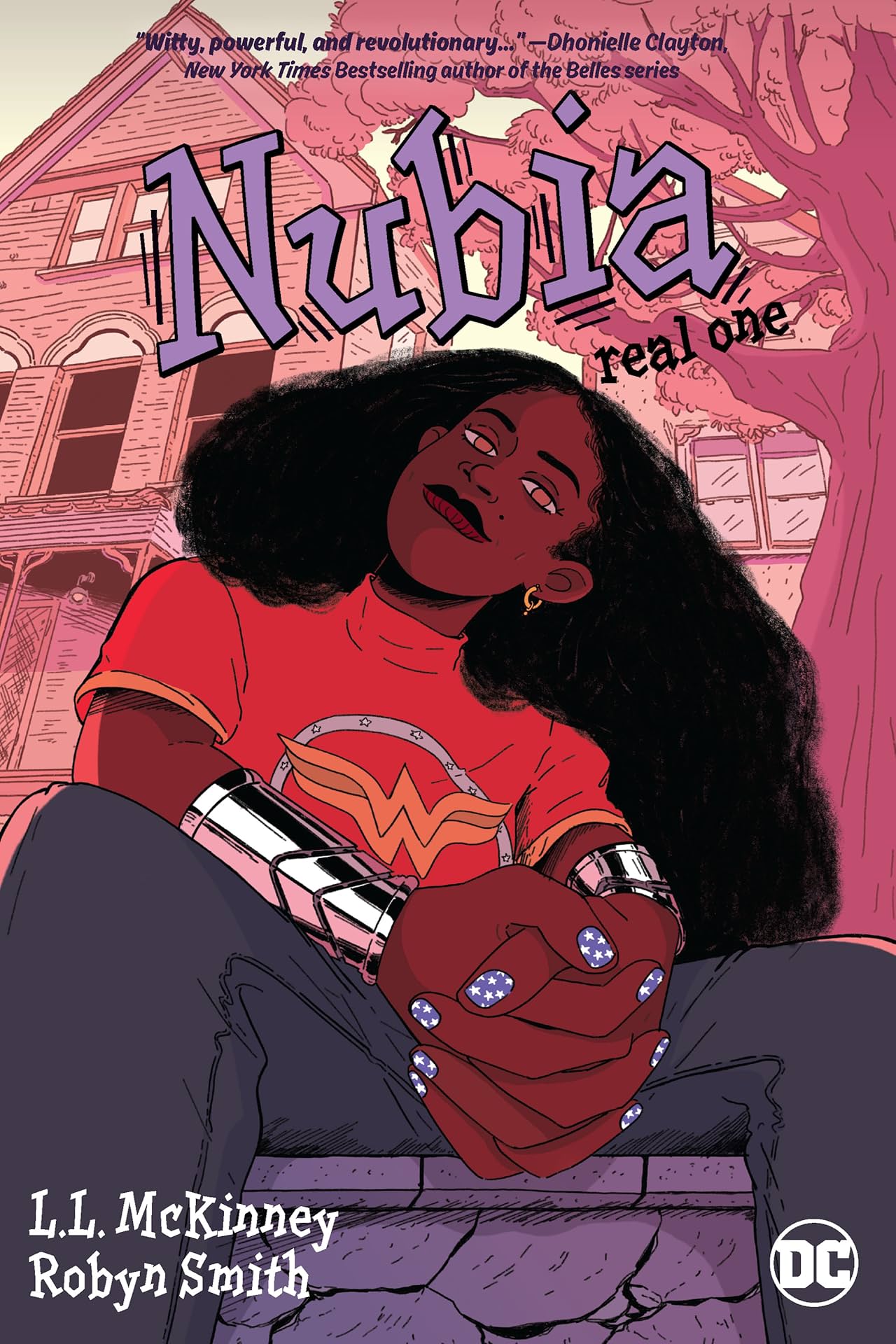
    Nubia Johnson's a black teenager who lives with her two mothers and best friends in an American neighbourhood full of double standards. Despite having superpowers similar to those of her idol Wonder Woman, Nubia is feared rather than celebrated.
    One morning, Nubia meets Wonder Woman in person and learns a big surprise: they're biracial twin sisters.
    Centuries ago, Queen Hippolyta of Themyscira became a mother when she formed two baby girls out of clay: the white-skinned Diana and the black-skinned Nubia. Shorty after being brought to life, however, the bloodthirsty Ares kidnapped Nubia and vanished without a trace.
    Meanwhile, Diana grew up and became Wonder Woman, but it would be a long time before she found her long-lost twin, whom the war god had prevented from ageing.
    To keep her sister safe, Diana placed Nubia with her adoptive family, observing her from time to time.
    Armed with the knowledge of her origins and her own pair of bulletproof bracelets, Nubia stands up for herself and her loved ones to show the world what she has been all along: a superhero.
    DC's first black superheroine, Nubia is the main protagonist of a YA graphic novel written by L.L. McKinney and illustrated by Robyn Smith. Tackling the topics of police brutality, white supremacy, and gun violence, Nubia: Real One is a timely book for people of all races to read.

Nubia: "Besides, if being a hero means protecting those you love... I can do that."

Age Rating: 17+

    "Women have to harness their power... And if you can't go straight ahead, you go around the corner." -- Cher

    High on Mount Olympus, Hera, Queen of the Gods and Goddess of Women, leads a rebellion. Confronting their male counterparts, the Greek goddesses demand that all mortal men be punished for abusing women. But when Zeus, the King of the Gods and Hera's adulterous husband, dismisses their demand, the goddesses come up with a plan.
    Reconvening at The Well of the Lost in the Underworld, the goddesses, except Hera, use forbidden magic to create an all new society of women: female beings free from the control of abusive men and the tyranny of male gods; warrior women called the Amazons.
    Back in the Upper World, a midwife orders her widowed assistant, Hippolyta, to abandon an unwanted baby girl. Having a change of heart, Hippolyta races against the elements in search of the child and encounters the fearless sisters to whom she would one day be Queen.
    Three years in the making, writer Kelly Sue DeConnick invites readers to Wonder Woman Historia: The Amazons, a new graphic novel trilogy chronicling the history of Diana's people.


    Illustrated by Phil Jimenez, Book One is now available for purchase.

Antiope: "An Amazon is your sister. And your protector."

    Book Two will be illustrated by Gene Ha and published this coming April. 
   Book Three will be illustrated by Nicola Scott and published in the future.
    For more information on the Amazons, watch this TED-Ed video on the real women behind the myths.


Age Rating: 9+

    "These gods and goddesses-they seemed to have as many aliases as a modern criminal. Indeed they seemed to be definitely criminal types." -- Agatha Christie, The Labours of Hercules

    DC Comics wouldn't have published Wonder Woman, nor would've the late Ray Harryhausen brought to life skeleton warriors and Medusa, nor would've Rick Riordan written about Percy Jackson's adventures if not for their common source: Greek mythology.
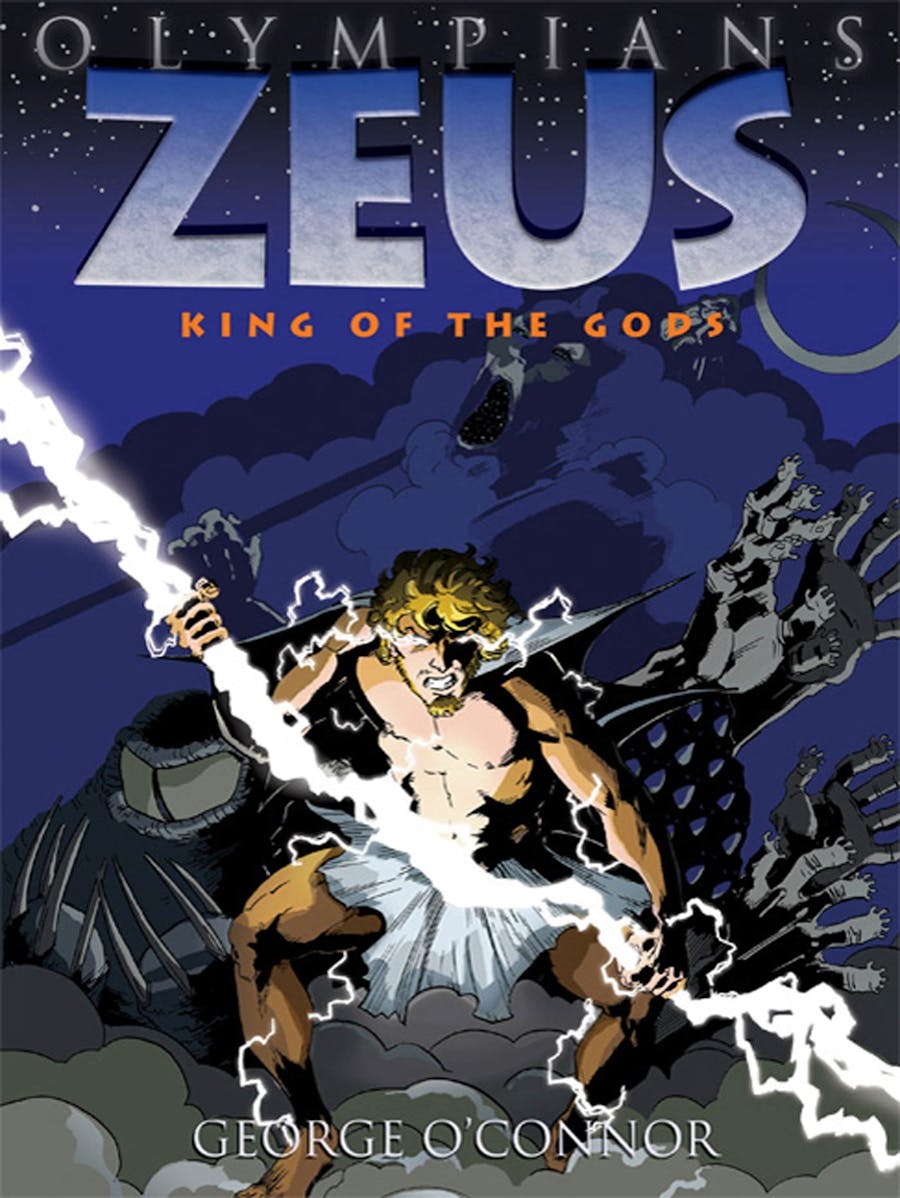
    From 2010 to 2022, author and illustrator George O'Connor had published a twelve-volume graphic novel saga that faithfully retells the stories about the most powerful yet flawed family of Greek gods: the twelve Olympians.
    Zeus, Athena, Hera, Demeter, Poseidon, Aphrodite, Ares, Apollo, Artemis, Hermes, Hephaistos, and Dionysos await you readers on Mount Olympus. Witness the Greek deities' clashes with family and foe alike, go on epic adventures with heroes, and learn about the mythology's contributions to popular culture.

Hestia: "All around me they gather, and old tales are told. New stories unfold. And I sit, and I watch. And I listen."

Age Rating: All Ages

    "Well-behaved women seldom make history." -- Laurel Thatcher Ulrich
    
    At Miss Quinzella Thiskwin Penniquiqul Thistle Crumpet's Camp for Hardcore Lady Types, best friends Jo, April, Molly, Mal, and Ripley earn badges by performing the usual summer camp activities and by going on not-so-usual supernatural adventures. Whether it involves bickering deities, amazing cryptids, their long-suffering counselor Jen, a shapeshifting Bear Woman, bigots, swearing in the names of feminist icons, or their daring camp director Rosie, the girls of Roanoke Cabin can overcome any obstacle that comes in their way.
    Written and illustrated from 2014 to 2020 by a number of talented authors and artists, Lumberjanes is a 76-issue fantasy comic series about the powers of friendship and being your true self.
    Sweet Agatha Christie! What are you waiting for? If you have the money, good grades, or whatever, read the Lumberjanes!

Jo: "Just what the junk is going on here, anyway?"

Age Rating: 9+

    "Your mind is not a cage. It's a garden. And it requires cultivating." -- Libba Bray

    After losing her neglectful parents to a cholera outbreak in India, the spoiled Mary Lennox is sent to England to live with her reclusive Uncle Craven.
    With the help of friendly servants and animals, Mary changes her ways, just in time to meet her mysterious cousin and to discover a key that unlocks a secret garden and love.
    Originally published in 1911 by A Little Princess author Frances Hodgson Burnett, The Secret Garden has been adapted into a graphic novel by Mariah Marsden, with illustrations by Hanna Leuchtefeld.

Mary Lennox: "I found the door to the secret garden."

Age Rating 9+

    "Resolve to keep happy, and your joy and you shall form an invincible host against difficulties." -- Helen Keller

    At four years old, Cece's just an ordinary child, until she gets diagnosed with meningitis. Although she recovers, Cece becomes deaf and is given her own Phonic Ear hearing aid to hear properly. Being deaf and wearing a hearing aid make Cece feel she's different from the other kids who can hear just fine. On the other hand, being different also gives Cece a chance to make friends and to be her own superhero: El Deafo.
       Published in 2014, El Deafo is an autobiographical children's graphic novel based on author and illustrator Cece Bell's experiences in growing up deaf.

Cece: "Just call me El Deafo."

    This past January, El Deafo has been adapted into a three-part animated miniseries narrated by Bell herself and featuring the voices of Jane Lynch, Pamela Adlon, and Chuck Nice amongst others.


    All three episodes of El Deafo can be viewed on Apple TV+.

Song For My Dog by Leslie Mosier๐Ÿถ
Age Rating: All Ages

    "If conversation was the lyrics, laughter was the music, making time spent together a melody that could be replayed over and over without getting stale." -- Nicholas Sparks, "The Choice"

    Born in May 2012 and living in Nashville, Tennessee, Doug the Pug is an international celebrity. With his verified Facebook, Instagram, and YouTube accounts, Doug's mission is to spread messages of love and kindness to people of all shapes, sizes, and lifestyles. When he isn't posing for photos or making videos, Doug spends time with his human, Leslie Mosier, and two cat siblings, Fiona and Teddy.
    In 2021, Doug made his film debut as the voice of Monchi in the Oscar-nominated animated comedy film The Mitchells vs. The Machines.
    A month before Doug's eighth birthday, Leslie released Song for My Dog, a heartwarming tribute to dogs and dog-lovers alike.
    Please prepare tissues.


Age Rating: 17+

    "It is not your business to determine how good (your passion) is, nor how valuable it is. It is your business to keep it yours clearly and directly." -- Martha Graham

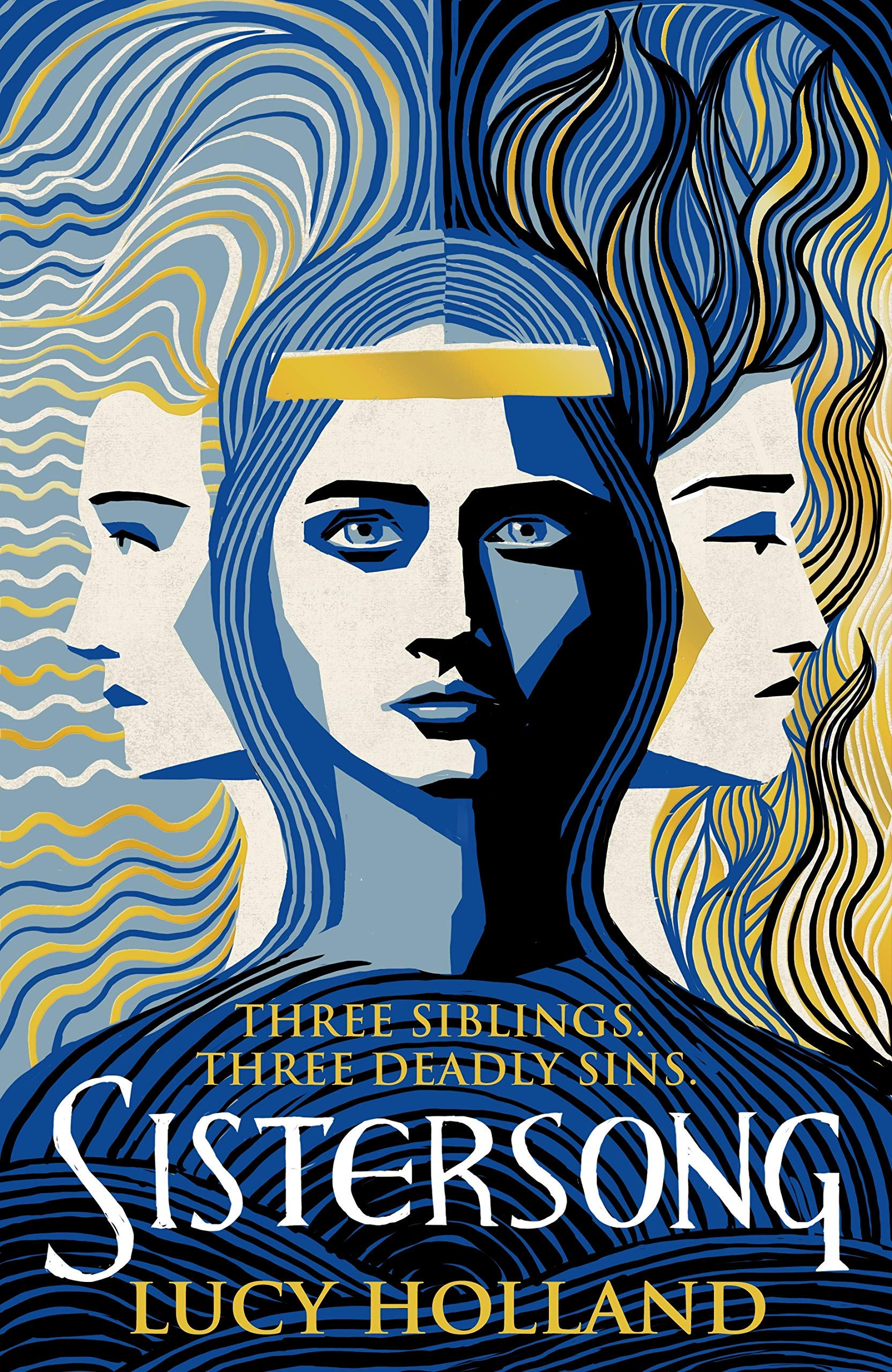
    In the Kingdom of Dumnonia, King Cador has converted to Christianity, severing ties to the magical land. Amidst the citizens' clashes with the hypocritical parish priest and rumours of a Saxon invasion, Cador's three children struggle to be themselves.
    Dark-haired Riva, who can heal others, tries to cure the internal scars caused by a mysterious fire that nearly claimed her life.
    Rebellious Keyne, who identifies as male, practices magic instead of conforming to society's expectations.
    Golden-haired Sinne, a talented singer, prefers the old ways to mass and desires to venture beyond her homeland's borders.
    When a handsome stranger enters Dumnonia, two sisters become rivals, a boy becomes a man, and a ballad involving a harp of bones is retold in Sistersong, a historical fantasy novel written by author Lucy Holland and narrated by actor Robyn Holdaway.

He made a harp of her breastbone
A hey ho and me bonny-o
And straight it began to play alone
The swans swim so bonny-o

--Loreena McKennitt, The Bonny Swans

The Soloists by GOBELINS♀️
Age Rating: 13+

    "Do what you feel in your heart to be right -- for you'll be criticized anyway." -- Eleanor Roosevelt

    In the French animated short film The Soloists, three singing sisters have been invited to perform at a festival. The trio live in a country with misogynist laws, two of which forbid women from singing in groups with less than three members and from owning dogs. When one of the sisters dies during rehearsal, the other two hold auditions for a third member to avoid persecution. But when all the auditionees die suddenly, the two surviving sisters resort to desperate measures.


    Starring Persepolis author Marjane Satrapi as one of the sisters, The Soloists is an allegory of women's ongoing fight for their rights.

Age Rating: All Ages     "When I was a young girl, my family used to drive up to Manhattan to see all the big musicals. And I remember levitating off my seat, amazed that there were these people, arm's length away, singing and dancing. It's always been magic to me." -- Debra Messing

    In this follow up to A is for Audra and B is for Ballet, John Robert Allman has written B is for Broadway, his third abecedarian rhyme and tribute to hit Broadway musicals and performers. Illustrated by Peter Emmerich, B is for Broadway is proof that-no matter what happens-the show must go on.

Narrator:
"From A to Z, you know the showbiz slang you've got to know.
So, as Ethel Merman belted out, let's go on with the show!"

The Girl in the Hallway or The Kidnapping of Xiana Fairchild by Jamie DeWolf๐Ÿบ
Age Rating: 15+
    
    "When one door closes, another opens; but we often look so long and so regretfully upon the closed door that we do not see the one that has opened for us." -- Alexander Graham Bell

    In 1999, a neglected Indigenous girl named Xiana Fairchild was kidnapped and murdered at the age of 7. Even after the cruel being responsible for Xiana's death was brought to justice, the story is far from over.
    In 2014, Jamie DeWolf, a neighbour of Xiana's, told her story in front of a live audience. Four years later, DeWolf's narration was adapted into The Girl in the Hallway, a stop-motion animated short film directed by Valerie Barnhart.

    
    The CDC says that homicide's the third leading cause of death for women aged 10-24 and is the fifth leading cause of death for Indigenous women aged 25-34.
    Sadly, when Indigenous and black people-especially women-vanish, they receive less media coverage than missing white people like Natalee Holloway and Gabby Petito. With domestic violence made worse by the COVID-19 pandemic, the scandalous Canadian residential schools, and the cry for justice against police brutality, watching Xiana Fairchild's story should serve as a wakeup call.
    My dear readers, if you or someone you know needs help, please contact your local help hotlines as soon as possible: one phone call makes a big difference.
    Regardless of race, gender, or beliefs, we're all human beings.

Age Rating: 9+

    "Feet, what do I need you for when I have wings to fly?" -- Frida Kahlo

    Since premiering in 1877, Swan Lake has been one of Pyotr Ilyich Tchaikovsky's famous compositions and one of the most performed ballets in history.
    This year, the timeless story returns with a whole new twist.
    For years, war has been occurring between the Kingdoms of Bloom, Rotbart, and Montrose.
    Princess Odette of Bloom Kingdom wishes to study ballet, but can't because she's cursed to be a white swan every day from sunrise to sundown. Princess Odile of Rotbart Kingdom wishes to go on an adventure, but is forbidden due to her disability. Prince Siegfried of Montrose Kingdom wishes to prove himself worthy of the crown despite being described as too sensitive to rule.
    When Odette and Dillie meet at Swan Lake, they become good friends. Upon discovering that Dillie's father has been accused of cursing Odette, the two princesses team up with Siegfried and embark on a quest to break the spell, prove Dillie's family innocent, and restore peace between the realms.
    Written by Rey Terciero and illustrated by Megan Kearney, Swan Lake: Quest for the Kingdoms is a graphic novel retelling of the world-famous ballet that had inspired The Swan Princess, Princess Tutu, and Black Swan.

Odette: "I guess flying is pretty awesome..."

Sidewalk by Celia Bullwinkel⌛
Age Rating: 12+

    "My mother always used to say, "The older you get, the better you get. Unless you're a banana." -- Betty White

    In Celia Bullwinkel's 2013 short film Sidewalk, we watch a woman as she grows from a child to an adult, experiencing body changes, unwanted attention, romance, motherhood, old age, and self acceptance.


Age Rating: All Ages

    "Never attempt to win by force what can be won by deception." -- Niccolรฒ Machiavelli, "The Prince"

    Not every day an African myth gets faithfully retold by White people such as Gail E. Haley.
    Haley grew up in the segregated southern States, witnessing how racism denied African Americans their human rights, including access to the library.
    After moving north and vowing never to return south, Haley started her own family and lived in the Caribbean for some years. There, she overheard the native women talk of Anansi, the shapeshifting spider-man who tricks people and animals to get what he wants. When Haley and her family returned to the United States, she researched on the trickster and immersed herself and her daughter into African Life. Two weeks before her son was born, Haley wrote and illustrated A Story, A Story, a children's book that retells the African myth of how Anansi came to own all stories.
    Long ago, the Sky God Nyame owns all the stories in the world, keeping them in a golden box. One day, Ananse climbs up to the sky to buy the stories. Not believing that a small creature like Ananse could pay the price, the Sky God demands a few dangerous creatures in exchange for the golden box. To Nyame's surprise, however, Ananse uses trickery to successfully purchase the stories and share them with the people on Earth.

African Storyteller: "A story, a story; let it come, let it go."

    A best-selling classic, A Story, A Story won Gail E. Haley the Caldecott Medal and was adapted into an animated short film narrated by Dr. John Akar, the Sierra Leonean ambassador to the United States.
    Anansi may be a trickster but his stories show that having a brain is better than having brawn. To this day, the enslaved Africans' descendants remind children of the powers that come from opposing racism and telling "spider stories."
    Courtesy of TED-ED, here's a variant of the African folktale:


Feathers and Fools by Mem Fox๐Ÿฆš๐Ÿฆข
Age Rating: All Ages

    "Remember that hope is a powerful weapon even when all else is lost." -- Nelson Mandela

    In 1989, Mem Fox wrote Feathers and Fools, a children's book first illustrated by Helen Semmler and then by Nicholas Wilton.
    A pride of peacocks and a flock of swans live side by side.    
    Instead of respecting the swans, the peacocks fear them due to their different appearances and behaviours. Fear then evolves into paranoia as the two species sharpen their feathers into arrows and wage war on one another.
    When all hope seems lost, two lives start in respect and harmony.
    Feathers and Fools is a fable with a powerful timely moral on the consequences of unfounded fear and discrimination.
   If you're unable to buy or borrow a copy, you can watch the whole plot in this YouTube video created and narrated by Ashley Paladini.


Age Rating: Adults Only
"Heav'n has no rage, like love to hatred turn'd,
Nor hell a fury, like a woman scorn'd."
-- William Congreve, The Mourning Bride

    Thirty-one years before "The Bride" slashed her way in a mission of revenge, a fictional Japanese woman wielded her own sword to show how double-edged she can be: as beautiful and as cold as the snow she is named after.
    From 1972 to 1973, Kazuo Koike and Kazuo Kamimura wrote and illustrated Lady Snowblood, an adults-only manga about a woman's hunt for those who had done her mother wrong.
    After four con artists get away with murdering her husband and son and raping her, a woman named Sayo wishes for revenge. Imprisoned for murdering one of the four perpetrators, Sayo sleeps with various men until she conceives a child who will carry out her retribution. On a cold, snowy winter night, Sayo dies after giving birth to a baby girl whom the other women prisoners name Oyuki, after the snow.
    Raised by the midwife who delivered her, and trained brutally by a priest and a pickpocket, Oyuki becomes the assassin known as Syura Yuki or Lady Snowblood. Her mission? Deliver her late mother's vengeance on the three remaining scammers.
    Armed with her umbrella sword, Syura Yuki travels around 19th century Japan to grant her mother's wish. Along the way, Oyuki does contract killing, performs impossible acts of theft, seduces beautiful women, disguises herself as other people, and even recruits a fighting of beggars and a writer to help her accomplish her mission.
    Published in two volumes (four in the official English translation by Dark Horse Comics), Lady Snowblood is a revenge story for classic manga and anime fans.

Oyuki: "I am a child of Syura. I am Syura Yuki..."

    In 1973, Lady Snowblood was adapted into a Japanese live action period drama film directed by Toshiro Fujita, with actress and singer Meiko Kaji playing Oyuki and performing the film's theme song.


    Fifty years after being made, the Lady Snowblood franchise remains a classic inside and outside of Japan. The Kindle editions of Dark Horse's English translation can currently be purchased within the United States or by customers using VPNs, while the film can now be watched on DVD and Blu-ray, courtesy of the Criterion Collection.

Oyuki: "Even before we enter this world, we are marked by karma."
   
The Sister Act Franchise by Touchstone Pictures⛪๐Ÿ‘ฉ๐Ÿฟ‍๐ŸŽค๐Ÿซ
Age Rating: 12+

     "When I sing, trouble can sit right on my shoulder and I don't even notice." -- Sarah Vaughan

    In 1992, EGOT winner Whoopi Goldberg starred in Sister Act, a musical comedy film that brings new meaning to the term sisterhood.
    Deloris Van Cartier (Goldberg) is a lounge singer at a casino in Reno, Nevada. When she witnesses her married lover, Vince LaRocca, executing his chauffeur, Deloris enters the witness protection program. Lt. Souther places Deloris in St. Katherine's Parish's convent of nuns where the stern Mother Superior (Dame Maggie Smith) gives her the alias "Sister Mary Clarence."
    Until she can testify against LaRocca, Deloris must pretend to be a nun and listen to the convent's choir which is notorious throughout the neighbourhood for singing off-key.
    After Deloris breaks one rule too many, Mother Superior has her join the choir, the members of which include the cheerful Sister Mary Patrick (Kathy Najimy), the humble Sister Mary Robert (Wendy Makkena), and the melancholic Sister Mary Lazarus (Mary Wickes).
    Then one Sunday morning, Mother Superior, the Monsignor, and the neighbourhood get a big surprise: Sister Mary Clarence has transformed the nuns into beautiful singers by combining Gospel music with Rock and Roll, and later inspiring them to help the community.
    When Deloris gets kidnapped by LaRocca, Mother Superior reveals the truth and she and the nuns of St. Katherine's fly to Las Vegas to get Deloris out of trouble.

Deloris Van Cartier: "Sister. We could. We could rock this place."

    A box office hit, Sister Act was followed in 1993 by a sequel, Sister Act 2: Back in the Habit.
    A year after becoming the unlikeliest of friends, Deloris reunites with the nuns of St. Katherine's Parish. This time, the sisters teach at a San Francisco Catholic high school where Deloris is hired as the new music teacher.
    Once more, Deloris masquerades as Sister Mary Clarence to train a class of rambunctious teens into becoming a choir and compete in a choral singing contest to save their school from shutting down.
    Although not as successful as the previous film, Sister Act 2 is loved by fans and is the film debut of Deedee Magno Hall, an American actress and singer who would go on to star in various musicals and voice Pearl in Cartoon Network's Steven Universe franchise.

Deloris Van Cartier: "If you wanna be somebody, if you wanna go somewhere... you better wake up and pay attention."

Since premiering thirty years ago, the Sister Act films will have you laughing at loud and singing along, regardless of your beliefs.

Wolf Children by Mamoru Hosoda❄️๐Ÿบ๐ŸŒง️
Age Rating: 12+

    "Life provides losses and heartbreak for all of us -- but the greatest tragedy is to have the experience and miss the meaning." -- Robin Roberts, Everybody's Got Something

    In 2012, Mamoru Hosoda, best known for Summer Wars, Mirai, and Belle, directed the anime drama film Wolf Children.
    In a Japanese city, a university student named Hana and a wolf man fall in love and have two children: a girl named Yuki (snow) and a boy named Ame (rain).


    Sadly, the family's fairy tale life gets shattered when the wolf man dies while hunting for food. Afraid of how her neighbours would react to her children's inherited ability to transform from human to wolf and vice versa, Hana moves with Ame and Yuki to the countryside to keep their shapeshifting a secret.
    As they grow older, Ame and Yuki face challenges while Hana works hard to support them in memory of their late patriarch.
    Released in 2012, Wolf Children is a beautiful story about the lengths a single mother goes to show how much she loves her unique progeny.


Hana: "What do you want to do? Be humans or be wolves? I think we should move. So you can choose."

Evil Angels, or A Cry in the Dark, by Fred Schepisi๐ŸŒ
Age Rating: 13+

    "People say the truth hurts. ... It hurts even more if you do a whole bunch of foolishness to try and avoid it." -- Tyler Perry, Don't Make a Black Woman Take Off Her Earrings

    2022 marked the tenth anniversary of Coroner Elizabeth Morris's delivery of findings that proved-once and for all-the real cause of one child's death.
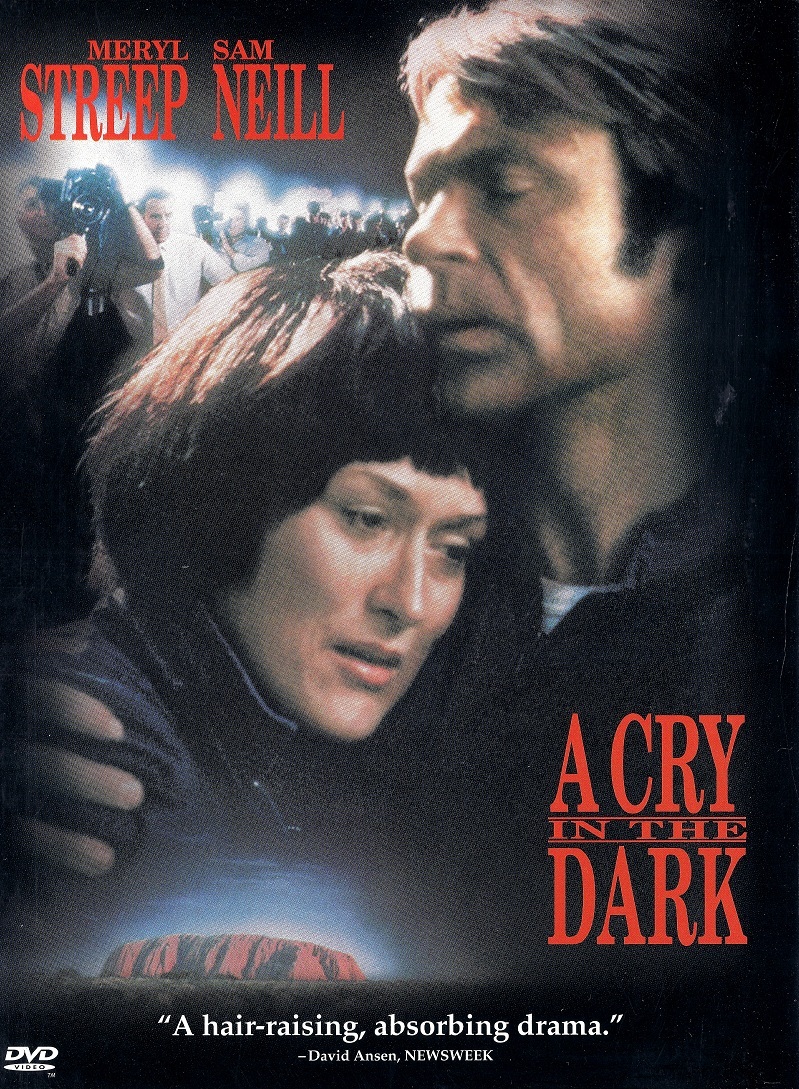
    It all began on the night of August 17, 1980, when a Seventh-day Adventist family's camping trip to Uluru, Australia became a living nightmare. In that unforgettable event, Michael and Lindy Chamberlain's nine-week-old daughter, Azaria, was stolen by a wild dingo.
    Rather than comfort them, the masses falsely accused the baby's grieving parents of killing her. Bias against against the Chamberlain family's religious beliefs, gossip, a botched police investigation, and the media frenzy surrounding the case all portrayed Lindy as a cold heartless being. On October 29, 1982, Mr. and Mrs. Chamberlain were falsely convicted of murdering their own child and sentenced to life behind bars.
    In 1985, author John Bryson wrote Evil Angels, a non-fiction book about the case.
    In 1986, Azaria's jacket was discovered in an area with dingo lairs.
    In 1988, Fred Schepisi directed a drama film based on Bryson's book, starring Oscar winner Meryl Streep as Lindy and Sam Neill as Michael. Evil Angels, also known as A Cry in the Dark outside Australia and New Zealand, premiered in November 1988, less than two months after the real Chamberlains were exonerated of all charges filed against them.


    On June 12, 2012, more than thirty years after the whole thing started, it was finally proven that a dingo was responsible for Azaria Chamberlain's death.
    Even though Azaria's body was never found, her death is a cautionary tale about the consequences of believing in fake news and of the delicate balance between humanity and nature.

Lindy Chamberlain: "I'd like to know more than anyone else... what happened to my... my baby daughter."

Linda & Joan by Russell Quinn๐Ÿง”๐Ÿผ‍♀️๐Ÿ‘ต๐Ÿผ
Age Rating: 9+

    "You only live once, but if you do it right, once is enough." -- Mae West

    Last year, I had recommended Russell Quinn's precious two-part video game, Linda & Joan.
    Here's a recap: Russell was born in England, raised and loved by his mum Linda Quinn and his maternal nan Joan Bevis.
    After he had grown up and lived in different countries, Russell kept in touch with his family, even taking his mum to see popular tourist spots.
    However, like all other people, the Quinns had experienced both positive and negative events throughout the years they were together.
    A few months before Russell was born, his dad died from leukaemia. In 2013, Linda's breast cancer had recurred and metastasised after being cured of it back in the 1990s, and Joan's other daughter died from bowel cancer.
     One winter, Russell had his heart broken twice. In December 2017, Linda died from breast cancer, and then in January 2018, Joan died while undergoing surgery to repair her broken hip.
    In memory of his loved ones, Russell Quinn has been making Linda & Joan, a two-part video game set in "the worst year of his life".
    The first part, Prologue: Four Months Earlier, was released in 2020.


    The second part and main game, Linda & Joan, is still being made, so people must follow its official social media accounts for updates.

Linda Quinn: "I wanted you to have your own life."

Human and Divine, a Song by Lynda Carter
Age Rating: All Ages

    "To be deeply loved by someone gives you strength, but to love someone deeply gives you courage." -- Esther Huertas

    For my final recommendation this year, here's Human and Divine, a love song by the one and only Lynda Carter.


I fell just like a Stone
From heaven to the fire below 
And into your arms 

You held me out of Time 
Showed me paradise 
An island in the storm 

I know you know 
we know our love will go on 

Human and Divine
Love is Human and Divine 
Until the end of Time
Our Love is Human and Divine
Love is Human and Divine

I found that love is still a Gift
A rainbow in the mist
Human and divine 

We're bound together in desire 
The ice inside the Fire 
Until the end of time

 I know you know
 We know that love will go ON

Human and Divine
Love is Human and Divine 
Until the end of Time
Our Love is  Human and Divine
Love is Human and Divine

References:
  1. Abdollahinia, M. et al. (Directors). (2021). Soloists, The [Film]. GOBELINS.
  2. Allman, J. R. (2022). B is for Broadway: Onstage and Backstage from A to Z. Doubleday Books for Young Readers.
  3. Anderson, L. H. (Ed.). (2021). Wonderful Women of the World. DC Comics.
  4. Anonymous. (2022). Dingoes. Australia Zoo. https://www.australiazoo.com.au/wildlife/our-animals/dingoes/
  5. Apple TV. (2021, December 16). El Deafo — Official Trailer | Apple TV+ [Video]. YouTube. https://www.youtube.com/watch?v=SqZ9ncOYRS4
  6. Ardolino, E. (Director). (1992). Sister Act [Film]. Touchstone Pictures.
  7. Barnhart, V. (2018). Girl in the Hallway, The [Film].
  8. Bell, C. (2014). Deafo, El. Amulet Books.
  9. Bell, C. (2015, August 4). Cece Bell: how I made El Deafo - in pictures. The Guardian. https://www.theguardian.com/childrens-books-site/gallery/2015/aug/04/cece-bell-el-deafo-in-pictures
  10. Bell, C. & McRobb, W. (Executive Producers). (2022). Deafo, El [TV series]. Lighthouse Studios; Wellsville Productions.
  11. Bryson, J. (1985). Evil Angels: The Case of Lindy Chamberlain. Open Road Media.
  12. Bullwinkel, C. (2014, September 24). Sidewalk (Official Version) [Video]. YouTube. https://www.youtube.com/watch?v=Zye28xU3F64
  13. Bullwinkel, C. (Director). (2013). Sidewalk [Film].
  14. Burnett, F. H. (1911). Secret Garden, The. Frederick A. Stokes.
  15. Carter, L. (2021, October 30). Lynda Carter - Human and Divine [Video]. YouTube. https://www.youtube.com/watch?v=08UeSaheCds
  16. DC. (2021, November 30). DC Beyond the Panels: Wonder Woman Historia: The Amazons [Video]. YouTube. https://www.youtube.com/watch?v=HaMKxkSuNm0
  17. DeConnick, K. S. (2021). Wonder Woman Historia: The Amazons. DC Comics.
  18. Doug the Pug. (2020, April 3). SONG FOR MY DOG - Music Video [Video]. YouTube. https://www.youtube.com/watch?v=-G1O149r8MA
  19. Duke, B. (Director). (1993). Sister Act 2: Back in the Habit [Film]. Touchstone Pictures.
  20. Edmonds, P. (2018, March 12). These Twins Will Make You Rethink Race. National Geographic. https://www.nationalgeographic.com/magazine/article/race-twins-black-white-biggs
  21. Ellis, G. et al. (2014). Lumberjanes. Boom! Studios.
  22. Far East Films. (2021, October 5). Lady Snowblood (1973) - Movie Trailer - Far East Films [Video]. YouTube. https://www.youtube.com/watch?v=bIiuywU9ZJ4
  23. Fox, M. (1989). Feathers and Fools. HMH Books for Young Readers.
  24. Fox, M. (2013, January 16). Feathers and Fools. Mem Fox. https://memfox.com/gossip-behind-mems-books/feathers-and-fools-llustrated-by-nick-wilton/
  25. Fujita, T. (Director). (1973). Lady Snowblood [Film]. Toho.
  26. GOBELINS. (2021, October 14). SOLOISTS - Animation Short Film 2021 - GOBELINS, THE [Video]. YouTube. https://www.youtube.com/watch?v=lIyLRnB-eCY
  27. HD Retro Trailers. (2019, October 28). Cry in the Dark (1988) ORIGINAL TRAILER [HD 1080p], A [Video]. YouTube. https://www.youtube.com/watch?v=rt7o0XMMY90
  28. Haley, G. E. (1970). Story, A Story, A. Atheneum Books for Young Readers.
  29. Holland, L. (2021). Sistersong. Redhook.
  30. Hosoda, M. (Director). (2012). Wolf Children [Film]. Studio Chizu.
  31. Koike, K. (2005). Lady Snowblood Volume 1: The Deep-Seated Grudge Part 1. Dark Horse Comics.
  32. Koike, K. (2005). Lady Snowblood Volume 2: The Deep-Seated Grudge Part 2. Dark Horse Comics.
  33. Koike, K. (2006). Lady Snowblood Volume 3: Retribution Part 1. Dark Horse Comics.
  34. Koike, K. (2006). Lady Snowblood Volume 4: Retribution Part 2. Dark Horse Comics.
  35. Larson, K. W. (2021). True Wonder: The Comic Book Hero Who Changed Everything, A. Clarion Books.
  36. Madman Anime. (2012, August 7). REEL ANIME 2012: WOLF CHILDREN TRAILER (English Subtitles) [HD] [Video]. YouTube. https://www.youtube.com/watch?v=8xLji7WsW0w
  37. Marsden, M. (2021). Secret Garden: A Graphic Novel, The. Andrews McMeel.
  38. McKennitt, L. (2020, April 3). Bonny Swans, The [Video]. YouTube. https://www.youtube.com/watch?v=hztkgJSAZfY
  39. McKinney, L.L. (2021). Nubia: Real One. DC Comics.
  40. O'Connor, G. (2010). Olympians: Athena: Grey-Eyed Goddess. First Second.
  41. O'Connor, G. (2010). Olympians: Zeus: King of the Gods. First Second.
  42. O'Connor, G. (2011). Olympians: Hera: The Goddess and her Glory. First Second.
  43. O'Connor, G. (2012). Olympians: Hades: Lord of the Dead. First Second.
  44. O'Connor, G. (2013). Olympians: Poseidon: Earth Shaker. First Second.
  45. O'Connor, G. (2014). Olympians: Aphrodite: Goddess of Love. First Second.
  46. O'Connor, G. (2015). Olympians: Ares: Bringer of War. First Second.
  47. O'Connor, G. (2016). Olympians: Apollo: The Brilliant One. First Second.
  48. O'Connor, G. (2016). Olympians: Artemis: Wild Goddess of the Hunt. First Second.
  49. O'Connor, G. (2018). Olympians: Hermes: Tales of the Trickster. First Second.
  50. O'Connor, G. (2019). Olympians: Hephaistos: God of Fire. First Second.
  51. O'Connor, G. (2022). Olympians: Dionysos: The New God. First Second.
  52. Paladini, A. (2010, May 21). Feathers and Fools.mov [Video]. YouTube. https://www.youtube.com/watch?v=nk_omG7-61I
  53. Quinn, R. (2020). Linda & Joan Prologue: "Four Months Earlier" [Video Game]. False Vacuum Games.
  54. Quinn, R. (2020, June 22). Linda & Joan Prologue: "Four Months Earlier" - Release Trailer [Video]. YouTube. https://www.youtube.com/watch?v=tKwfslycric
  55. Quinn, R. (2023). Linda & Joan [Video Game]. False Vacuum Games.
  56. Schepisi, F. (Director). (1988). Evil Angels [Film]. Roadshow Entertainment.
  57. Snap Judgment Films. (2014, September 17). Girl In The Hallway / Jamie DeWolf, Snap Judgment LIVE, The [Video]. YouTube. https://www.youtube.com/watch?v=U_hfUKXEAvk
  58. TED-Ed. (2018, June 18). Did the Amazons really exist? - Adrienne Mayor [Video]. YouTube. https://www.youtube.com/watch?v=iYL5CLJ2prA
  59. TED-Ed. (2022, January 28). Myth of Anansi, the trickster spider - Emily Zobel Marshall, The [Video]. YouTube. https://www.youtube.com/watch?v=6nWba9Ii5Lo
  60. The Atlantic. (2019, November 8). Kidnapping of Xiana Fairchild, The [Video]. YouTube. https://www.youtube.com/watch?v=qBPj90rrvR4
  61. Terciero, R. (2022). Swan Lake: Quest for the Kingdoms. HarperAlley.