My dear readers,
Be changed for good by my list of recommendations for Women's History Month 2026. As always, check out the age ratings and content, and beware of spoilers.
Special thanks to Kendare Blake, Felicia Day, Morgan Dick, Joanna Ebenstein, Alison Friend, Jane Harrington, Rowan MacColl, Yonathan Tal, and Rita Williams-Garcia for their support.
Be changed for good by my list of recommendations for Women's History Month 2026. As always, check out the age ratings and content, and beware of spoilers.
-A. Eleazar
Special thanks to Kendare Blake, Felicia Day, Morgan Dick, Joanna Ebenstein, Alison Friend, Jane Harrington, Rowan MacColl, Yonathan Tal, and Rita Williams-Garcia for their support.
In Memoriam:
Marie-Catherine d'Aulnoy, Henriette-Julie Murat, Charlotte-Rose La Force, Marie-Jeanne L'Héritier, Catherine Bernard, Catherine Durand, and Louise d'Auneuil, the Inventors of Fairy Tales
Sigrid Undset (1882 - 1949)
Marilyn Monroe (1926 - 1962)
Mary Rodgers (1931 - 2014)
Happy 100th birthday, Marilyn Monroe💃🏼
Freaky Friday by Mary Rodgers👩🏽👧🏽
Sigrid Undset (1882 - 1949)
Marilyn Monroe (1926 - 1962)
Mary Rodgers (1931 - 2014)
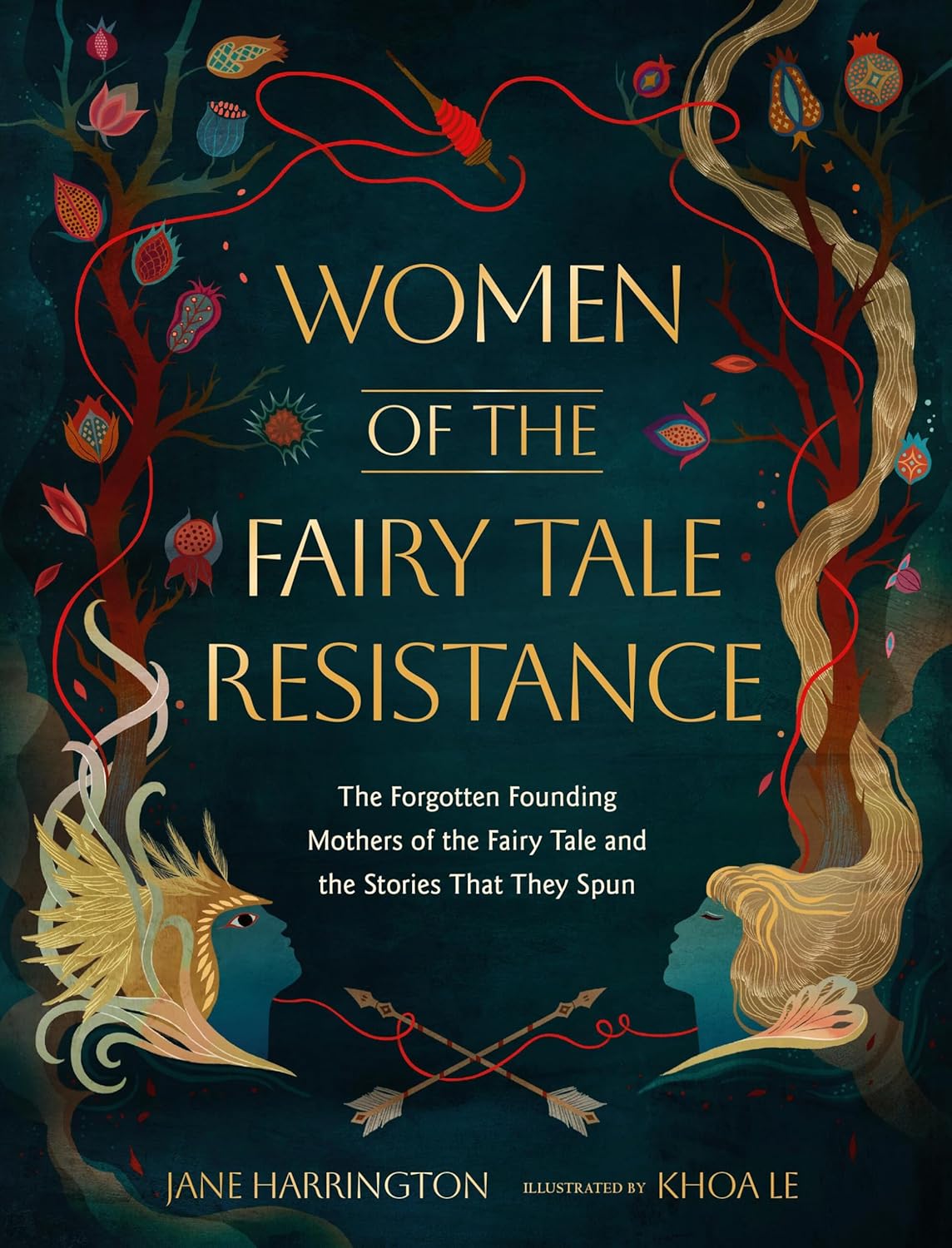
Women of the Fairy Tale Resistance: The Forgotten Founding Mothers of the Fairy Tale and the Stories That They Spun; written by Jane Harrington, illustrated by Khoa Le, and narrated by Hope Newhouse
😻👨🏼💔🌳🐑💇🏼♀️👸🏽💎🌹🐅🧚🏼♀️☀️💐
Age Rating: 13+
Age Rating: 13+
"With your strength, my lady, teeth can crush flint." -- Enheduanna, The Exaltation of Inanna
Once upon a time, there were male collectors: Charles Perrault of France, the Brothers Grimm of Germany, Hans Christian Andersen of Denmark, and Joseph Jacobs of the United Kingdom. They weren't just ordinary men: they're the credited "authors" of fairy tales, the stories adults tell their children at bedtime, sources of whim and fantasy, and the bases for many stage and screen adaptations.
But from within the forgotten pages of history, author Jane Harrington and artist Khoa Le show us the forgotten mothers of fairy tales. Many content creators give credit to Perrault et al., when their real muses should've been Marie-Catherine d'Aulnoy, Henriette-Julie Murat, Charlotte-Rose La Force, Marie-Jeanne L'Héritier, Catherine Bernard, Catherine Durand, and Louise d'Auneuil- a septet of 17th century French women who invented conte de fées or fairy tales.
Back during the reign of King Louis XIV, life in France was a nightmare for women: banned from studying and forced into arranged marriages to older men allowed to be abusive adulterers; in short, the government during Louis XIV's reign was no better than the Taliban.
With those loyal to Louis XIV cracking down on any form of suspected treason, the seven conteuses, or female storytellers, would gather in salons across Paris to tell and write their tales with female protagonists, and resist by including fairies in them. Why? Because in mythology and folklore, female fairies aren't to be messed with. By writing fairy tales, the conteuses became "modern fairies", creating fictional damsels who get themselves and their loved ones out of distress. Despite negative criticism from hypocrites of both sexes, the conteuses' tales became popular among the masses. Just like their characters, the conteuses also fought-for their rights to be educated, to be credited for their own work, to marry for love, and even the choices to remain single or to their date their boyfriends and/or girlfriends. But also like their characters, the conteuses were unfairly persecuted for being themselves, yet they managed to write their fairy tales, which went on to be retold by the male "collectors", whose own variants continue to be adapted into the ever growing list of screen and stage productions.
In Jane Harrington's Women of the Fairy Tale Resistance, the seven salon sisters are once again credited as the true creators of fairy tales, their lives described in seven biographies and thirteen of their publications retold. Even though not all fairy tales have "happy endings", Harrington and the conteuses show us readers that only when we stand up to the real villains in our lives could we truly live happily ever after.
 |
| Jane Harrington: "These fairy tale princesses didn't sleep through the action; they were the action." |
Happy 100th birthday, Marilyn Monroe💃🏼
Were you surprised by me?
When you took me home
When the glamor wore off
Reduced to skin and bone
I can't even tell
Who you want to know
I'm a goddess on stage
Human when we're alone
-- Laufey, Goddess
-- Laufey, Goddess
I want to continue my list not with a recommendation, but rather with a short biography of a woman and a lesson of the price we pay for stardom.
On June 1, 1926, a brunette girl named Norma Jeane Mortensen was born, the product of an affair between two people already married to others: Gladys Baker, a woman with mental illness, and Charles Stanley Gifford, a man who didn't want anything to do with his own daughter and was absent throughout her life. The girl was later baptised Norma Jeane Baker.
Because of her mother's illness, Norma Jeane grew up raised by many different foster parents and guardians, some of whom had even sexually abused her.
In 1942, a 16-year-old Norma Jeane married 21-year-old factory employee James Dougherty, but with WWII going on, Dougherty left home to fight the Axis Powers while his young wife stayed with his mother. While Norma Jeane was working at Reginald Denny's aviator factory one day, someone took a photo of her for a magazine, a minor event that would kickstart her path to fame. Mr. Dougherty, however, opposed his wife having her own career and they divorced in 1946.
In 1942, a 16-year-old Norma Jeane married 21-year-old factory employee James Dougherty, but with WWII going on, Dougherty left home to fight the Axis Powers while his young wife stayed with his mother. While Norma Jeane was working at Reginald Denny's aviator factory one day, someone took a photo of her for a magazine, a minor event that would kickstart her path to fame. Mr. Dougherty, however, opposed his wife having her own career and they divorced in 1946.
Dying her brown hair blonde, Norma Jeane began her career as a model. At first, Norma Jeane played small film roles and when she was 20, studio executive Ben Lyon suggested she come up with a unique stage because her married name of Dougherty might be too hard for others to pronounce. Norma Jeane suggested Monroe, a surname from her mother's side of the family, while Lyon chose the first name Marilyn because Norma Jeane reminded him of the Ziegfeld Follies star Marilyn Miller.
With a new name and a new hair colour, Marilyn Monroe herself became famous, starring and singing in thirty films, most famously in Gentlemen Prefer Blondes (1953), The Seven Year Itch (1955), and Some Like It Hot (1959). But amidst the glamour and fame, Marilyn Monroe found herself in a series of scandals and the centre of rumours and gossip. One time, her career was nearly ruined when the photos she earlier posed nude for appeared in the first issue of Playboy. Marilyn did confess to appearing in the pictures, but swore she only did it because she needed the money. And despite having a big number of fans, Marilyn was typecast as a dumb blonde and she also suffered from a severe case of stage fright which led to her abusing drugs and alcohol.
With a new name and a new hair colour, Marilyn Monroe herself became famous, starring and singing in thirty films, most famously in Gentlemen Prefer Blondes (1953), The Seven Year Itch (1955), and Some Like It Hot (1959). But amidst the glamour and fame, Marilyn Monroe found herself in a series of scandals and the centre of rumours and gossip. One time, her career was nearly ruined when the photos she earlier posed nude for appeared in the first issue of Playboy. Marilyn did confess to appearing in the pictures, but swore she only did it because she needed the money. And despite having a big number of fans, Marilyn was typecast as a dumb blonde and she also suffered from a severe case of stage fright which led to her abusing drugs and alcohol.
Later in her life and career, Marilyn had two more husbands: baseball player Joe DiMaggio, whom she married in 1954 and divorced in 1955, and Jewish playwright Arthur Miller, whom she married in 1956 and divorced in 1961; during her last marriage, the woman born Norma Jeane Mortenson legally changed her name to Marilyn Monroe and converted to Judaism. She was even said to have reached out several times to her biological father, who refused to establish ties with her, breaking her heart.
Marilyn later became the subject of more gossip when it was alleged she was having an affair with the late American president John F. Kennedy, a rumour that was further amplified when on May 19, 1962, she infamously sang him an advanced happy birthday while wearing a slinky dress.
On August 4, 1962, Marilyn Monroe was found dead at her 12305 Fifth Helena Drive home in Brentwood, Los Angeles, her death caused by an overdose of barbiturates. She was 36.
Deified and despised, loved and hated, Marilyn Monroe was, is, and always will be synonymous with the glam and fortune of mid 20th century Hollywood. But behind the scenes, she was just a woman who wanted to love and be loved, a gift many of us take for granted.
 |
| "My thanks and love forever. - Marilyn" |
Age Rating: 8+
"Be careful what you wish for." -- A proverb
"Be careful what you wish for." -- A proverb
Children think adults have all the fun; after all, which age group gets to have days off from work, eat whatever, sleep whenever, and boss children and teenagers around? Sounds fun, right? Unless you're willing to keep house, get the children to school on time, cook meals, and work to pay the bills and avoid getting evicted.
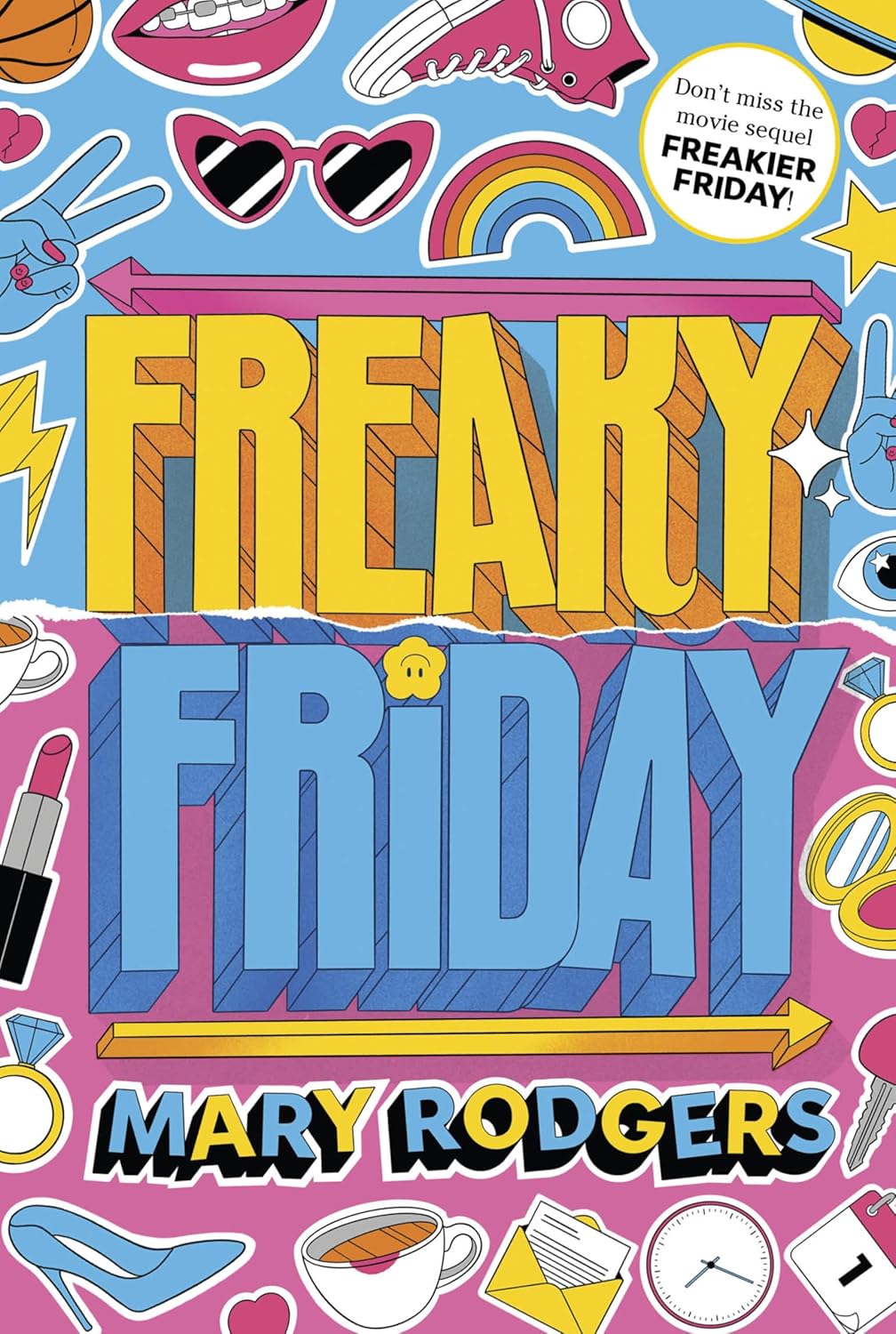
In 1972, the late Mary Rodgers-whose father was Richard Rodgers of Rodgers and Hammerstein fame-showed children that adulthood isn't what it's cracked up to be by writing Freaky Friday, a funny children's novel about a teenage girl who gets exactly what she wishes for.
Thirteen-year-old Annabel Andrews lives in a New York apartment with her parents, Bill and Ellen Andrews, her six-year-old brother Ben (whom she had nicknamed "Ape Face"), and their pet dog, Max.
Despite having the same brown hair and brown eyes, Annabel and her mother don't get along. Liberal yet irresponsible, Annabel is tired of her mother commanding her to clean her room, do her homework, and be nice to Ape Face; and Mrs. Andrews herself is equally fed up with her rude daughter. After fighting with her mother one Thursday night, Annabel wishes to be an adult, a gift Mrs. Andrews says her daughter will get.
On the morning of Friday, Annabel wakes up in her estranged mother's body! To make things even freakier than they already are, it is Mrs. Andrews herself who has granted her daughter's wish, somehow swapping their bodies to teach Annabel a lesson. Now the woman of the house, Annabel must literally fill in her mother's shoes, while Mrs. Andrews acts and talks like her teenage daughter to avoid suspicion.
In 1972, the late Mary Rodgers-whose father was Richard Rodgers of Rodgers and Hammerstein fame-showed children that adulthood isn't what it's cracked up to be by writing Freaky Friday, a funny children's novel about a teenage girl who gets exactly what she wishes for.
Thirteen-year-old Annabel Andrews lives in a New York apartment with her parents, Bill and Ellen Andrews, her six-year-old brother Ben (whom she had nicknamed "Ape Face"), and their pet dog, Max.
Despite having the same brown hair and brown eyes, Annabel and her mother don't get along. Liberal yet irresponsible, Annabel is tired of her mother commanding her to clean her room, do her homework, and be nice to Ape Face; and Mrs. Andrews herself is equally fed up with her rude daughter. After fighting with her mother one Thursday night, Annabel wishes to be an adult, a gift Mrs. Andrews says her daughter will get.
On the morning of Friday, Annabel wakes up in her estranged mother's body! To make things even freakier than they already are, it is Mrs. Andrews herself who has granted her daughter's wish, somehow swapping their bodies to teach Annabel a lesson. Now the woman of the house, Annabel must literally fill in her mother's shoes, while Mrs. Andrews acts and talks like her teenage daughter to avoid suspicion.
As herself, Annabel must deal with wearing braces, having a crush on her fourteen-year-old neighbour Boris Harris, and disagreeing with her mother's rules; now in her mother's body, Annabel must do the laundry, buy liquor, fire a racist cleaning lady, look after Ape Face, and attend a parent-teacher conference at her school all in one day.
When things become too much for Annabel, she regrets making her wish, but Mrs. Andrews has one more surprise for the teenage troublemaker.
Since its publication, Freaky Friday has been one of Mary Rodgers' best known works along with the Broadway musical Once Upon a Mattress, and has been adapted for the big screen by Disney beginning 1976.
When things become too much for Annabel, she regrets making her wish, but Mrs. Andrews has one more surprise for the teenage troublemaker.
Since its publication, Freaky Friday has been one of Mary Rodgers' best known works along with the Broadway musical Once Upon a Mattress, and has been adapted for the big screen by Disney beginning 1976.
In 2025, Freaky Friday was reprinted with brand new cover art by Toby Triumph; this new edition of the classic novel was released by HarperCollins in commemoration of Freakier Friday, the sequel to the 2003 film adaption starring Lindsay Lohan (The Parent Trap) and Jamie Lee Curtis (Halloween).
The Danish Poet by Torill Kove⛴️📚🌧️🐄✉️🐐🚂
 |
| Annabel Andrews: "I am just a little girl who has been turned into her mother." |
Age Rating: 9+
"Happy is the man whom the Muses love: sweet speech flows from his mouth." -- Hesiod
On my 21st birthday, I bought myself a copy of Kristin Lavransdatter, the Nobel prize-winning novel by Norwegian author Sigrid Undset. Set in medieval Norway, the trilogy is about the life of Kristin, and the consequences of her choice to leave Simon, the man her father Lavrans wants her to marry, to wed Erlend, a knight excommunicated from the Roman Catholic Church for having an affair with a married woman.
But what got me interested in the book was that I had first learned of it while watching The Danish Poet, a 2006 Academy Award-winning Canadian-Norwegian animated drama short film directed by Torill Kove and narrated by Liv Ullmann (Scenes from a Marriage).
In this National Film Board of Canada and Mikrofilm co-production, a person narrates of their old belief that we all start out as seeds floating in outer space as we wait for our parents to meet and have us.
The narrator then proceeds to tell the audience the chain of events that lead to their parents meeting, and it all began in an apartment in Copenhagen.
Living in the apartment is Kaspar Jorgensen, a Danish poet wishing for inspiration to write new material. Prescribed by his psychiatrist to spend the summer in Norway, Kaspar learns of Sigrid Undset and her bestselling novel, Kristin Lavransdatter. Moved by the novel, Kaspar sends a letter to Sigrid Undset, who then invites him to visit her.
Taking to ferry to Oslo, an excited Kaspar first stops at a local farm to take shelter from the summer rain. The farmer and his beautiful daughter, Ingeborg, just so happen to be related to Sigrid Undset and they allow the Danish poet to stay with them in exchange for his help doing farm work.
As one rainy day passes after another, the poet and the farmer's daughter fall in love. Unfortunately for the couple, Ingeborg is already engaged to the son of her father's best friend and (having also read her famous relative's book) chooses for her arranged marriage to proceed as her father had planned.
Parting ways, a heartbroken Kaspar returns home but not before Ingeborg gives him a lock of her hair, promising not to get another haircut until they're reunited.
To find out if Kaspar and Ingeborg get back together, I highly recommend watching The Danish Poet, a beautiful short film available to watch fully on the NFB's official website and Mikrofilm's Vimeo channel.
On my 21st birthday, I bought myself a copy of Kristin Lavransdatter, the Nobel prize-winning novel by Norwegian author Sigrid Undset. Set in medieval Norway, the trilogy is about the life of Kristin, and the consequences of her choice to leave Simon, the man her father Lavrans wants her to marry, to wed Erlend, a knight excommunicated from the Roman Catholic Church for having an affair with a married woman.
But what got me interested in the book was that I had first learned of it while watching The Danish Poet, a 2006 Academy Award-winning Canadian-Norwegian animated drama short film directed by Torill Kove and narrated by Liv Ullmann (Scenes from a Marriage).
In this National Film Board of Canada and Mikrofilm co-production, a person narrates of their old belief that we all start out as seeds floating in outer space as we wait for our parents to meet and have us.
The narrator then proceeds to tell the audience the chain of events that lead to their parents meeting, and it all began in an apartment in Copenhagen.
Living in the apartment is Kaspar Jorgensen, a Danish poet wishing for inspiration to write new material. Prescribed by his psychiatrist to spend the summer in Norway, Kaspar learns of Sigrid Undset and her bestselling novel, Kristin Lavransdatter. Moved by the novel, Kaspar sends a letter to Sigrid Undset, who then invites him to visit her.
Taking to ferry to Oslo, an excited Kaspar first stops at a local farm to take shelter from the summer rain. The farmer and his beautiful daughter, Ingeborg, just so happen to be related to Sigrid Undset and they allow the Danish poet to stay with them in exchange for his help doing farm work.
As one rainy day passes after another, the poet and the farmer's daughter fall in love. Unfortunately for the couple, Ingeborg is already engaged to the son of her father's best friend and (having also read her famous relative's book) chooses for her arranged marriage to proceed as her father had planned.
Parting ways, a heartbroken Kaspar returns home but not before Ingeborg gives him a lock of her hair, promising not to get another haircut until they're reunited.
To find out if Kaspar and Ingeborg get back together, I highly recommend watching The Danish Poet, a beautiful short film available to watch fully on the NFB's official website and Mikrofilm's Vimeo channel.
 |
| Narrator: "My parents met completely by chance due to a chain of events that was set in motion many years ago in a small apartment in Copenhagen." |
Age Rating: 13+
"It is impossible to live in the past, difficult to live in the present and a waste to live in the future." -- Frank Herbert, Dune
Eight years ago, I wrote a poem inspired by the NFB's Blind Vaysha, a Bulgarian-Canadian animated short film directed by Theodore Ushev, and based on the short story of the same name by Georgi Gospodinov.
Then last year, the NFB uploaded Blind Vaysha on its official YouTube channel.
In a European village, a girl named Vaysha is born with one green eye and one brown eye; but it isn't just her different-coloured eyes that make her unique.
Then last year, the NFB uploaded Blind Vaysha on its official YouTube channel.
In a European village, a girl named Vaysha is born with one green eye and one brown eye; but it isn't just her different-coloured eyes that make her unique.
Vaysha is blind to the present: her left eye only sees the past and her right eye only sees the future.
Unable to see what is happening now, Vaysha's split vision compels her to see people-including her own parents-as both children and seniors; butterflies as caterpillars and frog food; and trees as saplings and rotten stumps.
When superstitious healers fail to reunite Vaysha's sight, the poor girl is left wondering like the rest of us: is it worth it to remain stuck then? Is it worth it to always fear what'll happen next?
A cautionary tale about the importance of living now, Blind Vaysha shows us why time must never be taken for granted.
Unable to see what is happening now, Vaysha's split vision compels her to see people-including her own parents-as both children and seniors; butterflies as caterpillars and frog food; and trees as saplings and rotten stumps.
When superstitious healers fail to reunite Vaysha's sight, the poor girl is left wondering like the rest of us: is it worth it to remain stuck then? Is it worth it to always fear what'll happen next?
A cautionary tale about the importance of living now, Blind Vaysha shows us why time must never be taken for granted.
Nightmare in the Morning by Yonatan Tal👽
Age Rating: 13+
"I know who I WAS when I got up this morning, but I think I must have been changed several times since then." -- Lewis Carroll, Alice's Adventures in Wonderland
It's hard to wake up from dreamland, especially on Monday morning.
In 2016, animator Yonatan Tal made a music video for Nightmare in the Morning, a pop song written by Abby Lyons.
Age Rating: 13+
"I know who I WAS when I got up this morning, but I think I must have been changed several times since then." -- Lewis Carroll, Alice's Adventures in Wonderland
It's hard to wake up from dreamland, especially on Monday morning.
In 2016, animator Yonatan Tal made a music video for Nightmare in the Morning, a pop song written by Abby Lyons.
A distant extraterrestrial planet is ruled by an alien queen (Natalie Perez) who sings, dances, and dresses like Lady Gaga, and absolutely hates getting up in the morning; only when Her Majesty gets her daily cup of coffee could she be calm, awake her loyal subjects, and lead them in an energetic dance.
The Anatomical Venus: Wax, God, Death & the Ecstatic by Joanna Ebenstein💀
Age Rating: 13+
Got no good reason to get out of the bed
Oh yeah, I'm feelin' like I'm already dead
Don't try to talk to me 'cause I'm still gone
I'm not a light switch you can't just turn me on
Tell the city to get back to its sleepin'
I was dreamin' of a place I'd rather be in
While in this morning mood I'll get nowhere
The sun came up but I don't care
I'm a nightmare in the morning
I'm a nightmare in the morning
I'm a nightmare in the morning
It's way too early to be feelin' energetic
Yeah, morning people are annoying and pathetic
Stay far away from me, go back to bed
Now I'm the nightmare in your head
But now I got me my fix
Hello world! I'm ready for this
Ready for this
Ready for this
But I'm a nightmare in the morning
I'm a nightmare in the morning
I'm a nightmare in the morning
The Anatomical Venus: Wax, God, Death & the Ecstatic by Joanna Ebenstein💀
Age Rating: 13+
"I don't want life to imitate art. I want life to be art." -- Ernst Fischer
When I was in school, one of the exams I had to pass was dissecting a (non-Endangered) frog in the laboratory. Thankfully, I performed the task with ease, plus the fact that I grew up reading anatomy books showing unedited photographs of human organs.
Then in 2024, I read how an American university chopped up and and sold marginalised human corpses without the deceased's nor their families' consent; to make things worse, those body snatchers didn't even bother to contact the next of kin, who didn't even know their loved ones had been for years until the news report published a damning list of names.
Yes, it's important for future doctors, nurses, and coroners to have anatomical knowledge, but many seem to ignore the limits: unlike centuries ago when human dissection was taboo, body parts can now be examined in the name of research. While many people and/or their families have been consenting to have their remains donated to science, body parts are still being abused, an insult for everyone.
Another problem with cadavers is that they rot, leaving instructors and students with limited time before the body parts decay. But back in the 18th century, one man came up with a solution.
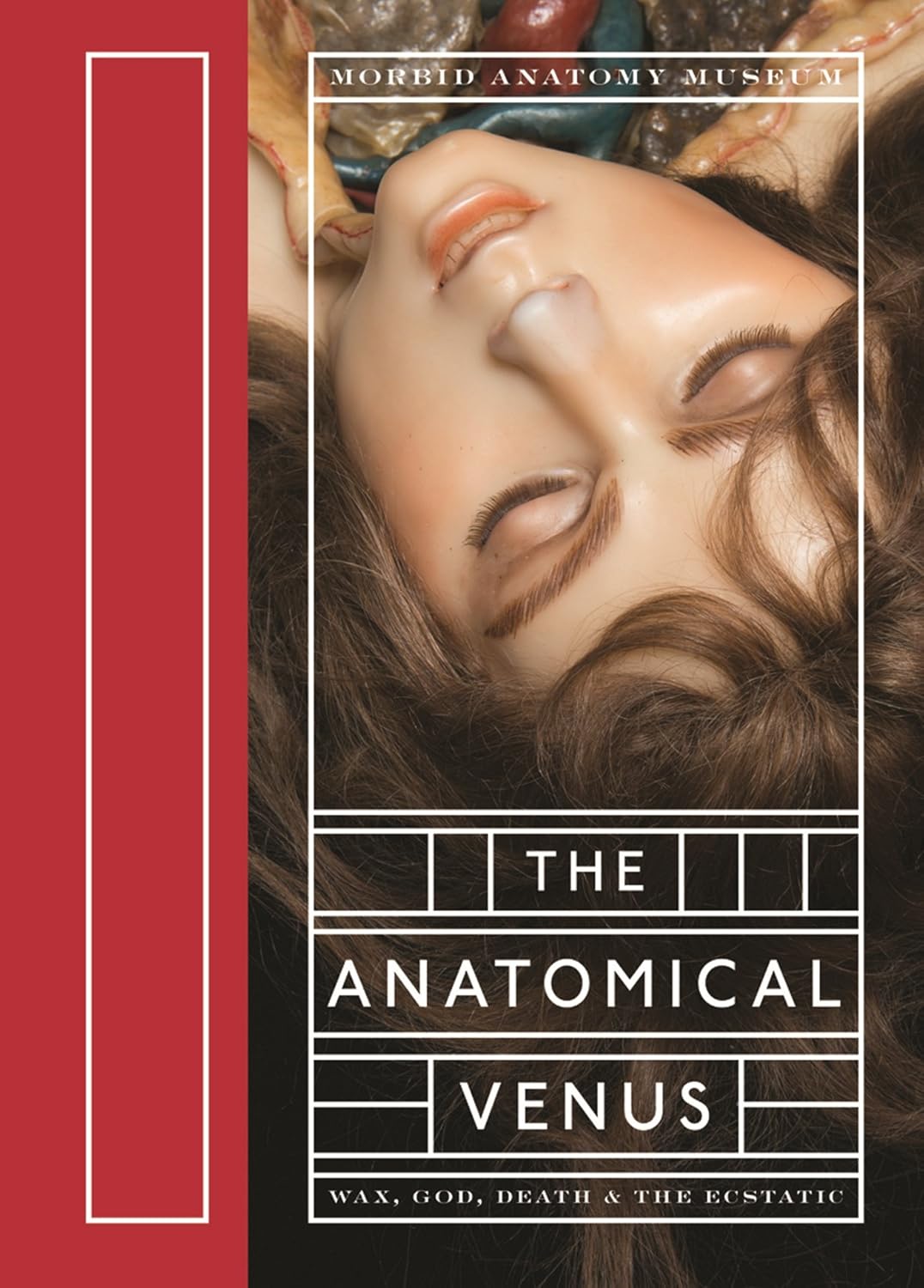
Back in the 1780s, Italian sculptor Clemente Susini invented the Anatomical Venuses, lifelike models of gorgeous women made of wax and adorned with real human hair. Named after the Olympian goddess of love and beauty and Cupid's mother, these Slashed Beauties or Dissected Graces lie naked on their backs, looking so realistic they might as well be sleeping; but when the front of their torsos are lifted up and placed nearby, their purpose is revealed: to show people what's inside their mortal bodies. With layers of removeable wax organs, the Anatomical Venuses had achieved their purpose: to provide the masses with accurate and odourless anatomical knowledge without having to resort to scheduled live dissections.
On the one hand, the Anatomical Venus is scientists' and artists' dream come true; on the other hand, she could be interpreted as a chauvinistic display: a human-sized cross between Barbie and matryoshka dolls for fools' twisted imagination.
When I was in school, one of the exams I had to pass was dissecting a (non-Endangered) frog in the laboratory. Thankfully, I performed the task with ease, plus the fact that I grew up reading anatomy books showing unedited photographs of human organs.
Then in 2024, I read how an American university chopped up and and sold marginalised human corpses without the deceased's nor their families' consent; to make things worse, those body snatchers didn't even bother to contact the next of kin, who didn't even know their loved ones had been for years until the news report published a damning list of names.
Yes, it's important for future doctors, nurses, and coroners to have anatomical knowledge, but many seem to ignore the limits: unlike centuries ago when human dissection was taboo, body parts can now be examined in the name of research. While many people and/or their families have been consenting to have their remains donated to science, body parts are still being abused, an insult for everyone.
Another problem with cadavers is that they rot, leaving instructors and students with limited time before the body parts decay. But back in the 18th century, one man came up with a solution.
Back in the 1780s, Italian sculptor Clemente Susini invented the Anatomical Venuses, lifelike models of gorgeous women made of wax and adorned with real human hair. Named after the Olympian goddess of love and beauty and Cupid's mother, these Slashed Beauties or Dissected Graces lie naked on their backs, looking so realistic they might as well be sleeping; but when the front of their torsos are lifted up and placed nearby, their purpose is revealed: to show people what's inside their mortal bodies. With layers of removeable wax organs, the Anatomical Venuses had achieved their purpose: to provide the masses with accurate and odourless anatomical knowledge without having to resort to scheduled live dissections.
On the one hand, the Anatomical Venus is scientists' and artists' dream come true; on the other hand, she could be interpreted as a chauvinistic display: a human-sized cross between Barbie and matryoshka dolls for fools' twisted imagination.
Nowadays, Anatomical Venuses aren't as reliable as before; thanks to advances in science and technology, people can now study anatomy with the responsible uses of formaldehyde, high-quality videos and images, and updated information.
Despite the horrible history of human dissection, centuries of research and hundreds of photos are recounted and collected in The Anatomical Venus: Wax, God, Death & the Ecstatic, a book written in 2016 by Morbid Anatomy founder Joanna Ebenstein.
Though Anatomical Venuses are now mostly artifacts displayed in museums and subjects of films directed by David Cronenberg, Ebenstein's book shows readers the history of researching ourselves.
Though Anatomical Venuses are now mostly artifacts displayed in museums and subjects of films directed by David Cronenberg, Ebenstein's book shows readers the history of researching ourselves.
 |
| Joanna Ebenstein: "How can we understand today an object that is at once a seductive representation of ideal female beauty and an explicit demonstration of the inner workings of the body?" |
Three Dark Crowns by Kendare Blake👸🏻🔥👸🏻💐👸🏻🐍
Age Rating: 15+
"You may love your sibling, but you also understand that your sibling will stab you in the back." -- Jada Pinkett Smith, Queen Cleopatra
One day, American author Kendare Blake learned an interesting fact about bees: if there's more than one queen in the colony, the insect sisters battle each other to the death until only one queen bee remains and survives long enough to found her own colony and produce the next generation of drones, workers, and queens. This animal fact is what inspired Blake to write Three Dark Crowns, a series of young adult novels for fans of The Hunger Games and Succession.
Separated from the Mainland by a magical mist, the Island of Fennbirn is home to matriarchs and the households they are heads of. All the islanders, male and female, worship a Goddess said to have blessed them with five gifts, magical powers which they lose upon leaving the borders:
- Poisoners: Poisoners consume toxins without suffering any side effects. They can also use their skills to either poison or heal others.
- Elementals: Elementals control earth, air, fire, water, or weather, and are immune to extreme cold and heat.
- Naturalists: Naturalists make plants and crops grow and communicate with animals. Animals that form special bonds with naturalists are called familiars.
- War gifted: Warriors guide weapons with their minds, thus making them skilled in combat.
- Sight gifted: Oracles can see into the future.
- Legion cursed: The legion cursed are islanders who have two gifts. Legion cursed individuals must be executed because possessing more than one gift makes them mad and dangerous.
But it's not just the Goddess-given gifts that make the islanders unique from other human beings; the island is also home to generations of black-dressed triplet Queens. However, local tradition states that only one Queen can rule the island so to win the crown, one of the triplets must use her gift to kill her own sisters.
In every era, the Queen Crowned goes to the Black Cottage where she gives birth to triplet girls. As each baby is delivered by the Midwife, the Queen Crowned announces the newborn girl's name and gift. Like the other islanders, each Queen is born with any of the five gifts, but ever since the reign of the mad Oracle Queen Crowned Elsabet, all oracle Queens are killed at birth, as are Legion Cursed Queens. Only Queens Crowned can produce the generational triplets, which Temple doctrine states are daughters of the Goddess whom all Queens are linked to. On the rare occasions a Queen Crowned gives birth to quadruplets, the fourth-born girl, a Blue Queen, is immediately declared the new Queen Crowned and her sisters are killed to eliminate competition.
After giving birth, the Queen Crowned and her king-consort move to the Mainland.
For the first six years of their lives, the young Queens are raised by the Midwife at the Black Cottage until the Claiming Ceremony, when each triplet is separated from the others to be raised by a selected foster family with the same gift she has.
Until they turn sixteen and reunite, the triplet Queens are raised and trained by their foster families to strengthen their gifts. The year the Queens turn sixteen is locally referred to as the Ascension Year, kickstarting the sisters' fight to become the next Queen Crowned. The Year of Ascension traditionally begins with the Quickening Ceremony held on the third night of the Beltane Festival, during which the Queens show their powers and meet suitors from the Mainland.
Regardless of the duration, an Ascension Year ends when one Queen successfully kills her sisters. When only one triplet is left alive, she becomes the new Queen Crowned, while her dead sisters are thrown into the Breccia Domain and mourned for a period of time. The winner of this generational sibling rivalry has a crown tattooed on her head, a symbol of her royal ascension, and her slain sisters are never spoken of again. The Queen Crowned then marries a suitor of her own choosing and appoints members of the Black Council, her group of royal advisers.
The Queen Crowned rules the island until she gives birth to the next generation of triplet Queens, starting the cycle anew.
This is the way it has always been on the Island of Fennbirn until the day Poisoner Queen Crowned Camille gives birth to the latest set of triplets: the Queens Mirabella, Arsinoe, and Katharine.
Raised by the Temple priestesses, Mirabella is an elemental who can start fires and thunderstorms with the snap of her fingers; with the Milone family as her friends, Arsinoe is a naturalist who has yet to make a single flower bloom nor gain a familiar; and viewed as weak by her heartless guardians, the Arron family, Katharine is a poisoner who could barely consume the weakest toxin without vomiting.
With the majority of the islanders believing Mirabella to be the triplet destined to become the next Queen Crowned and their sixteenth year approaching fast, Arsinoe and Katharine go to great lengths to make their supporters proud, only for all three Queens to discover the truth about their Goddess, the island, and themselves.
To find out who among Mirabella, Arsinoe, and Katharine will become the next Queen Crowned, people must read and listen to Three Dark Crowns, its three sequels (One Dark Throne, Two Dark Reigns, and Five Dark Fates), and the prequel novellas making up Queens of Fennbirn, all written by Kendare Blake and narrated by Amy Landon.
Until they turn sixteen and reunite, the triplet Queens are raised and trained by their foster families to strengthen their gifts. The year the Queens turn sixteen is locally referred to as the Ascension Year, kickstarting the sisters' fight to become the next Queen Crowned. The Year of Ascension traditionally begins with the Quickening Ceremony held on the third night of the Beltane Festival, during which the Queens show their powers and meet suitors from the Mainland.
Regardless of the duration, an Ascension Year ends when one Queen successfully kills her sisters. When only one triplet is left alive, she becomes the new Queen Crowned, while her dead sisters are thrown into the Breccia Domain and mourned for a period of time. The winner of this generational sibling rivalry has a crown tattooed on her head, a symbol of her royal ascension, and her slain sisters are never spoken of again. The Queen Crowned then marries a suitor of her own choosing and appoints members of the Black Council, her group of royal advisers.
The Queen Crowned rules the island until she gives birth to the next generation of triplet Queens, starting the cycle anew.
This is the way it has always been on the Island of Fennbirn until the day Poisoner Queen Crowned Camille gives birth to the latest set of triplets: the Queens Mirabella, Arsinoe, and Katharine.
Raised by the Temple priestesses, Mirabella is an elemental who can start fires and thunderstorms with the snap of her fingers; with the Milone family as her friends, Arsinoe is a naturalist who has yet to make a single flower bloom nor gain a familiar; and viewed as weak by her heartless guardians, the Arron family, Katharine is a poisoner who could barely consume the weakest toxin without vomiting.
With the majority of the islanders believing Mirabella to be the triplet destined to become the next Queen Crowned and their sixteenth year approaching fast, Arsinoe and Katharine go to great lengths to make their supporters proud, only for all three Queens to discover the truth about their Goddess, the island, and themselves.
To find out who among Mirabella, Arsinoe, and Katharine will become the next Queen Crowned, people must read and listen to Three Dark Crowns, its three sequels (One Dark Throne, Two Dark Reigns, and Five Dark Fates), and the prequel novellas making up Queens of Fennbirn, all written by Kendare Blake and narrated by Amy Landon.
 |
| Three dark queens are born in a glen, sweet little triplets will never be friends Three dark sisters all fair to be seen, two to devour and one to be Queen |
Favourite Daughter; written by Morgan Dick, and narrated by Heather Kosik and Susanna Fournier👩🏽👩🏼
Age Rating: 13+
"Forgiveness is giving up all hope of a different past. They tell you successful therapy is when you have the big discovery that your parents did the best they could with what they were given." -- Viola Davis, Finding Me
"Forgiveness is giving up all hope of a different past. They tell you successful therapy is when you have the big discovery that your parents did the best they could with what they were given." -- Viola Davis, Finding Me
Families are the most-messed up things on Earth; honestly, it has been shown time and again that family members are more likely to purposely hurt you than complete strangers. People who care usually recommend therapy for those seeking to distance and/or sever ties with toxic relations.
Therapy does help, but what if the patient and the therapist are half-siblings who've never met before? Awkward, right?
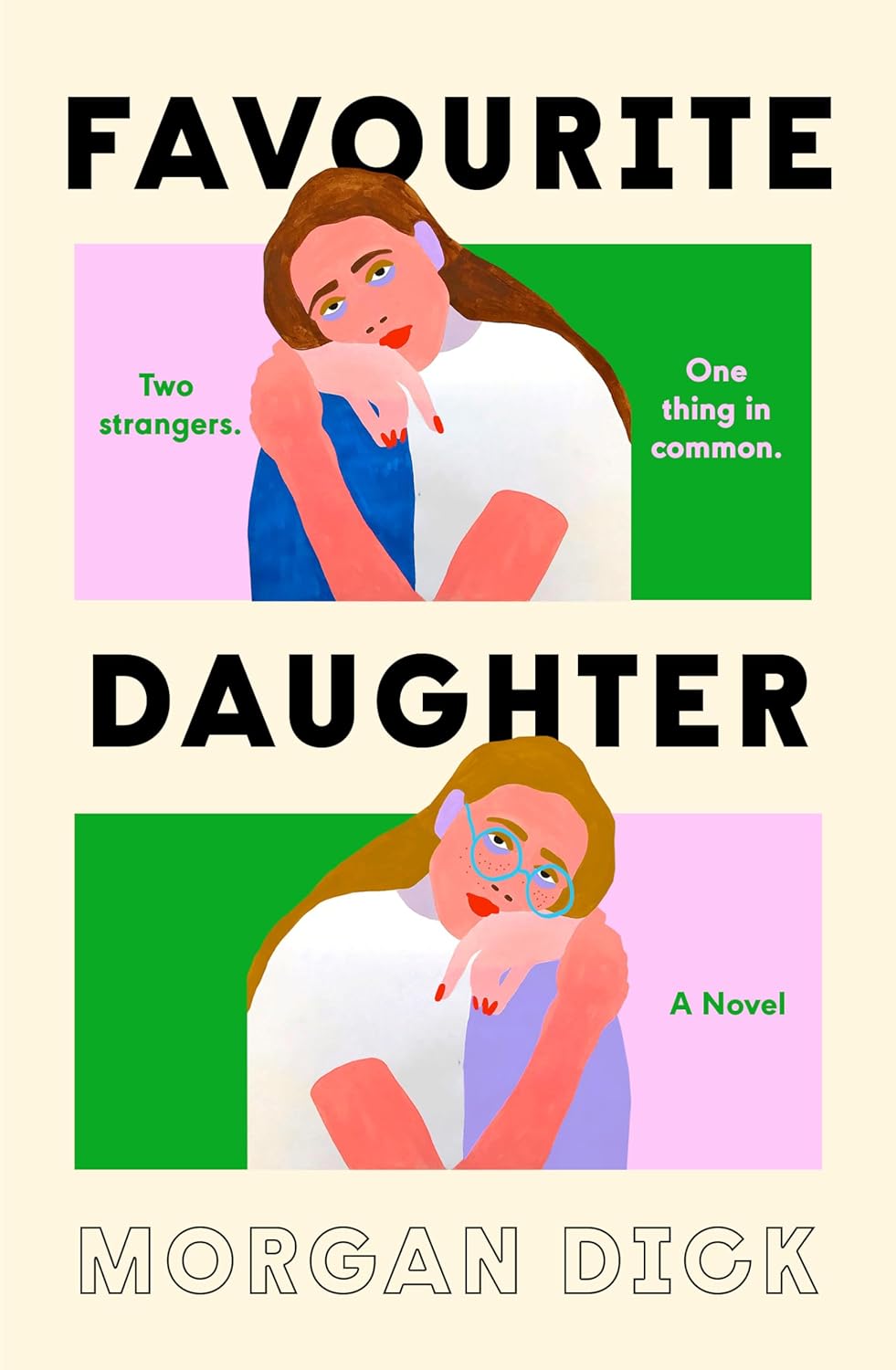
In 2025, Canadian author Morgan Dick wrote Favourite Daughter, a novel that's perfect for fans of comedy and drama.
Michelle "Mickey" Morris is an alcoholic teacher who hates her father for abandoning her and her mother.
Charlotte "Arlo" Kowalski is a psychotherapist who loved her father, Adam Kowalski, despite his big ego and faults.
When Mickey's father dies, she's shocked to learn that she's to inherit his money on the condition that she attend therapy sessions from a particular psychotherapist: Arlo. Wanting to escape a mistake she made in the past, Arlo's upset that her late father has cut her out of his last will and testament and is determined to discover why.
What Arlo doesn't know is that she and Mickey are paternal half-sisters, whose shared father had decided they be friends (and to apologise to Mickey and her own mother for leaving them). Kowalski's plan, however, doesn't go as planned for his daughters annoy each other. Arlo wants nothing more than to redeem herself by treating Mickey, who is the last patient any therapist wants. When the truth is revealed, the two sisters' lives spiral out of their control unless they master the only tools they have to move on: each other.
By writing Favourite Daughter, Morgan Dick has given readers a book about and for dysfunctional families.
What Arlo doesn't know is that she and Mickey are paternal half-sisters, whose shared father had decided they be friends (and to apologise to Mickey and her own mother for leaving them). Kowalski's plan, however, doesn't go as planned for his daughters annoy each other. Arlo wants nothing more than to redeem herself by treating Mickey, who is the last patient any therapist wants. When the truth is revealed, the two sisters' lives spiral out of their control unless they master the only tools they have to move on: each other.
By writing Favourite Daughter, Morgan Dick has given readers a book about and for dysfunctional families.
 |
| Adam Kowalski: "Acknowledging the harm I caused her as a young father and understanding the need for professional services to redress it, I ask that these funds be held in trust until Michelle has completed seven fifty-minute psychotherapy sessions. Should Michelle not complete these sessions within three months, my wish is that the money instead be donated to the Sunrise Hospice Foundation." |
One Crazy Summer: The Graphic Novel; written by Rita Williams-Garcia and illustrated by Sharee Miller👧🏿👧🏿👧🏿👩🏿🦱
Age Rating: 8+
Age Rating: 8+
"People are trapped in history and history is trapped in them." -- James Baldwin
Back in 2010, African-American author Rita Williams-Garcia wrote One Crazy Summer, a children's historical fiction novel about three African-American sisters visiting their estranged mother in 1960s California and becoming part of a revolution.
Then in 2025, artist Sharee Miller adapted One Crazy Summer into an authorised graphic novel.
Living in Brooklyn, New York are three African-American sisters named Delphine, Vonetta, and Fern Gaither, and their Pa Louis and Big Ma. Seven years prior, the girls' Ma, Cecile Johnson, left the family to live in California, and Delphine has been acting like a mother to her little sisters ever since.
In the summer of 1968, Cecile suddenly invites her three daughters to spend four weeks with her in Oakland, a request the girls' father and strict grandmother reluctantly allow.
Upon landing in California as the only Black children on the flight, the Gaither sisters expect to go to Disneyland and meet Tinker Bell, but Cecile, or "Nzila" as she now calls herself, instead has them take summer classes at The People Center with the other diverse children in the neighbourhood. Every Monday to Friday, the children are offered free breakfasts and taught about the importance of being themselves, standing and fighting for each other's human rights. But the teachers are no ordinary people, as the Gaither girls find out: they're members of the Black Panther Party, a group known for protecting impoverished African-Americans from corrupt politicians, providing them with their needs, and fighting against racism, and their estranged mother is one of them.
Living in Brooklyn, New York are three African-American sisters named Delphine, Vonetta, and Fern Gaither, and their Pa Louis and Big Ma. Seven years prior, the girls' Ma, Cecile Johnson, left the family to live in California, and Delphine has been acting like a mother to her little sisters ever since.
In the summer of 1968, Cecile suddenly invites her three daughters to spend four weeks with her in Oakland, a request the girls' father and strict grandmother reluctantly allow.
Upon landing in California as the only Black children on the flight, the Gaither sisters expect to go to Disneyland and meet Tinker Bell, but Cecile, or "Nzila" as she now calls herself, instead has them take summer classes at The People Center with the other diverse children in the neighbourhood. Every Monday to Friday, the children are offered free breakfasts and taught about the importance of being themselves, standing and fighting for each other's human rights. But the teachers are no ordinary people, as the Gaither girls find out: they're members of the Black Panther Party, a group known for protecting impoverished African-Americans from corrupt politicians, providing them with their needs, and fighting against racism, and their estranged mother is one of them.
With Nzila more focused on writing her poems rather than looking after her daughters as all mothers should, Delphine once again takes on the maternal role for Vonetta's and Fern's sakes. As the weeks pass by, Nzila's daughters make new friends, explore California, and find their own voices. Then one night, the girls witness their mother being arrested by White police.
As the Gaither sisters learn more about their mother, the Black Panther Party, and what it really means to be African-American, one thing is certain: this is one crazy summer they'll never forget.
Now in graphic novel form, One Crazy Summer once again shows readers a timely story about loving our neighbours and the freedom that comes out of a united fight against oppression.
As the Gaither sisters learn more about their mother, the Black Panther Party, and what it really means to be African-American, one thing is certain: this is one crazy summer they'll never forget.
Now in graphic novel form, One Crazy Summer once again shows readers a timely story about loving our neighbours and the freedom that comes out of a united fight against oppression.
 |
| I birthed a Black nation. From my womb Black creation Spilled forth To be Stolen Shackled Dispersed. I dispatched Black warriors Raged against unjust barriers To find The Black and strong had fallen Divided Deceived Overcome. Black oceans separate us Tortured cries Songs of Black greatness Still echo in my canal. Hear the reverberation Of a stolen Black nation Forever lost To foreign shores Where thieves do not atone And Mother Africa cannot be consoled. -- Nzila |
Dog Only Knows: The Dog Portraits of Alison Friend🐶🐕🐕🦺🐩
Age Rating: 13+
"Dogs are better than humans because they know but do not tell." -- Emily Dickinson
Prior to the COVID-19 pandemic, British artist Alison Friend illustrated children's picture books and created the characters, tasks she enjoyed very much. But when the world was put into lockdown and the number of authors commissioning her dwindled, Friend turned to making and selling her work as part of Artist Support Pledge. The moment Friend began painting funny animal portraits, demand skyrocketed and she became viral on Instagram.
For the first time in years, many of the viral artist's paintings are collected in a book titled Dog Only Knows: The Dog Portraits of Alison Friend.
Age Rating: 13+
"Dogs are better than humans because they know but do not tell." -- Emily Dickinson
Prior to the COVID-19 pandemic, British artist Alison Friend illustrated children's picture books and created the characters, tasks she enjoyed very much. But when the world was put into lockdown and the number of authors commissioning her dwindled, Friend turned to making and selling her work as part of Artist Support Pledge. The moment Friend began painting funny animal portraits, demand skyrocketed and she became viral on Instagram.
For the first time in years, many of the viral artist's paintings are collected in a book titled Dog Only Knows: The Dog Portraits of Alison Friend.
Containing hundreds of her viral dog paintings, Alison Friend's first published book will have you smiling and laughing at the lives and habits of her originally whimsical characters: there's Maggie, who's bad at sharing popcorn; the Good Girl, who's really sweet until the time comes for her to leave the park; Otto, whose days pass by when reading his favourite romance novels; Little Jane, an influencer who gets everything for free and takes a private jet to Paris Fashion Week; Pizza Lover, who is very specific about his pizza toppings; the fabulous Fabio; Little Louis, whose life's theme song is Non, je ne regrette rien; Ernest, whose daily walks with his human must start at 15:00 sharp; and even Patsy, who refuses to do any tricks until she has had her first cup of coffee for the day; and more dogs to meet and make friends with when you buy and read the book.
Whether buying a copy for yourself and/for others, Dog Only Knows: The Dog Portraits of Alison Friend is a must read for art and animal lovers, as well as fans of Snoopy and Bluey Heeler.
Try Everything by Shakira🐰🦊
All I Can Say by Kali Uchis💮
Age Rating: All Ages
Wicked: For Good by Jon M. Chu; Based on the Musical by Stephen Schwartz, the Novel by Gregory Maguire, and the Characters by L. Frank Baum🧹🌪️🫧
 |
| Alison Friend: "For all the dogs I have loved." |
Try Everything by Shakira🐰🦊
Age Rating: All Ages
"I've heard of nothing coming from nothing, but I've never heard of absolutely nothing coming from hard work." -- Uzo Aduba
Back in 2016, Disney's Zootopia premiered with the accompanying theme song Try Everything. Performed by Colombian singer Shakira as her Zootopia character Gazelle, the song is about persevering through all of life's trials while accepting that it's okay to make mistakes as you learn.
Oh-oh-oh-oh-oh
Oh-oh-oh-oh-oh
Oh-oh-oh-oh-oh
Oh-oh-oh-oh-oh
I messed up tonight
I lost another fight
I still mess up, but I'll just start again
I keep falling down
I keep on hitting the ground
But I always get up now to see what's next
Birds don't just fly
They fall down and get up
Nobody learns without getting it wrong
I won't give up, no, I won't give in
'Til I reach the end
And then I'll start again
No, I won't leave
I wanna try everything
I wanna try even though I could fail
I won't give up, no, I won't give in
'Til I reach the end
And then I'll start again
No, I won't leave
I wanna try everything
I wanna to try even though I could fail
Oh-oh-oh-oh-oh (Try everything)
Oh-oh-oh-oh-oh (Try everything)
Oh-oh-oh-oh-oh (Try everything)
Oh-oh-oh-oh-oh
Look how far you've come
You've filled your heart with love
Baby, you've done enough, take a deep breath
Don't beat yourself up
No need to run so fast
Sometimes we come last, but we did our best
I won't give up, no, I won't give in
'Til I reach the end
And then I'll start again
No, I won't leave
I wanna try everything
I wanna try even though I could fail
I won't give up, no, I won't give in
'Til I reach the end
And then I'll start again
No, I won't leave
I wanna try everything
I wanna to try even though I could fail
I'll keep on making those new mistakes
I'll keep on making them every day
Those new mistakes
Oh-oh-oh-oh-oh (Try everything)
Oh-oh-oh-oh-oh (Try everything)
Oh-oh-oh-oh-oh (Try everything)
Oh-oh-oh-oh-oh
Try everything
All I Can Say by Kali Uchis💮
Age Rating: All Ages
"Love is all we have, the only way that each can help the other." -- Euripides
In 2024 and in 2025, American singer Kali Uchis gained and lost precious things: in the former year, she became a mother to a baby boy but sadly lost her dear mother in the latter year.
Despite the events of her life, Uchis released her third studio album Sincerely as she became a mother just as she had lost hers.
Among the tracks is All I Can Say, a doo-wop song with a 1950s feel and about loving others in the way you know how: from the heart.
All I can say
Is that you belong with me
And a dreamer should dream
How else would dreams turn reality?
And my peace of mind…
No, it will not be destroyed
By lost souls on the decline
Who only strive to divide
No I'm not sorry
For the way that I am
I'm not sorry
For the way that I love
Or the heart that I have
No I'm not sorry
For the dreams that I dream
Or the life that I live
Coz it all belongs to me
And that's all that I can say
No I'm not sorry
For the way that I am
I'm not sorry
For the way that I love
Or the heart that I have
No I'm not sorry
For the dreams that I dream
Or the life that I live
And that’s all that I can say
Age Rating: 14+
"Men at some time are masters of their fates:
The fault, dear Brutus, is not in our stars,
But in ourselves, that we are underlings."
-- Cassius, in Julius Caesar by William Shakespeare
Best known for creating and starring in The Guild, and founding Geek & Sundry, Felicia Day is an American actress, singer, gamer, and writer.
Like many people, Day is familiar with Greek mythology, especially with the events of the Trojan War, a series of epic battles that began when Queen Helen of Sparta, a daughter of Zeus, left her husband King Menelaus for Prince Paris of Troy. But Day had discovered that Helen had another sister in addition to Timandra and Clytemnestra- a Spartan princess named Philonoe. However, the only trace of Philonoe is in a single sentence explaining that she was made immortal by the virgin goddess Artemis, namesake of Princess Diana Themyscira (AKA Wonder Woman) and Diana, the late Princess of Wales.
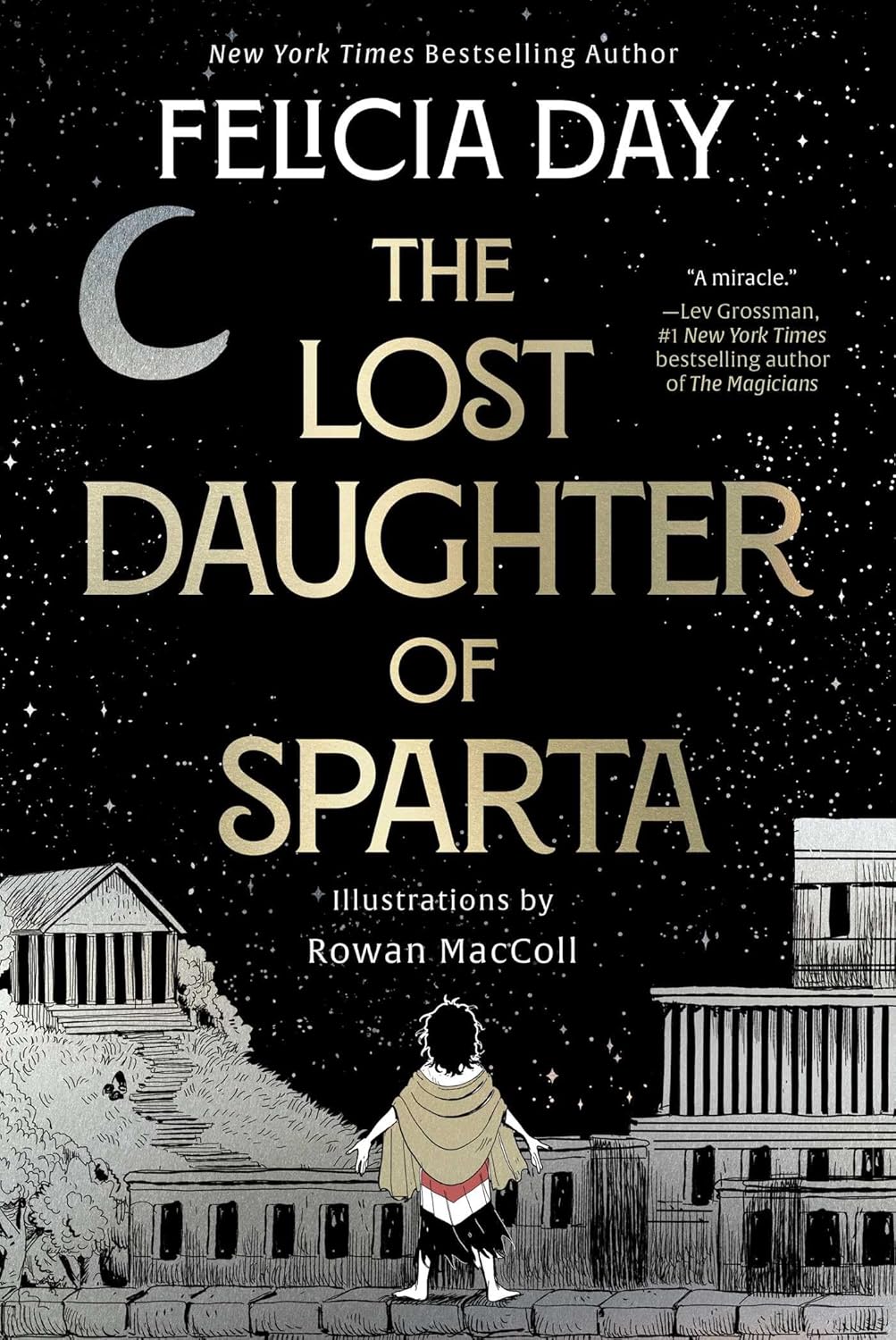
Inspired by this single sentence from the classics, Felicia Day teamed up with artist Rowan MacColl to write and narrate a new Greek myth-inspired graphic novel titled The Lost Daughter of Sparta.
Philonoe is a Spartan princess, but grew up raised by goatherds and all because her parents, King Tyndareus and Queen Leda, perceived the wine stain-like birthmark on her face as a sign she is twice-cursed by the gods. In her 18th year, Philonoe is taken back to her parents; but instead of a happy reunion, the Spartan monarchs order their youngest daughter to conceal her birthmark with a face veil, marry the cruel Prince Vasilios of Glas to secure an alliance between the two kingdoms, and to not repeat her infamous big sisters' mistakes.
In her bedroom, Philonoe learns of her family history: when her father consecrated new ground years ago, he excluded Aphrodite while sacrificing to the Olympians. Enraged, the goddess of love and beauty cursed all daughters born to the House of Tyndareus to be adulterous wives: Queen Timandra of Arcadia deserted her husband Echemus for King Phyleus of Delichium; many know the Trojan War started because Queen Helen of Sparta and Prince Paris of Troy ran off together; and Queen Clytemnestra of Mycenae had both abandoned and murdered her own husband Agamemnon to be with her own lover. When Philonoe swears to be faithful to her own husband-to-be, her mother warns her that prophecies decreed by the gods are bound happen- it's only a matter of when.
Wishing to avoid her family curse and betraying Vasilios, Philonoe prays to Artemis, the Olympian goddess of the moon and the hunt, who then takes the princess to Aphrodite. The love goddess then commands the Spartan princess to perform three impossible tasks: should she succeed, she could rewrite destiny. With only days before her royal wedding, Philonoe sets out to change her own fate, but finds herself frequently crossing paths with Artemis, who will play a special role in the princess's quest.
A story about love and a woman choosing to save herself, The Lost Daughter of Sparta is a must read for fans of Greek mythology and other retellings that include Madeline Miller's Circe, Jennifer Saint's Ariadne, Blandine Le Callet's Medea, and Lauren J. A. Bear's Medusa's Sisters.
 |
| Philonoe: "After the goddess gave me her impossible tasks, one of sea, one of cave, and one of peak... I slipped out of Sparta as Helios's chariot crested above the mountains. What else could I do? I had a life to save. Mine." |
Wicked: For Good by Jon M. Chu; Based on the Musical by Stephen Schwartz, the Novel by Gregory Maguire, and the Characters by L. Frank Baum🧹🌪️🫧
Age Rating: 7+
"Virtue is persecuted by the wicked more than it is loved by the good." -- Miguel de Cervantes, Don Quixote
"Virtue is persecuted by the wicked more than it is loved by the good." -- Miguel de Cervantes, Don Quixote
First came The Oz Books by L. Frank Baum; second the famous film released in 1939 by MGM; third was the launch of Gregory Maguire's The Wicked Years novel series; fourth came Wicked, the hit Broadway musical composed by Stephen Schwartz; then to round it all up, Jon M. Chu directed the long-awaited film adaptation of Wicked into two parts starring Cynthia Erivo (Widows, Harriet) as Elphaba, Ariana Grande-Butera (Victorious, Sam & Cat) as Glinda, Jonathan Bailey (Bridgerton) as Fiyero, Michelle Yeoh (Crouching Tiger, Hidden Dragon, Everything, Everywhere All at Once) as Madame Morrible, Peter Dinklage (Game of Thrones) as Dr. Dillamond, and Jeff Goldblum (Jurassic Park) as the Wizard of Oz.
Several years after the green-skinned Elphaba Thropp had proven herself worthy of the Grimmerie, she has become the Land of Oz's number one foe: the Wicked Witch of the West.
One of the few people aware that the Wizard ruling the land is a fraud responsible for the losses of Animals' rights, Elphaba is determined to expose him and restore order despite everyone else being turned against her.
Meanwhile, Elphaba's only friend, the blonde Glinda Upland, has been entitled "Glinda the Good Witch" as Madame Morrible and the Wizard work behind the scenes to bring Elphaba down.
When a cyclone sends a certain girl from Kansas crashing down into Oz, two witches deal with the consequences of their actions, events that began the day they set foot in Shiz University, and redefine what it means to be wicked and good.
Concluding the award-winning blockbuster franchise, Wicked: For Good isn't the end of one story, but a beginning of new ones down the road...
 |
| Who can say if I've been changed For the better? I do believe I have been changed For the better And because I knew you Because I knew you Because I knew you I have been changed For Good |
References:
- Blake, K. (2016). Three Dark Crowns. HarperCollins.
- Blake, K. (2017). One Dark Throne. HarperCollins.
- Blake, K. (2017). Young Queens, The. HarperCollins.
- Blake, K. (2018). Oracle Queen, The. HarperCollins.
- Blake, K. (2018). Two Dark Reigns. HarperCollins.
- Blake, K. (2019). Five Dark Fates. HarperCollins.
- Chu, J. M. [Director]. (2025). Wicked: For Good [Film]. Universal Pictures.
- Day, F. (2026). Lost Daughter of Sparta, The. Simon & Schuster.
- Dick, M. (2025). Favourite Daughter. Penguin.
- Ebenstein, J. (2016). Anatomical Venus: Wax, God, Death & the Ecstatic, The. Distributed Art Publishers.
- Friend, A. (2025). Dog Only Knows: The Dog Portraits of Alison Friend. Hachette UK.
- Harrington, J. (2025). Women of the Fairy Tale Resistance: The Forgotten Founding Mothers of the Fairy Tale and the Stories That They Spun. Hachette UK.
- Kove, T. [Director]. (2006). Danish Poet, The [Film]. National Film Board of Canada; Mikrofilm.
- Laufey. (2024, March 7). Laufey - Goddess (Official Audio With Lyrics) [Video]. YouTube. https://www.youtube.com/watch?v=UVevH51EYo0
- Mikrofilm AS. (2013, February 19). Danish Poet, The [Video]. Vimeo. https://vimeo.com/59917070
- NFB. (2025, October 15). Blind Vaysha | Full Animated Film | National Film Board of Canada [Video]. YouTube. https://www.youtube.com/watch?v=fk9-CpxAQ2c
- Rodgers, M. (2025). Freaky Friday. HarperCollins.
- Shakira. (2016, March 4). Shakira - Try Everything (Official Video) [Video]. YouTube. https://www.youtube.com/watch?v=c6rP-YP4c5I
- Tal, Yonatan. (2016, July 27). Nightmare In The Morning [Video]. YouTube. https://www.youtube.com/watch?v=j73LIHywUoU
- Uchis, K. (2025, May 9). Kali Uchis - All I Can Say [Video]. YouTube. https://www.youtube.com/watch?v=obBXhTwFsKQ
- Ushev, T. [Director]. (2016). Blind Vaysha [Film]. National Film Board of Canada.
- Waxman, O. B. (2018, September 5). How Did Marilyn Monroe Get Her Name? This Photo Reveals the Story. Time. https://time.com/5368339/marilyn-monroe-real-name-story/
- Williams-Garcia, R. (2025). One Crazy Summer: The Graphic Novel. Quill Tree Books.


No comments:
Post a Comment