Wednesday, November 06, 2019

Ten Little Soldier Boys: An Analysis of Agatha Christie's And Then There Were None๐Ÿช–๐Ÿช–๐Ÿช–๐Ÿช–๐Ÿช–๐Ÿช–๐Ÿช–๐Ÿช–๐Ÿช–๐Ÿช–

Blogger's note: This post is dedicated in memory of Dame Agatha Christie (1890-1976). 

My dear readers,
    If you're interested, I recommend the following biographical graphic novel to learn more about the Queen of Mystery.


-A. Eleazar


About the Author

    Dame Agatha Christie was born Agatha Mary Clarissa Miller on September 15, 1890 in Torquay, Devon. At a young age, she had shown an interest in reading and a talent in writing. After her father died, Agatha and her mother became close and often travelled around the world.
    In 1912, Agatha met Colonel Archibald "Archie" Christie, a Royal Flying Corps aviator. During World War I, Archie was in France and Agatha volunteered as a nurse. They got married on Christmas Eve 1914. Their daughter, Rosalind, was born on August 5, 1919.
    In 1920, Agatha began writing mystery novels and short stories. She was inspired by the poisons she studied as a nurse, the exotic places she visited, and the people she met along the way. Many of Agatha's books feature plot twists and popular fictional sleuths such as Hercule Poirot, Miss Jane Marple, and Tuppence and Tommy Beresford. Agatha's published works became best-sellers, loved by fans and adapted for radio, theatre, and screen, sealing her fate as the Queen of Mystery.
    However, amidst her success, Agatha experienced tragedies. Shortly after her mother died, Archie confessed to having an affair and asked for a divorce. Agatha was so overwhelmed that she disappeared on December 3, 1926, prompting a nationwide search party. Although she was found at a hotel 11 days later, Agatha never revealed to her family and friends what happened during that time. Nevertheless, she continued writing, doing her favourite hobbies, and followed a course of psychiatric treatment. She and Archie divorced in 1928.
    In late 1928, Agatha met archaeologist-in-training Max Mallowan. They were married on September 11, 1930.
    When World War II broke out, Max got a wartime job in Cairo. Agatha remained in England, resuming her career and spending time with her family. Rosalind married Hubert Prichard and on September 21, 1943, gave birth to a son named Mathew.
    By 1945 and Max's return with the end of the war, Agatha became less prolific and in her mid-50s enjoyed a slower pace of life.
    In 1971, Agatha was made a dame for her contribution to literature.
    After a successful career and a happy life, Dame Agatha Christie died peacefully on January 12, 1976. She is buried in the churchyard of St Mary's, Cholsey, near Wallingford.

Summary of the Text

Ten Little Soldier Boys went out to dine; ๐Ÿช–๐Ÿช–๐Ÿช–๐Ÿช–๐Ÿช–๐Ÿช–๐Ÿช–๐Ÿช–๐Ÿช–๐Ÿช–
One choked his little self and then there were Nine. ๐Ÿบ

    On August 8, eight people travel to Sticklehaven, Devon by train and by car. All of them have been invited by Ulick Norman and Una Nancy Owen, or Mr and Mrs U.N. Owen, to come to Soldier Island. Justice Lawrence Wargrave, a retired judge, is going to meet an old friend. Vera Claythorne, a teacher, has been hired to be Mrs Owen's secretary. Captain Philip Lombard, a soldier of fortune, has been hired for his skills by Mr Owen's attorney Isaac Morris. Emily Brent, a conservative spinster, has been invited by a woman she thinks she remembers from a previous holiday. General John Macarthur will be meeting up with some old military friends. Dr Edward Armstrong has been summoned to care for Mrs Owen. William Blore, a former detective, has been sent by Mr Owen to protect Mrs Owen's jewels. Anthony Marston recklessly drives his sports car towards the Devon coast, believing that there will be a fabulous party with rich and famous people.
    The guests then board the boat that will take them to Soldier Island. The captain, Fred Narracott, thinks that they are a strange group and not the young rich crowd he had been expecting. The guests arrive at the island where Thomas and Ethel Rogers, the Owens' manservant and housekeeper, welcome them to their hosts' house and escort them to their rooms. They each discover in their room a framed copy of the Ten Little Soldier Boys rhyme. In addition to the rhyme, Vera finds a bear-shaped clock in her own room. The guests all realise that none of them have actually met their hosts and that the Rogers had only been hired recently. 
    At dinner, the guests acquaint themselves with one another, even though the Owens are detained in London. In the middle of the dining-room table are figurines depicting the Ten Little Soldier Boys. Later, in the drawing-room, a loud voice accuses the guests and the servants of committing murders and names their supposed victims.
    When the voice ends, Mrs Rogers faints upon hearing it say her name. Armstrong has Mr Rogers give a glass of brandy to his wife. In an adjoining room, the guests find a gramophone with a record titled "Swan Song" on it. When they play the record, they again hear the voice.  Mr Rogers had played the record, but he swears he had only done it on Mr Owen’s orders. Meanwhile, Mrs Rogers is taken to her room where Armstrong gives her a mild dose of trional. Each guest then explains how they were invited to the island. Wargrave notes that their hosts' initials "U.N. Owen" are a pun, a play on the word "unknown." The judge suggests that a madman may have invited them to the island.
    The guests then deny the accusations against them, but Marston and Lombard do not.
    Rogers tells the others that the boat will return in the morning with supplies for the island. As he says this, Marston (accused by Owen of running over two children named John and Lucy Combes) takes a sip of his drink and chokes to death. The other guests suspect that it must be suicide, although it is as impossible for anyone to tamper his drink unnoticed. As the guests go to bed, Rogers enters the dining-room and is puzzled to find that one of the Ten Little Soldier statuettes is missing.

Nine Little Soldier Boys sat up very late; ‍๐Ÿช–๐Ÿช–๐Ÿช–๐Ÿช–๐Ÿช–๐Ÿช–๐Ÿช–๐Ÿช–๐Ÿช–
One overslept himself and then there were Eight. ๐Ÿ›Œ๐Ÿป

    The guests are unable to sleep well due to the accusations. In the morning, Armstrong is awakened by Rogers who tells him that his wife will not wake up. Armstrong checks on Mrs Rogers to find that she (accused by Owen of being complicit in her husband's crime) has died in her sleep.

Eight Little Soldier Boys travelling in Devon; ‍๐Ÿช–๐Ÿช–๐Ÿช–๐Ÿช–๐Ÿช–๐Ÿช–๐Ÿช–๐Ÿช–
One said he'd stay there and then there were Seven.⛴️

    After breakfast, Armstrong informs the others of Mrs Rogers' passing. Macarthur feels that they will never leave the island. He goes to the beach where he talks in a trance-like state to his late wife, Leslie. Rogers, unaffected by his own wife's death, resumes his duties and discovers that another soldier China figure is missing.
    Miss Brent and Vera discuss the accusations of murder. Miss Brent is sure that the Rogers are guilty of the crime against them. Lombard suggests to Armstrong that Owen has invited them to account for crimes that they cannot be tried for. The two men enlist Blore for his help and they search the island and the house for Owen, but they do not find him.
    The guests begin to accuse each other of conspiring in the deaths. Lombard reveals he brought his revolver to defend himself. Blore insinuates that Armstrong gave Mrs Rogers an overdose. At lunch, the guests notice that a storm is coming to the island. Armstrong goes to call in Macarthur and finds that he (accused by Owen of having Leslie's lover, Arthur Richmond, killed in action) has died from a blow to the head. As they bring the general's body into the house, the storm breaks and the island is cut off from the mainland. When they return to their meal, they notice that only seven soldier figurines remain.
    Using reason and logic, Wargrave tells the others that Owen is responsible for the deaths and that they are among them. Except the dead, the judge proclaims, no one is exempted from suspicion. All the guests sit and discuss who they believe might be the killer. Each has a different theory, mostly based on each guest's characteristics.
    During teatime, Rogers finds that a bathroom curtain has gone missing, and Miss Brent loses a ball of wool. After dinner, all the guests lock their doors, afraid of what might happen during the night. Rogers locks the dining-room so that the murderer will not break off another soldier.

Seven Little Soldier Boys chopping up sticks; ‍๐Ÿช–๐Ÿช–๐Ÿช–๐Ÿช–๐Ÿช–๐Ÿช–๐Ÿช–
One chopped himself in halves and then there were Six. ๐Ÿช“

    In the morning, the guests wake up late because Rogers has not woken them up. In the unlocked dining-room, they find that another soldier figure has been broken off. They soon find Rogers (accused by Owen of depriving his previous employer, Jennifer Brady, of her medication to inherit her money) dead in the woodshed. He had been given a fatal cut to the head while chopping wood.

Six Little Soldier Boys playing with a hive; ๐Ÿช–๐Ÿช–๐Ÿช–๐Ÿช–๐Ÿช–๐Ÿช–
A bumble bee stung one and then there were Five. ๐Ÿ

    After breakfast, everyone, except Miss Brent, goes into the drawing-room to resume their investigation. Miss Brent becomes sleepy and feels a pin prick in her neck. Soon, the others return to the dining-room where they find Miss Brent (accused by Owen of driving her maid, Beatrice Taylor, to suicide for being pregnant out of wedlock) dead from a dose of cyanide administered by a hypodermic needle. There is also a bee in the room. Armstrong admits that he brought a needle with him as he always does. They find it along with a smashed soldier figure. Wargrave locks away all the guests' medicine so that no one has access to it. They learn that Lombard's revolver is missing and search the house for it, but they do not find it.

Five Little Soldier Boys going in for law; ‍๐Ÿช–๐Ÿช–๐Ÿช–๐Ÿช–๐Ÿช–
One got in Chancery and then there were Four. ‍๐Ÿ‘จ๐Ÿป‍⚖️

    The remaining guests become mad. Still, when the power goes out, they agree to always stay together in one room with one person leaving at a time. Vera claims the privilege to take a bath. When she enters her room, she smells the sea, and feels something grab her neck. She screams, and the men run up to her room. They found that it was some seaweed that had grabbed Vera. The men think that they have prevented the next murder. When they return to the drawing-room, however, they find Wargrave (accused by Owen of having an innocent man named Edward Seton executed) outfitted with the missing bathroom curtain and Miss Brent's wool on his head. Armstrong removes the wool and discovers a gunshot wound on the judge's forehead. When they all go to bed that evening, Lombard is surprised to find his revolver returned to the drawer in his bedside table. In her room, Vera notices for the first time a big black hook hanging from the ceiling.

Four Little Soldier Boys going out to sea; ๐Ÿช–๐Ÿช–๐Ÿช–๐Ÿช–
A red herring swallowed one and then there were Three. ๐ŸŒŠ

    Early the next morning, Blore awakens to hear footsteps down the hall. He immediately goes to the other rooms, knowing that the killer must be the person not in theirs. Vera and Lombard both answer their doors, but Armstrong does not. Lombard and Blore search the island but return to tell Vera that Armstrong has disappeared and that another soldier figurine has been smashed.

Three Little Soldier Boys walking in the Zoo; ๐Ÿช–๐Ÿช–๐Ÿช–
A big bear hugged one and then there were Two. ๐Ÿป

    The storm passes, and the group attempts to leave the island. They stand on a cliff, flashing S.O.S. signals when Blore returns to the house to have lunch. Vera and Lombard hear a crash and go to the house to find Blore (accused by Owen of having an innocent man named James Landor die in prison) dead on the ground. His head has been crushed by the bear clock from Vera's room, fulfilling another verse of the rhyme.

Two Little Soldier Boys sitting in the sun; ๐Ÿช–๐Ÿช–
One got frizzled up and then there was One. ☀️

    Vera and Lombard now both believe that the killer must be Armstrong, only to find his body when they return to the cliffs. The doctor (accused by Owen of killing his patient, Louisa Clees, by operating on her while drunk) had been drowned in the ocean. Vera believes Lombard is the killer and takes his gun. As Lombard (accused by Owen of abandoning twenty-one African tribesmen to die) leaps for the weapon, Vera shoots him in the heart, killing him.

One Little Soldier Boy left all alone; ๐Ÿช–
He went and hanged himself and then there were None.๐Ÿชฆ๐Ÿชฆ๐Ÿชฆ๐Ÿชฆ๐Ÿชฆ๐Ÿชฆ๐Ÿชฆ๐Ÿชฆ๐Ÿชฆ๐Ÿชฆ

    Still clasping the revolver, Vera returns to the house and knocks off two soldier figures. She carries the last one upstairs and drops the revolver. In her room, Vera finds a noose hanging from the hook and remembers her past and Owen's accusation against her.
    Before becoming a teacher, Vera worked as a governess for the wealthy Hamilton family's son, Cyril, and was in a relationship with his Uncle Hugo. She let her charge drown so that his uncle could inherit the family fortune and marry her. When Hugo found out about it, he left Vera for he loved his nephew dearly.
    Vera drops the figurine, steps onto a chair, and hangs herself.

Epilogue

    Sir Thomas Legge and Inspector Maine, two Scotland Yard detectives, discuss the case of the Soldier Island murders. They go over the facts, the order in which each victim was killed, and the cause of each victim's death. It seems Vera would be the murderer since Armstrong's body had been laid out on the beach, Lombard had been shot, and her fingerprints were on the revolver. However, the chair that Vera had stood on to hang herself had been moved after her death, meaning that someone else was on the island after all the murders had been committed. A distress signal was spotted on August 11, and a rescue party was sent the following day. In addition, the mainlanders were instructed to cut off all communication with the island for one week after the victims arrived. The locals are also sure that no one could have left the island because of the storm. Although the police deduce that U.N. Owen was both the killer and one of the victims, they are unable to identify which.
    Years later, a fishing captain sends to Scotland Yard a letter containing U.N. Owen's confession and true identity.
    The killer explains that he had always believed that the innocent must live and the guilty punished. He even mentions Edward Seton being truly guilty of his crime. When the culprit got diagnosed with a terminal illness, he decided to pattern a series of murders after the Ten Little Soldier Boys poem. He would kill criminals who had gotten away unpunished. So, he collected his victims based on information from those who knew them. He then recruited Morris, a drug-smuggling lawyer, to help him buy Soldier Island, invite the victims, and make the gramophone record. Morris was later poisoned for driving a drug-abusing daughter of the vigilante's friends to suicide.
    On August 8, the murderer travelled with his victims to Soldier Island.  He had killed them by order of their guilt, following the nursery rhyme as best as possible. He slipped potassium cyanide into Marston's glass during the commotion over the gramophone. When Rogers brought up the glass of brandy for his wife, the killer laced it with a lethal amount of chloral hydrate, a sleeping medicine. 
    On August 9, the killer gave Macarthur a quick and painless death.
    On August 10, the vigilante killed Rogers with an axe. While the victims were looking for the manservant, the killer hid Lombard's gun. He put his last dose of chloral into Miss Brent's coffee during breakfast, before injecting her with his last dose of cyanide. He reveals that he had recruited Armstrong to help him pretend to be dead, so he could "catch the unknown killer." This was done with the bathroom curtain, Miss Brent's wool, and some red mud on the forehead; Armstrong was the only person who examined him. The killer then secretly returned the revolver to Lombard's room.
    On August 11, the killer met with Armstrong and pushed him over a cliff. The vigilante returned to his room and played dead. He took delight in watching his remaining victims become mad. He pushed from a window the clock that killed Blore and watched Vera shoot Lombard. Hidden in a wardrobe, the killer watched Vera kill herself. To make the whole event a murder mystery, the culprit shot himself through the forehead with Lombard's revolver. He had written this message first, stuffed it in a bottle, and thrown it out to sea.
     The letter is signed by Lawrence Wargrave.

Themes

Community
    Even though they have all committed crimes, the ten guests band together out of necessity, and because they understand that they are not defined by their misdeeds (Shmoop Editorial Team, 2008).

Criminality
    The guests may have been accused of serious crimes, but they are not criminals technically; if anything, they see themselves as poor decision-makers.
    Even though he is a representative of the law, Wargrave punishes his victims because they cannot be touched by the criminal system. The book implies that while one can escape the justice system, they cannot escape their fate (Shmoop Editorial Team, 2008).

Good vs. Evil
    The main characters have done terrible things, but they seem like sympathetic people who fear what is happening to them.
    One thing is that Wargrave is the worst of them all; he thinks all his victims are guilty of murder. In the end, Wargrave dies last because he recognises himself as the evillest of all the characters (Shmoop Editorial Team, 2008).

Guilt
    Wargrave says that being guilty, though uncomfortable, is better than being good. Although he ends up killing eight people and driving Vera to shoot Lombard dead and hang herself, Wargrave is not remorseful, making him a psychopath (Shmoop Editorial Team, 2008).

Isolation๐Ÿ️
    Because of their isolation and inability to contact the outside world, the characters create a hierarchy and social order within their own ranks.
    Wargrave deliberately picks an isolated location so that his victims cannot escape from themselves; they must sit and contemplate the deaths that they caused (Shmoop Editorial Team, 2008).

Justice and Judgement⚖️
    Wargrave's vendetta is not the same thing as justice. He kills the others because he finds them guilty of heinous crimes. He then kills himself to be consistent with his need for absolute justice (Shmoop Editorial Team, 2008).

Lies and Deceit
    The majority of the characters do not admit to any wrongdoings because they are lying to themselves. Some, like Vera and Miss Brent, have even managed to convince themselves that they have not done anything wrong (Shmoop Editorial Team, 2008).

Memory and the Past
    The plot takes place in two different times: one on the island when the characters are trying to stay alive, and the other in their memories as they relive their crimes again and again.
    Vera dies by suicide to escape her past.
    Wargrave does not let the past stay in the past. For him, a crime stays fresh until the person who committed it gets their comeuppance (Shmoop Editorial Team, 2008).

Mortality☠️
    For Christie, death-like guilt-is part of the human condition and inevitable. No matter how clever or savvy a person is, they are still going to die.
    The ten main characters' deaths are presented as a game whereas their victims' are presented as tragedies (Shmoop Editorial Team, 2008).

Respect and Reputation
    For many of the characters, losing respect and their reputations would be even worse than losing their lives. Rogers cares so much about his reputation that he carries on as the perfect servant rather than mourning the loss of his wife (Shmoop Editorial Team, 2008).

Symbols

Seaweed
    The seaweed represents a past that Vera can never escape except through death-or, at least, that is what Wargrave wants her to think (Shmoop Editorial Team, 2008).

Soldier Figurines๐Ÿช–๐Ÿช–๐Ÿช–๐Ÿช–๐Ÿช–๐Ÿช–๐Ÿช–๐Ÿช–๐Ÿช–๐Ÿช–
    The contrast between the seriousness of the ten characters' deaths and the childishness of the soldier figurines informs the reader that the whole gambit is a game to Wargrave and gives them insight into just how much of a sociopath he is. While other people are concerned about their lives, Wargrave is just playing game master and, as such, he is also in charge of the clock.
    As the figurines go missing one by one, the characters get nervous as the killer is counting down. One could even say that the figurines represent the whole dawning sense of doom that Wargrave is going for: not just killing off the guests but putting them through some psychological torture while he is at it (Shmoop Editorial Team, 2008).

Wargrave's Wound
    The wound on Wargrave's forehead alludes to the Biblical story of Cain, the first murderer. In the Book of Genesis, Cain kills his brother, Abel, out of envy, and then God marks him so that everyone will know his sin. In a similar way, Wargrave marks himself as the Soldier Island Killer. Even though he knows that he has committed some crimes, he is still proud of himself. In a way, the mark that he gives himself signifies that he has done something grand (Shmoop Editorial Team, 2008).

The Writing of And Then There Were None

    And Then There Were None is the book that made Agatha Christie the best-selling writer of all time, outsold only by the Bible and William Shakespeare's plays. The book has sold over 100 million copies and is read around the world in more than 50 languages.
    Christie got inspiration from the 1869 nursery rhyme by Frank Green and during her holiday on an island on which she based the setting. She also states in her autobiography that And Then There Were None was the hardest novel for her to write, but she still found it fascinating. She rewrote the plot many times before she had it published. 
    The book was first published under the title Ten Little Niggers in 1939 in the United Kingdom. When it was republished in 1940 in the United States, it was retitled Ten Little Indians due to the term from the original British edition already being a racist slur. It worked for a while, but times change. Eventually, Christie's estate settled on And Then There Were None and the symbolic figurines in the text were changed into soldiers.
    Over eighty years since its publication, And Then There Were None has been adapted and parodied many times for the stage and screen.
    In 1943, Christie adapted her novel into a stage play.  Because it was first performed during WWII, the character General Macarthur was renamed MacKenzie to avoid confusion with the real life General Douglas MacArthur. Christie and the producers also thought that the original ending would have been too bleak for the audience during the time. So, they changed it to a happier one where Lombard and Vera are innocent of their crimes, defeat the killer, and fall in love. Many film versions that followed feature the same happy ending.
    In 2005, Christie's estate updated the play's script, giving crews the choice to end a production either happily or faithfully to the source material.
    In 2015, Agatha Christie's fans celebrated her 125th birthday by voting And Then There Were None the World's Favourite Christie.
    Then during the Christmas season, the BBC aired the first TV adaption of And Then There Were None.


    The critically-acclaimed three-part miniseries follows the book more closely than the previous films, and stars Charles Dance (Game of Thrones) as Justice Wargrave, Maeve Dermody (Breathing Under Water) as Vera Claythorne, Aidan Turner (The Hobbit) as Philip Lombard, Miranda Richardson (Merlin) as Emily Brent, Sam Neill (Jurassic Park) as General Macarthur, Toby Stephens (Twelfth Night) as Dr Armstrong, Douglas Booth (Worried About the Boy) as Anthony Marston, Burn Gorman (Coronation Street) as William Blore, Noah Taylor (Almost Famous) as Thomas Rogers, and Anna Maxwell Martin (South Riding) as Ethel Rogers.


    With its unique plot and twist ending, And Then There Were None is and will always be the mystery novel that made Dame Agatha Christie a best-selling author and a household name.

References
  1. 10 Things You Didn't Know About And Then There Were None. (n.d.). Agatha Christie. https://www.agathachristie.com/film-and-tv/and-then-there-were-none/10-things-you-didnt-know-about-and-then-there-were-none
  2. About Agatha Christie - The World's Best-Selling Novelist. (n.d.). Agatha Christie. https://www.agathachristie.com/about-christie
  3. Christie, A. (1939). And Then There Were None. Collins Crime Club.
  4. Christie, A. (2016, February 9). And Then There Were None - Lifetime Trailer [Video]. YouTube. https://www.youtube.com/watch?v=HfFqHONPUa0
  5. Daly, L. H. et al. (Executive Producers). (2015). And Then There Were None [TV series]. Agatha Christie Productions; BBC.
  6. Davis, L. & Wang, B. (Eds). (2010, November 8). And Then There Were None Summary. GradeSaver. https://www.gradesaver.com/and-then-there-were-none/study-guide/summary
  7. Shmoop Editorial Team. (2008, November 11). And Then There Were None Symbolism, Imagery, Allegory. Shmoop. https://www.shmoop.com/and-then-there-were-none/symbolism-imagery.html
  8. Shmoop Editorial Team. (2008, November 11). And Then There Were None Themes. Shmoop. https://www.shmoop.com/and-then-there-were-none/themes.html
  9. Shmoop Editorial Team. (2008, November 11). And Then There Were None What's Up With the Title?. Shmoop. https://www.shmoop.com/and-then-there-were-none/title.html

Friday, March 01, 2019

What is Up With That?: Recommendations for Women's History Month 2019

Rapunzel: "And now for the million dollar question: Do people assume all your problems got solved because a big strong man showed up?"
Vanellope: "Yes! What is up with that?"
Disney Princesses"She is a princess!"
-Ralph Breaks the Internet (2018)

My dear readers,
    March is Women's History Month. To celebrate the third month of the year, I would like to recommend to you the following media. Please note the age rating for each medium and beware of some spoilers.

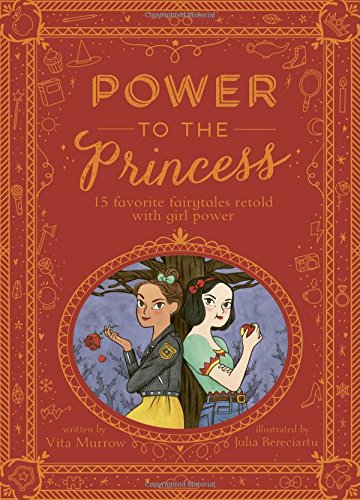
Power to the Princess: 15 Favorite Fairytales Retold with Girl Power by Vita Murrow๐Ÿ‘ธ๐Ÿป๐Ÿ‘ธ๐Ÿผ๐Ÿ‘ธ๐Ÿฝ๐Ÿ‘ธ๐Ÿพ๐Ÿ‘ธ๐Ÿฟ
Age Rating: 5+

    This children's book contains fifteen princess fairy tales retold by Vita Murrow and illustrated by Julia Bereciartu. Rather than be damsels in distress, Snow White, Cinderella, Sleeping Beauty, et al. are mature and diverse women who overcome social issues without any help from princes. This book is perfect for fans of Jim C. Hines’ Princess novels and the fantasy TV series Once Upon a Time
    To be followed this October by its brother anthology High-Five to the Hero: 15 Favorite Fairytales Retold for Real Boys.

What if princesses didn't always marry Prince Charming and live happily ever after?

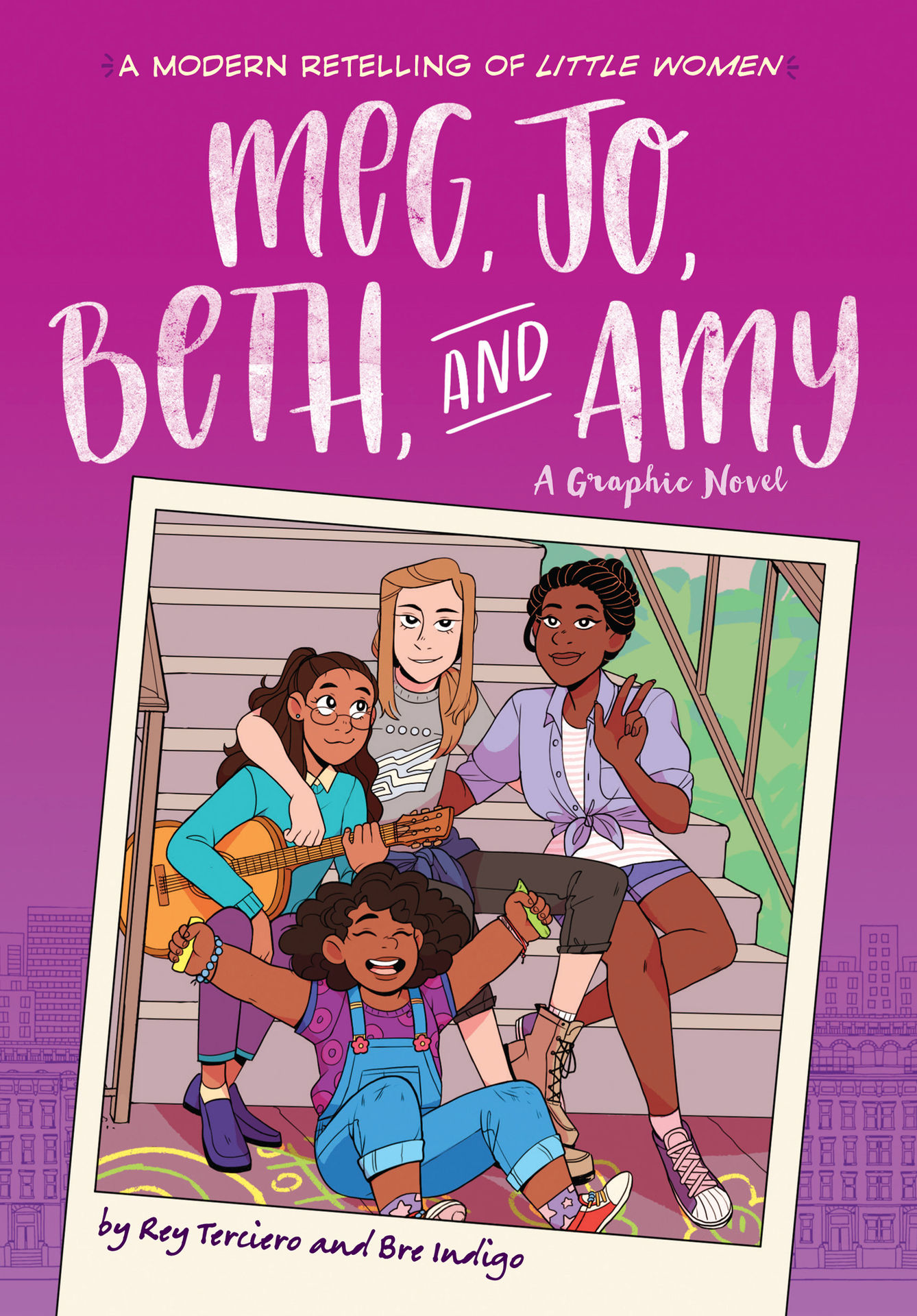
Meg, Jo, Beth, and Amy: A Modern Retelling of Little Women by Rey Terciero๐Ÿ‘ง๐Ÿฟ๐Ÿ‘ง๐Ÿผ๐Ÿ‘ง๐Ÿฝ๐Ÿ‘ง๐Ÿพ

Age Rating: 9+

    2018 marked the 150th anniversary of Louisa May Alcott's semi-autobiographical classic Little Women. To honour the event, Rey Terciero had written a modern retelling with illustrations by Bre Indigo.
    In this very special book, the Marches are reimagined as a biracial family living in present day New York City. As Meg, Jo, Beth, and Amy deal with the ups and downs of growing up, the four sisters will each go on a journey to her dream and her identity.
    This graphic novel is the This Is Us for modern comics readers.

Clockwise from top left: Jo, Meg, Amy, and Beth
Jo March: "And while the world isn't where it should be, it's on its way... "

Lynda La Plante's Widows
๐Ÿฆน๐Ÿผ‍♀️๐Ÿฆน๐Ÿผ‍♀️๐Ÿฆน๐Ÿป‍♀️๐Ÿฆน๐Ÿฟ‍♀️
Age Rating: 15+

    Lynda La Plante is a British writer best known for creating Prime Suspect, a police procedural drama in which Dame Helen Mirren starred as Jane Tennison. 
    Originally, La Plante worked as an actress. However, she was typecast by directors as barmaids and prostitutes due to her appearance. In response, she quitted acting to become a writer. She sent an idea for a TV series to Verity Lambert, a producer at Euston Films. Since Lambert was looking for a female-driven series, she commissioned La Plante to write the episodes.
    One day, the former actress read an article about a woman who had been bereft of her husband's death and was prompted by a dire financial situation to try robbing a post office. The widow failed and got arrested as a result. It was that news report that inspired La Plante to make the plot of her show. 
    To bring her characters to life, La Plante gained insight into the criminal underworld by interviewing prostitutes and prisoners' wives. At the auditions, four unknown actresses were cast as the lead characters. Thus, a twelve-episode crime drama titled Widows was made.
    The premise is that three women-Dolly Rawlins (Ann Mitchell), Linda Perelli (Maureen O'Farrell), and Shirley Miller (Fiona Hendley)-lose their robber husbands in a botched hijack. After her husband Harry's funeral, Dolly finds his ledgers. The journals detail all of Harry's heists, including the failed four-person job that has killed him. Even though the police monitor her moves, and two thug brothers want the ledgers, Dolly, nevertheless, recruits Linda, Shirley, and a hooker named Bella O'Reilly (Eva Mottley in series 1; Debby Bishop in series 2) to finish the raid.
    Full of action, drama, thrills, and twists, Widows was one of the most-viewed programmes worldwide. In 1995, it was followed by a sequel series titled She's Out, with Mitchell reprising her role as Dolly. Then in 2018, a feature film adaption by Oscar-winning director Steve McQueen premiered and was dedicated in memory of Mottley.

From left to right: Linda, Shirley, Bella, and Dolly.
Dolly Rawlins"We do it. We pull the next big one Harry lined up."

The Olympians Series by George O'Connor๐Ÿ”ฅ๐Ÿฆ‰๐Ÿฅค๐Ÿฆš๐ŸŒˆ⚱️๐ŸŒพ๐Ÿ’˜๐ŸŒ™

Age Rating: 9+

    Since 2010, George O'Connor has been publishing a planned duodecalogy of graphic novels that retell the Greek myths about the twelve Olympians. These books contain stories about heroes, monsters, quests, gods, and, of course, goddesses.

From left to right: Hestia, Athena, Hebe, Hera, Iris, Persephone, Demeter, Aphrodite, and Artemis.

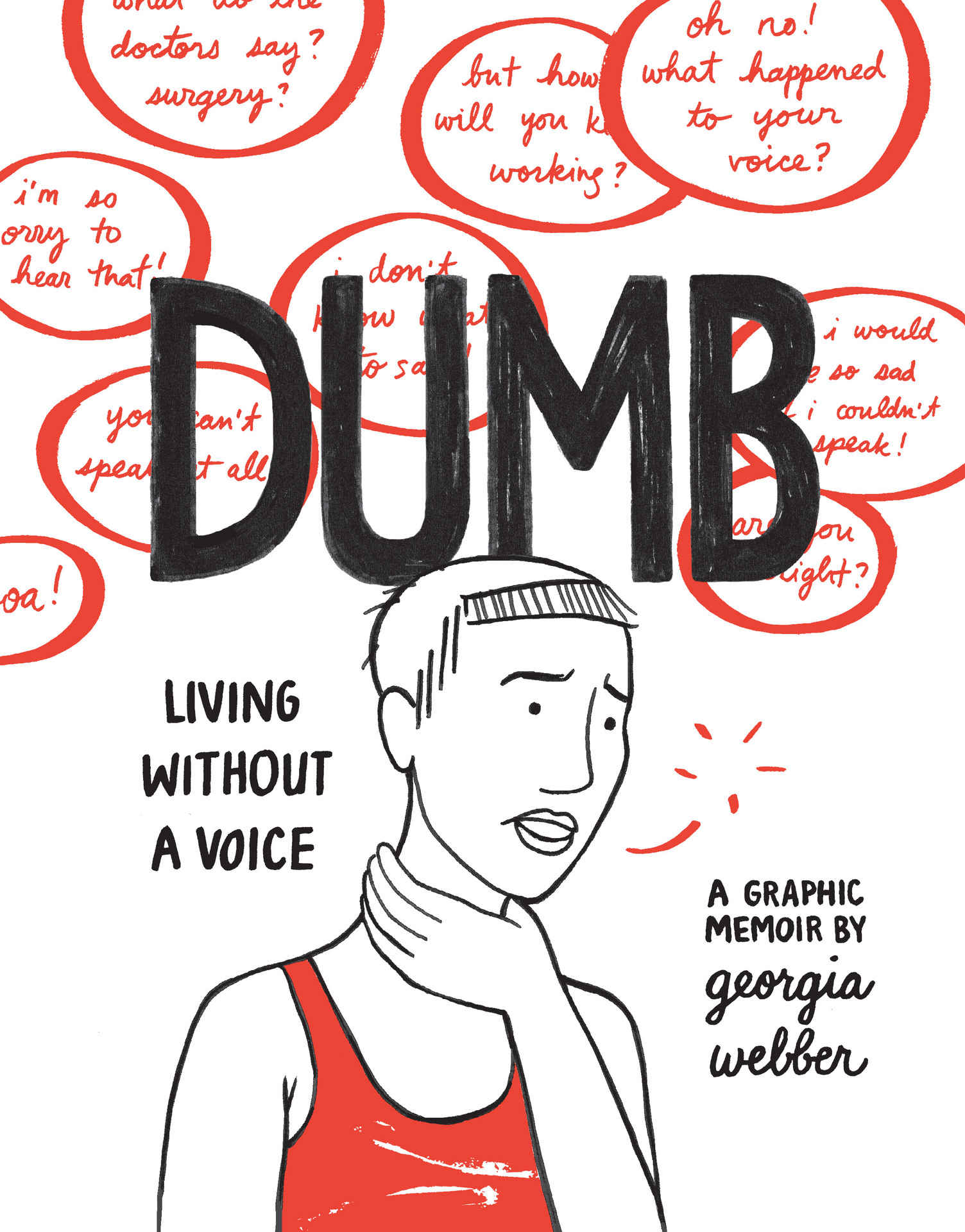
Dumb: Living Without a Voice by Georgia Webber๐Ÿคซ

Age Rating: 17+

    This graphic novel reminds readers that men and women should not be judged by what they look like or what they say, but rather by what they do. Artist Georgia Webber gives an artistic take on that moral in her graphic memoir Dumb.
    When a throat injury deprived Georgia of her need to speak, her life unravelled. She was prescribed by doctors to stay silent for months. Then she had to find a job that did not require too much talking. Worst of all, she had to sacrifice her favourite hobby of singing. Throughout her ordeal, Georgia was supported by her friends and she wondered what did it mean to have a voice.


Orphan Black๐Ÿฆข๐Ÿงฌ๐Ÿ‘

Age Rating: 17+


    The recent news reports on designer babies should remind us that science is a double-edged sword. That moral is shown in the Canadian Sci-Fi series Orphan Black
    For five seasons, Tatiana Maslany wowed audiences with her Emmy-winning performances as the Project Leda clones Sarah Manning, Helena, Alison Hendrix, Cosima Niehaus et al as they navigate through and fight against the madness that created them.
    Welcome to Clone Club, Sestras.

Clone Club: "Just one. I'm a few. No family too. Who am I?"


Threads by Torill Kove๐Ÿงถ
Age Rating: All Ages

    Torill Kove is the Oscar-winning director of the short films My Grandmother Ironed the King's Shirts, The Danish Poet, and Me and My Moulton. In her latest project Threads, Kove shows that regardless of DNA or adoption, the love between parents and children is boundless.


Geek Love by Katherine Dunn๐ŸŽช

Age Rating: 17+

    Mary Shelley, Shirley Jackson, and Octavia E. Butler were among many women famous for writing grotesque, shocking, and macabre plots. In 1983, Alfred A. Knopf added Katherine Dunn to that group when it published her bestselling novel Geek Love.
    The late author got inspiration for her book when she took her son for a walk at the Rose Garden in Portland, Oregon. Dunn observed how genetic engineering resulted in different roses, each with its own sets of colours, shapes, and scents. She joked in an interview that she could have redesigned her son, who refused to spend time with her then, to be more obedient.
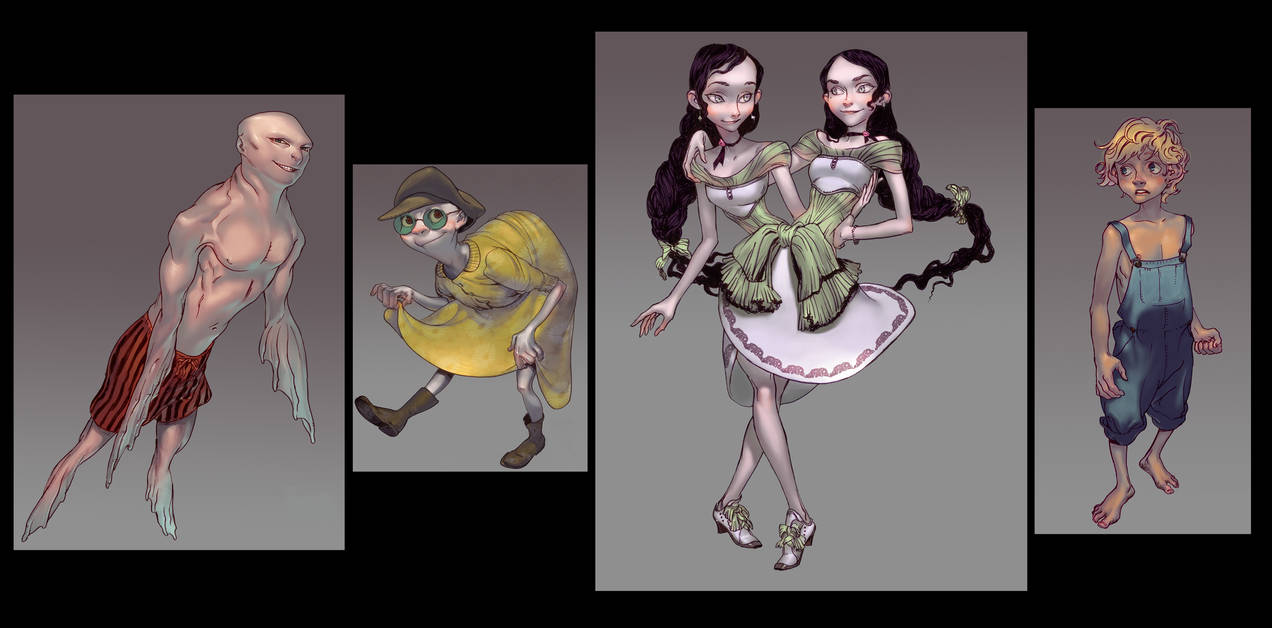
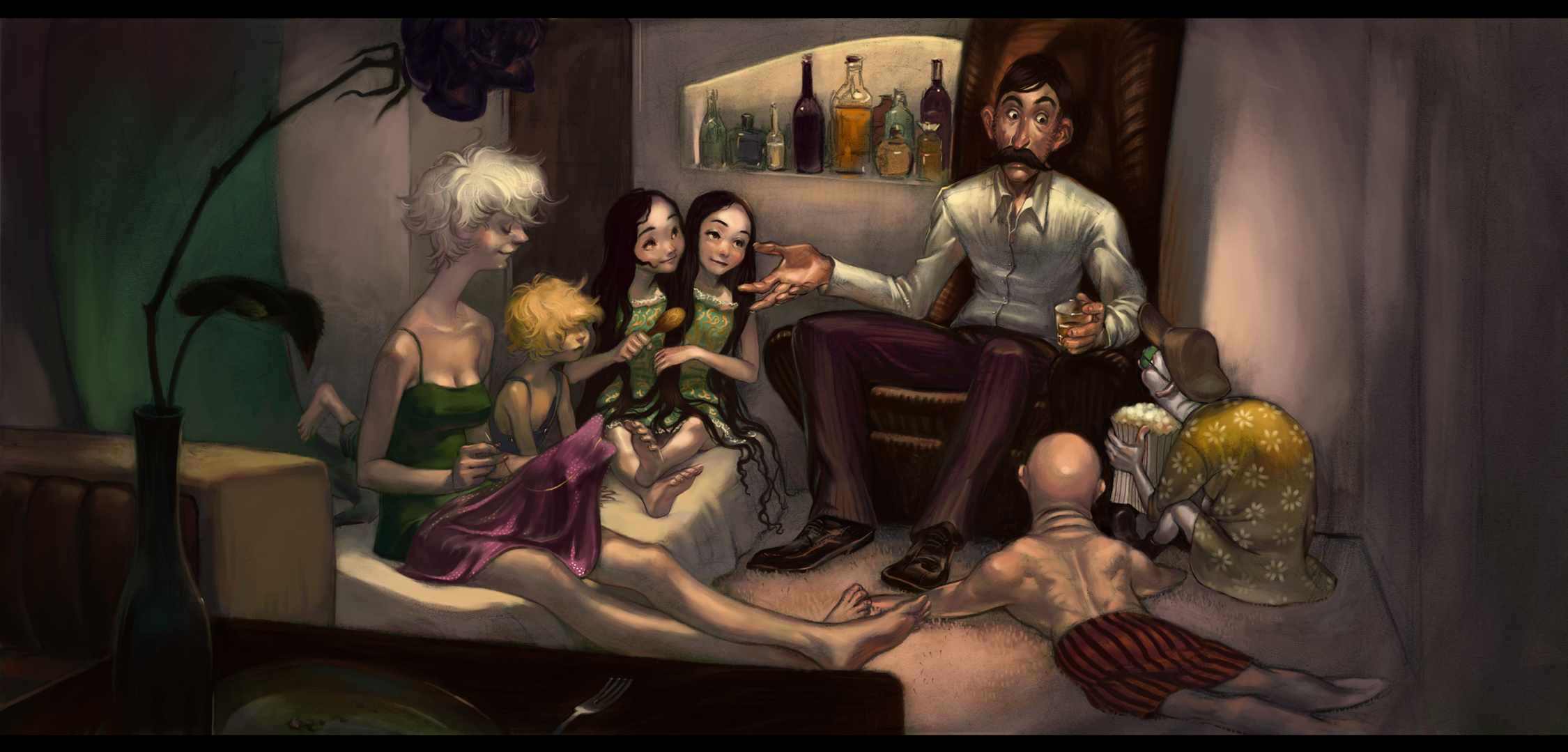
    The same roses are alluded to in Aloysius and Lil Binewski's plan to breed a freak show to save their struggling circus. Lil ingests various drugs and poisons to conceive her and Al's "perfect" children. Of all the progeny, only five survive the mad science experiment: Arturo, born with seal-like flippers for arms and legs, Electra and Iphigenia, conjoined twin sisters who share one pair of legs, Olympia, a hunchbacked albino dwarf considered by her parents to be unspecial, and Fortunato, a normal-looking boy with telekinesis.

From left to right: Arturo, Olympia, Electra and Iphigenia, and Fortunato*.

    Olympia is the main protagonist of the novel and she narrates the events of her life as a circus geek.
    Since its publication, Geek Love has shocked and surprised readers and critics, redefining the word normal and the freak show genre.

Olympia: "We children would smile and hug him and he would grin around at us and send the twins for a pot of cocoa from the drink wagon and me for a bag of popcorn because the red-haired girls would just throw it out when they finished closing the concession anyway. And we would all be cozy in the warm booth of the van, eating popcorn and drinking cocoa and feeling like Papa's roses."
*Geek Love fanart by Jandruff.

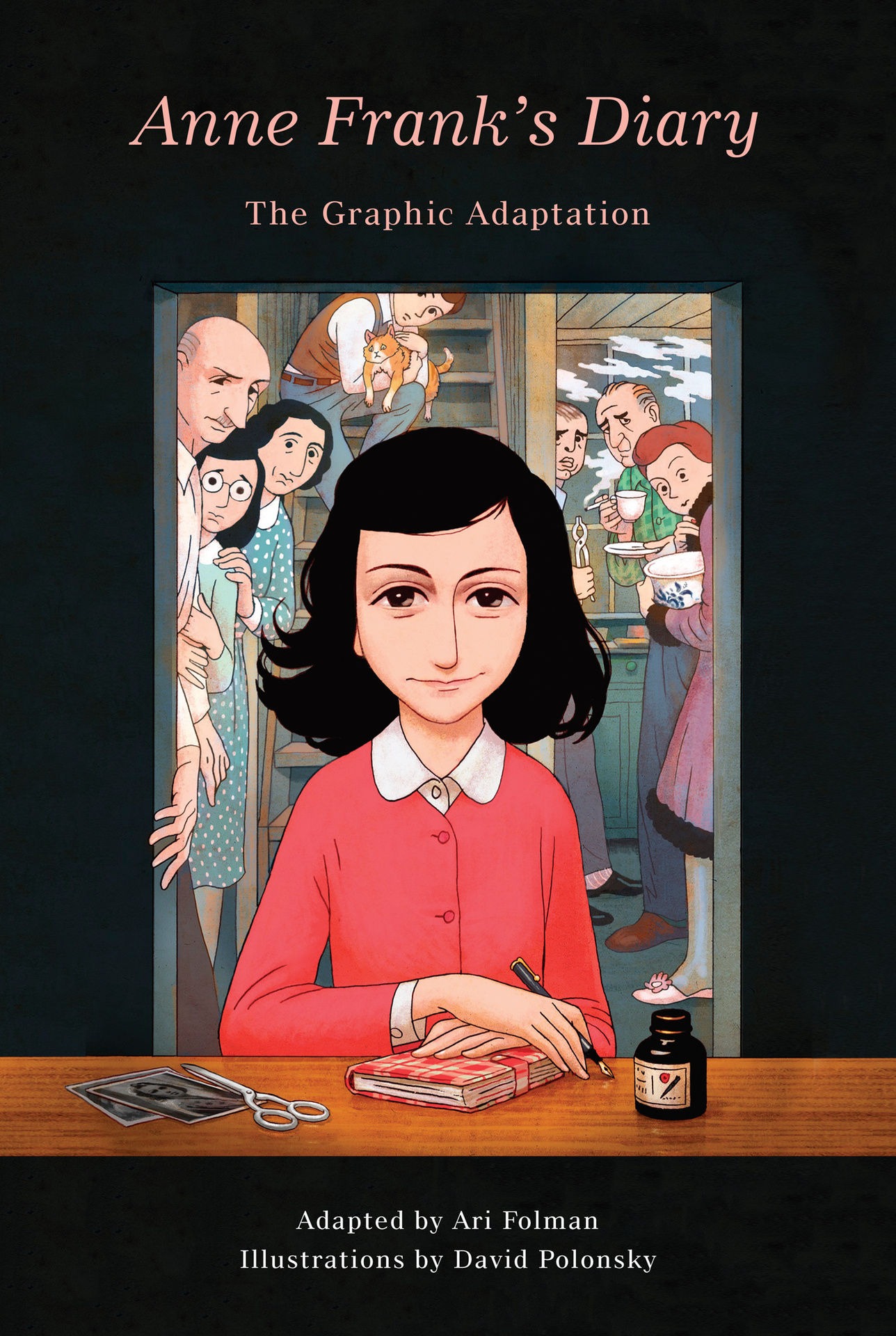
Anne Frank's Diary: The Graphic Adaptation๐Ÿ•
Age Rating: 13+

    This year would have marked Anne Frank's 90th birthday had she survived the Holocaust.
    In October 2018, The Diary of a Young Girl was adapted into an authorised graphic novel by Ari Folman and illustrated by David PolonskyFolman, himself a child of Holocaust survivors, is currently directing an animated film that will retell the story of Anne
Anne Frank: "It's really a wonder that I haven't dropped all my ideals, because they seem so absurd and impossible to carry out. Yet I keep them, because in spite of everything, I still believe that people are really good at heart."
's life and her legacy in the modern world. With his signature style, 
Polonsky, an artist from Tel Aviv, has reimagined scenes and dialogue from the definitive edition. 

    This book is guaranteed to introduce new readers to a Jewish teenage girl who, until her untimely death, was fearless during one of history's darkest moments.

Age Rating: 15+

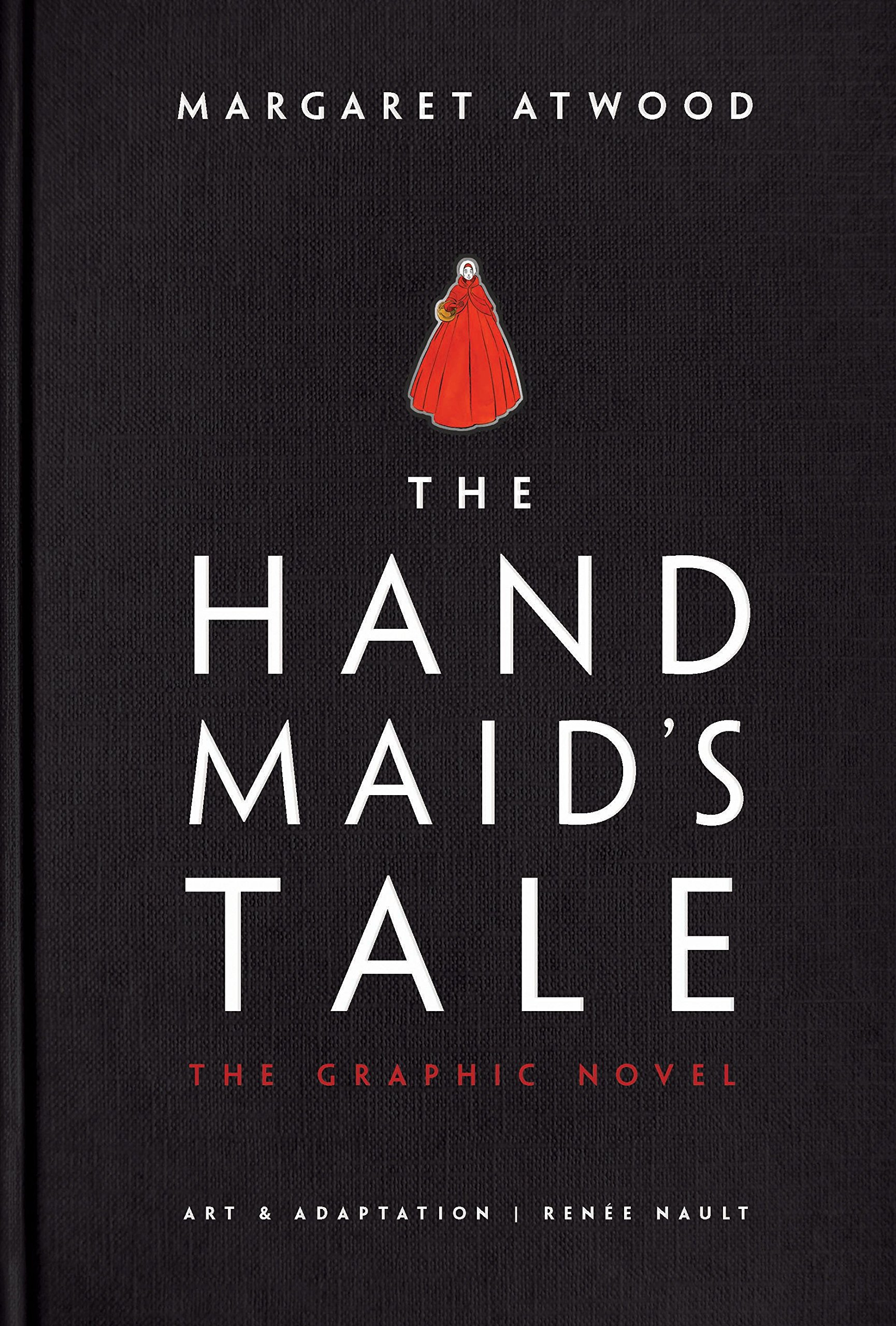
    In 1985, Margaret Atwood had written her bestselling dystopian novel The Handmaid's Tale.
    In a possible future, the United States of America is no more, and in its place is the Republic of Gilead. The Christian fundamentalist men behind the coup waste no time in seizing power, stripping all the nation's women of their rights, and dividing them into castes based on their functions. One caste is made up of the fertile Handmaids whose sole purpose is to bear children for the regime due to majority of the population having been rendered infertile by STDs. The main protagonist of the book is a Handmaid named Offred and she defiantly remembers the time before Gilead, when she had her rights, her family, and her identity.
    People who have read the book and watched the Emmy-winning TV series it is based on are in for a treat. My last recommendation is Renee Nault's illustrated graphic adaptation.

"Ignoring isn't the same as ignorance, you have to work at it."
--Margaret Atwood, The Handmaid's Tale

    If this is the first time you have heard of Atwood or Offred, watch this video explain why you should read The Handmaid's Tale.


Until next time,


A. Eleazar


References:
  1. Alcott, L. M. (1868). Little Women. Boston, Massachusetts: Roberts Brothers.
  2. Appleyard, K. et al (Producers), & Fawcett, J. et al (Directors). (2013). Orphan Black [Television series]. Canada: BBC America.
  3. Atwood, M. (2019). Handmaid's Tale: The Graphic Novel, The. Canada: Penguin Random House.
  4. Dunn, K. (1989). Geek Love. New York City, New York: Alfred A. Knopf.
  5. Fearnley, L. et al (Producers), & Kove, T. (Director). (2017). Threads [Motion picture]. Montreal, Canada: National Film Board of Canada.
  6. Frank, A. (2018). Anne Frank's Diary: The Graphic Adaptation. United States: Pantheon.
  7. Hughes, S. (2018, November 2) Widows: the big-haired 80s caper that inspired Steve McQueen. Retrieved January 6, 2019, from https://www.theguardian.com/tv-and-radio/2018/nov/02/the-original-widows-interview-lynda-la-plante-steve-mcqueen
  8. Jandruff. (2008). Geek Love Characters [Image file]. Retrieved February 5, 2019, from https://www.deviantart.com/jandruff/art/Geek-Love-Characters-107430462
  9. Jandruff. (2008). Geek love - Papa's Roses [Image file]. Retrieved February 5, 2019, from https://www.deviantart.com/jandruff/art/Geek-love-Papa-s-Roses-107431883
  10. Lambert, V. et al (Producers), & Toynton, I. & Annett, P. (Directors). (1983). Widows [Television series]. United Kingdom: Euston Films.
  11. Murrow, V. (2018). Power to the Princess: 15 Favorite Fairytales Retold with Girl Power. United States: Quarto Knows.
  12. O'Connor, G. (2010). Olympians Series, The. United States: First Second Books.
  13. Perry, D. (2018, April 7). Rise of Katherine Dunn: How the late Portland author survived hard times and became a literary legend, The. Retrieved February 5, 2019, from https://www.oregonlive.com/history/2017/12/the_rise_of_katherine_dunn_how.html
  14. TED-Ed. (2018, March 8). Why should you read “The Handmaid’s Tale”? - Naomi R. Mercer [Video file]. Retrieved February 22, 2019, from https://www.youtube.com/watch?v=7v-mfJMyBO0
  15. Terciero, R. (2019). Meg, Jo, Beth, and Amy: A Graphic Novel. United States: Little, Brown Books for Young Readers.
  16. Webber, G. (2018). Dumb: Living Without a Voice. Seattle, Washington: Fantagraphics.

Saturday, January 06, 2018

The Rashลmon Effect: An Analysis of Ryลซnosuke Akutagawa's Short Story In a Grove๐ŸŽ

    "Memory is a snare, pure and simple; it alters, it subtly rearranges the past to fit the present." -- Mario Vargas Llosa

    This blog post is dedicated in memory of the Japanese author Ryลซnosuke Akutagawa.

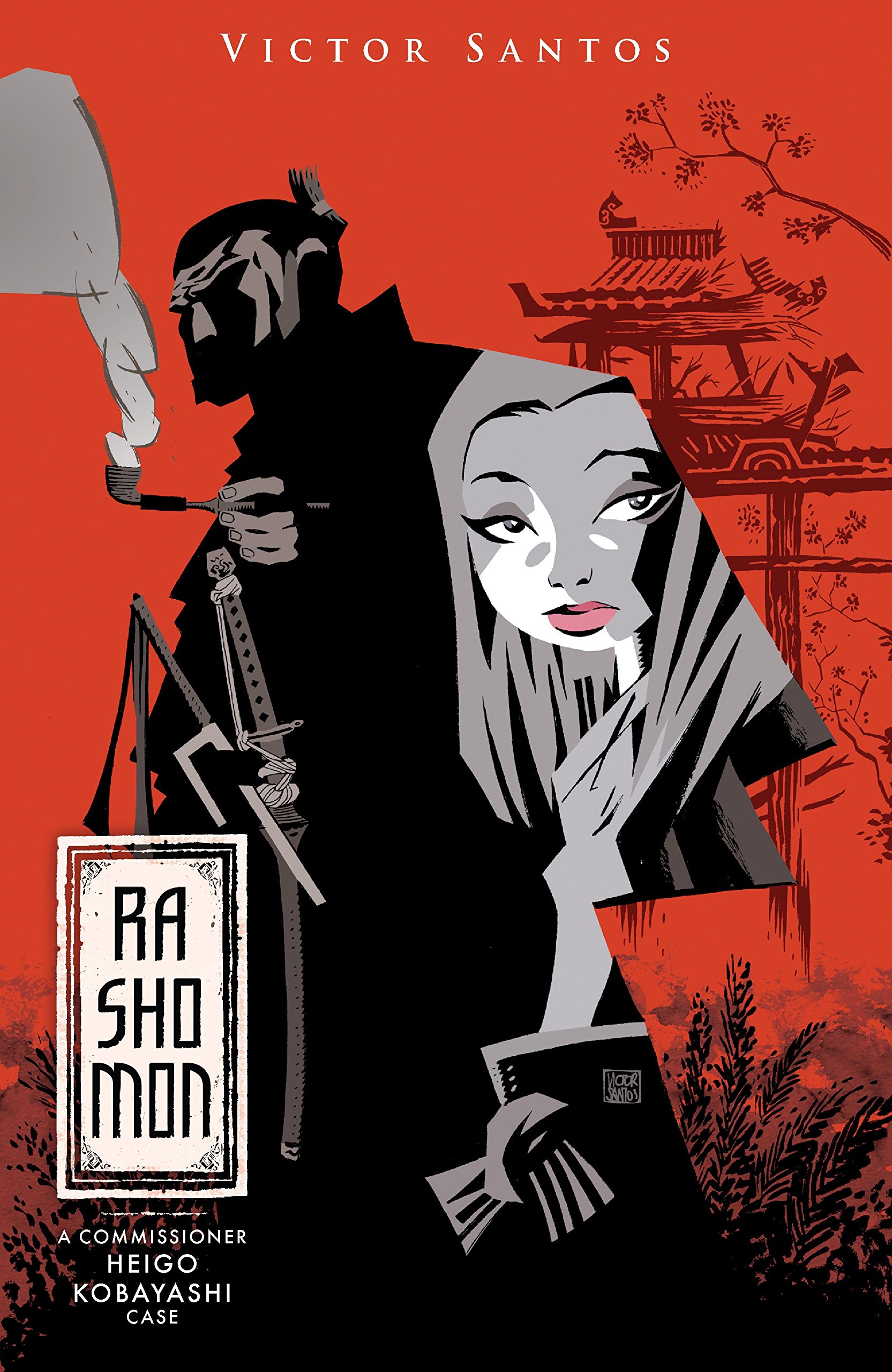
    Special thanks to Spanish comic artist Vรญctor Santos.

Heigo Kobayashi: "A damned web of lies..."

About the Author

    Ryลซnosuke Akutagawa, pseudonym Chลkลdล Shujin or Gaki, was a prolific Japanese writer known especially for his stories based on events in the Japanese past and for his stylistic virtuosity.

    Akutagawa was born on March 1, 1892 in Tokyo. As a boy, he was sickly and hypersensitive, but he excelled at school and was a voracious reader. He began his literary career while attending Tokyo Imperial University (now the University of Tokyo), where he studied English literature from 1913 to 1916.
    In 1915, the publication of Akutagawa's short story Rashลmon led to his introduction to Natsume Sลseki, the outstanding Japanese novelist of the day. With Sลseki's encouragement, Akutagawa began to write a series of stories derived largely from 12th- and 13th-century collections of Japanese tales but retold in the light of modern psychology and in a highly individual style. He ranged wide in his choice of material, drawing inspiration from such disparate sources as China, Japan's 16th-century Christian community in Nagasaki, and European contacts with 19th-century Japan. Many of his stories have a feverish intensity that is well-suited to their often-macabre themes.
    In 1922, he turned toward autobiographical fiction, but Akutagawa's stories of modern life lack the exotic and sometimes lurid glow of the older tales, perhaps accounting for their comparative unpopularity. His last important work, Kappa (1927), although a satiric fable about the titular creature, is written in the mirthless vein of his last period and reflects his depressed state at the time. On July 24, 1927, Akutagawa died by suicide, his death shocking the literary world.
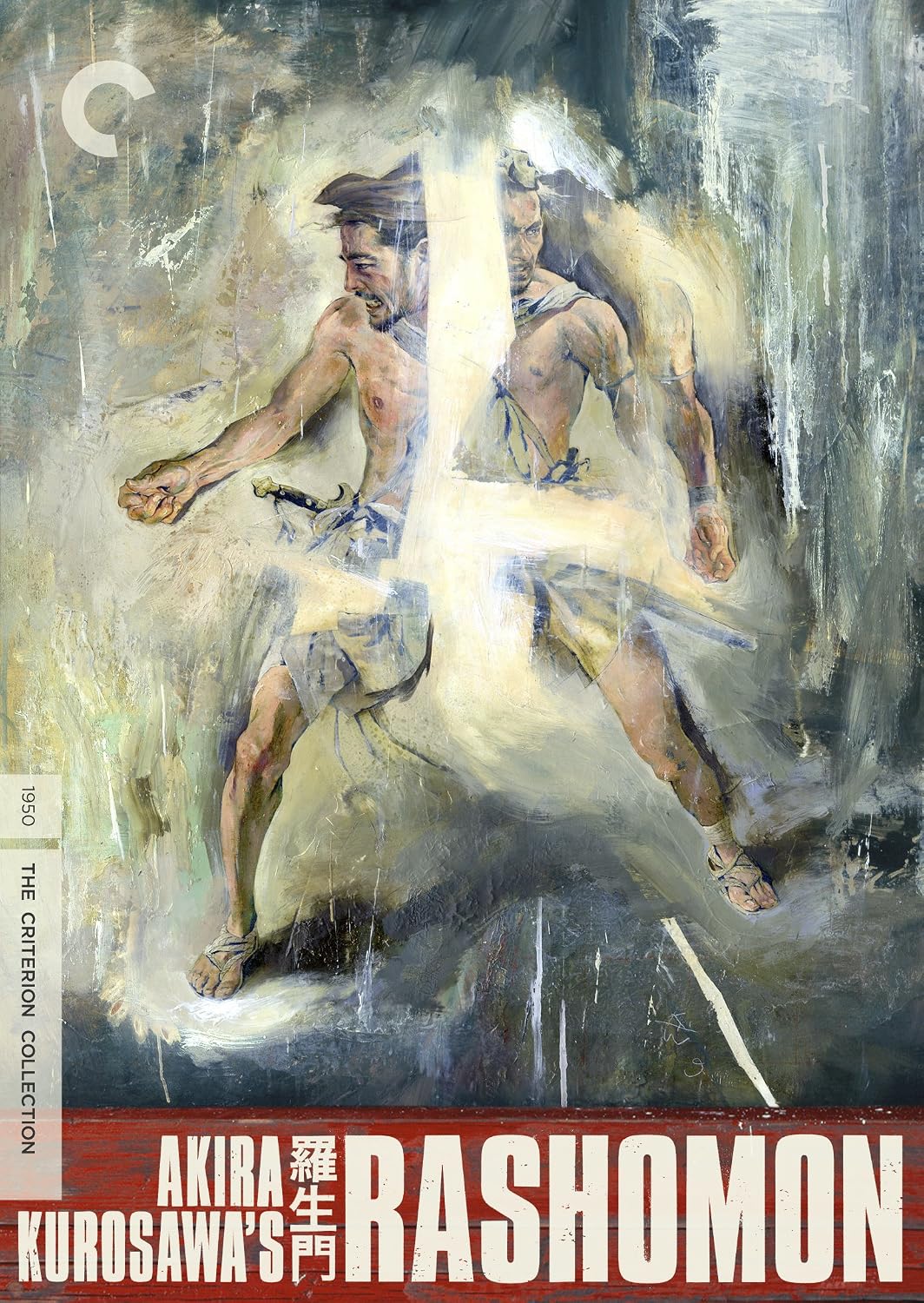
    Today, Akutagawa is one of the most widely translated of all Japanese writers, and many of his stories have been made into films. The 1950 Oscar-winning film Rashลmon, directed by Akira Kurosawa, is based on Akutagawa's story by that title and another story of his, In a Grove.

Summary of In a Grove

    Seven testimonies are given before the High Police Commissioner of Kyลto surrounding the discovery of a murdered man's body in a grove.
    The first account is that of the woodcutter who discovered the man's body in the woods. When asked to describe the body, the woodcutter says that it wears a Kyลto-style headdress and a blue kimono and has a single fatal sword stroke across the chest. He also says that the trampled leaves around the body showed there had been a violent struggle. There were no swords nearby, and not enough room for a horse-only a piece of rope, a comb, and bloodstained bamboo blades.
    A travelling Buddhist priest delivers the second account. He says that he saw the man, who was accompanied by his wife on horseback, on the road, around noon the day before the murder. The woman was wearing a lilac kimono and the man was carrying a sword, a bow, and a black quiver containing twenty arrows.
    The third person to testify is a hลmen. He has captured a notorious bandit named Tajomaru. Tajomaru was injured when thrown from his horse, and he was carrying a bow and a black quiver containing seventeen arrows, which he suspects were stolen from the victim. Tajomaru was not carrying the dead man's sword, but he believes there is enough evidence to convict him of the murder.
    The fourth testimony is from the victim's mother-in-law. The old woman's daughter is a spirited, fun-loving 19-year-old woman named Masago, married to Takejiro Kanazawa, also known as Takehiko, a 26-year-old samurai from Wakasa. Her daughter, she says, has never been with a man other than Takehiko. She begs the police to find her missing daughter and her testimony trails off as she weeps.
    Next, Tajomaru confesses to killing Takehiko, but not Masago. He says that he saw them on the road and upon first seeing Masago, decided that he must have her. He lured Takehiko into the woods with the promise of buried treasure. He then gagged him with bamboo leaves, tied him to a cedar root and calmly brought Masago back. When she saw her husband tied up, she pulled a dagger from her bosom and tried to stab Tajomaru, but, being a skilled bandit as he is, he dodged her attack and raped her. Originally, he had no intention of killing the man, he claims, but after the rape, Masago begged him to either kill her husband or kill himself-she could not live if two men knew her shame. The survivor would be her new husband. Tajomaru, observing proper duelling etiquette, untied Takehiko so they could have a fair swordfight. During the duel, Masago fled, but Tajomaru did not notice. Tajomaru took the man's sword, bow and quiver, as well as the woman's horse, which was simply grazing quietly. He says that he sold the sword before the hลmen captured him.

The Bandit
Tajomaru: "I always knew I'd hang some day. That's my life. You want to kill me? Go ahead."

    Masago then gives her account. According to her, after the rape, Tajomaru fled. Her husband, who wore a lilac kimono at the time and was still tied down, had an indescribable light in his eyes that made her think that he hated her and found her disgusting after her defilement. She no longer wanted to live, but she said she could not leave him alive as he was. He agreed, or so she believed-he could not say anything because his mouth was still stuffed full of leaves-and she plunged her own dagger into his chest. She then unbound Takehiko, and ran off into the forest, whereupon she attempted to kill herself numerous times, she said, but Kwannon, a bodhisattva goddess, must have kept her alive.


The Wife
Masago: "Even the most compassionate gods would condemn me..."

    The seventh and final account comes from Takehiko through a medium. The spirit says that after the rape, Tajomaru persuaded Masago to become his wife; she assented, but then Tajomaru turned pale and cried that he must kill Takehiko. Tajomaru kicked Masago to the ground, and asked Takehiko if he should kill her. Hearing this, Masago shrieked and fled into the forest. Tajomaru then cut Takehiko's bonds and ran away, saying his fate was next. Takehiko grabbed Masago's forgotten dagger and plunged it into his chest. Soon, his spirit leaves his body and retrieves the dagger from his breast, leaving him to sink down into the darkness of space.

The Samurai
Takejiro Kanazawa: "Who was it? Good question, my Lord."

Themes
Guilt
    Various confessions offered to the High Police Commissioner arise strictly out of guilt. In fact, Tajomaru, Masago, and Takehiko (through the Medium) each confess out of the perception of their own guilt (Johanning & Suduiko 2016).

Greed

    Greed is the central motivating factor that leads to Takehiko's demise. He takes Masago with him to follow Tajomaru to the grove because of their perceived greed for cheap weapons, but he ends up getting killed (Johanning & Suduiko 2016).

Motif

Kimonos
    The seemingly small detail of confusing the colours of Masago's and Takehiko's kimonos tells the reader a different story about each narrator's trustworthiness and indeed the trustworthiness of the psyche. One can wonder how so many people who have little reason to lie tell such different stories about whether the kimonos were lilac or blue (Johanning & Suduiko 2016).

In a Grove in Popular Culture

    Ever since Akira Kurosawa's 1950 film adaptation of In a Grove, which borrows its setting from Rashลmon, the popularity of contradictory accounts of a single event has been popular. This concept was coined as the Rashลmon Effect. The term is credited to the film, but the effect is also present in Akutagawa's original short story.

Woodcutter: "I don't understand any of those three."

    First published in an essay on the politics of journalism for Theaterwork Magazine in 1982 by Valerie Alia, this term can be found in fiction as well as in real life. It is a useful term for journalists and lawyers studying the nature of truth and truth-telling in journalism.
    In Karl G. Heider's seminal studies in ethnography, he uses the term to account for the subjectivity of perception on recollection - an idea universal enough to find itself in fields as far away from film as physics and philosophy.
    However, the Rashลmon effect is also popular in films, plays, TV series, other short stories, and graphic novels as well. To name a few: Gone Girl, Talvar, Batman: The Animated Series, The Dick Van Dyke Show, Arrested Development, Happy Days, The Simpsons, Star Trek, Tell Me Why, and many others have alluded to the effect.
    In short, any event with multiple parties involved is difficult to summarize because of constant refutations, even in seemingly insignificant details. One may wonder how it could be possible to have such varied accounts of the same incident in which the real evidence cannot even be accounted for (Johanning & Suduiko 2016).

VI. References
  1. Akutagawa, R. (1952). Rashomon and Other Stories. New York City, New York: Liveright Publishing Corporation.
  2. Editors of Encyclopรฆdia Britannica. (2015, December 31). Akutagawa Ryลซnosuke. Britannica. https://www.britannica.com/biography/Akutagawa-Ryunosuke
  3. Johanning, C. & Suduiko, A (Eds). (2016, January 13). Rashลmon “In a Grove” Summary and Analysis. Grade Saver. https://www.gradesaver.com/rashomon/study-guide/summary-in-a-grove
  4. Kurosawa, A. (Director). (1950). Rashลmon [Film]. Daiei Film.
  5. Johanning, C. & Suduiko, A (Eds). (2016, January 13). Rashลmon Symbols, Allegory and Motifs. Grade Saver. https://www.gradesaver.com/rashomon/study-guide/symbols-allegory-motifs
  6. Johanning, C. & Suduiko, A (Eds). (2016, January 13). Rashลmon: The Rashลmon Effect. Grade Saver. http://www.gradesaver.com/rashomon/study-guide/the-rashmon-effect
  7. Johanning, C. & Suduiko, A (Eds). (2016, January 13). Rashลmon Themes. Grade Saver. https://www.gradesaver.com/rashomon/study-guide/themes
  8.  Santos, V. (2012, November 13). Making of Rashomon Cover [Blog post]. Vรญctor Santos Comics. https://victorsantoscomics.blogspot.com.es/2012/11/blog-post.html
  9. Santos, V. (2012, December 28). Rashomon Illustrations (1) [Blog post]. Vรญctor Santos Comics. https://victorsantoscomics.blogspot.com.es/2012/12/ilustraciones-de-rashomon-1-rashomon.html
  10. Santos, V. (2013, January 4). Rashomon Illustrations (2) [Blog post]. Vรญctor Santos Comics. https://victorsantoscomics.blogspot.com.es/2013/01/blog-post.html
  11. Santos, V. (2017). Rashomon: A Commissioner Heigo Kobayashi Case. Dark Horse Comics.

Tuesday, June 27, 2017

Horror in the Suburbs: An Analysis of Shirley Jackson's The Lottery

The Lottery.
Written by Shirley Jackson and Adapted and Illustrated by Miles Hyman

About Shirley Jackson
    Shirley Jackson was born on December 14, 1916, in San Francisco, California, and grew up nearby in Burlingame. She first attended the University of Rochester and then Syracuse University, where she became fiction editor of the campus humor magazine.
    After graduating in 1940, Jackson moved to New York City. She began to write professionally, her short stories appearing in such publications as The New Yorker, Redbook, The Saturday Evening Post, and The Ladies' Home Journal.
    She also wrote novels like The Road Through the Wall, The Haunting of Hill House, and We Have Always Lived in the Castle as well as the witty, embellished memoir Life Among the Savages, which tells of her domestic experiences. Often relying on supernatural themes, she was known for tackling provocative, chilling subject matter that was culturally incisive and held metaphors for how people dealt with differences. She was married to critic Stanley Edgar Hyman, with whom she had four children.
    Shirley Jackson died on August 8, 1965, from heart failure. Decades later, two of her children, Laurence Jackson Hyman and Sarah Hyman Dewitt, had edited a collection of her unpublished works, Let Me Tell You: New Stories, Essays, and Other Writings. The compilation, released in August 2015, marked the 50th anniversary of the author's death.
    To this day, Shirley Jackson is best known for her short story The Lottery.

Summary of The Lottery
    In a small anonymous town live approximately three hundred people. On a clear morning, June 27th, the townspeople, starting with the children, assemble for the annual lottery which will begin at ten in the morning and end at twelve in the afternoon. While the girls chat to one side, the boys, including Bobby Martin, Harry Jones, and Dickie Delacroix, pocket stones. Shortly thereafter, the men and women begin to gather, chatting amongst themselves before standing together as families.
    The lottery is conducted by Mr. Summers, a childless man married to an unpleasant woman. He is assisted by Mr. Graves, who follows him to bring the three-legged stool upon which Mr. Summers places a very worn black box. The black box used for the lottery is even older than the oldest town citizen, Old Man Warner. Mr. Summers stirs the slips of paper inside the black box. Originally, wood chips were used, but as the town's population increased, Mr. Summers was forced to switch to paper to fit all the slips inside the box.
    Before commencing the lottery, several lists had to be made: heads of households, heads of families, and members of each family. Mr. Summers efficiently tends to all the details and prepares to start the lottery. Tess Hutchinson is nearly late, but she arrives just in time to join her husband, Bill, and their children in the crowd. Mr. Summers makes sure that everyone who needs to be at the lottery is present and accounts for those absent. Then, the lottery begins.
    Mr. Summers begins to call the names of each family alphabetically, and each head of the household, usually the patriarch, comes forward to take a slip of paper from the black box. As this happens, Mr. Adams mentions to Old Man Warner that a nearby village is considering giving up the lottery. Old Man Warner derides this suggestion, calling those people a "pack of young fools."
    Once all the heads of households receive slips, they simultaneously check them. Bill has selected the special slip with the black dot, and his family is singled out. Tess is dissatisfied and accuses Mr. Summers of not giving her husband enough time to select his slip. Nonetheless, Mr. Summers rearranges the box so that it holds only five slips for the Hutchinson family. The family comes forth, and each of them, Bill, Tess, and their children, select one of the five slips in the box.
    One by one, the children, then Bill, reveal that their slips of paper are blank. The town realizes that Tess holds the remaining piece of paper with the black dot. The villagers start to collect stones, Mrs. Delacroix selecting one that is so large she can hardly carry it. As Tess protests, everyone, including her own family, descend upon her and stone her to death.

Themes

Suburban Horror
    The short story demonstrates Jackson's penchant for this trope. As exemplified most clearly in Tess's stoning, Jackson's vision of horror is not limited to haunted houses or exotic locations. On the contrary, horror is engendered in the mind, in the banal brutality of everyday individuals, who may be mothers, fathers, wives, and husbands. Unhappiness, sheer dissatisfaction with one's life, can lead to the blurring of reality and fantasy, and even madness. And in this madness, horror can come alive in the most mundane of settings and situations (Le & Kissel, 2009) and enhance the contemporary reader's uneasy sense that the group violence in the story could be taking place anywhere and everywhere, right now. It is also what prevents any of the villagers from questioning their roles in ritualistic murder (Shmoop Editorial Team, 2008).

Society and Class
    Basically, the story asks readers to think about the rituals and traditions they unthinkingly follow as members of their societies. Beyond critiquing the ways in which custom obscures right and wrong, the lottery also becomes a way of analyzing "traditional" social and gender divisions: the anonymity of the village lends the short story a sense of universality and the villagers live in an intensely patriarchal society.
    The random distribution of paper means some families are fortunate and others are not. They think it is significant that it is paper that has come to replace wood chips - much as paper money has taken the place of gold or goods for barter. The paper, either in the lottery or in the wallet, symbolizes exchange value; as people get more "civilized," they lose track of what the paper really means. In the case of both the lottery and cash, paper can mean either good or bad fortune - and it is disturbing how much life and wealth can be left up to the gambles of chance (Shmoop Editorial Team, 2008).

Exclusion
    The text is not about short-lived mass hysteria like the Salem Witch Trials. Rather, it is a regular thing; like a witch trial that happens every year, where one unfortunate person gets excluded. Their exclusion gives the remaining community members a bonding experience (Shmoop Editorial Team, 2008).

Tradition and Customs
    The story is about an annual tradition practiced by the villagers of an anonymous small town, a tradition that appears to be as vital to the villagers as New Year celebrations might be to others. Yet, subtle hints throughout the story, as well as its shocking conclusion, indicate that over time, the lottery has become a meaningless tradition for the villagers to follow. What is particularly important about tradition in the text is that it appears to be eternal: no one knows when it started, and no one can guess when it will end. Its apparent lack of history is what makes tradition so powerful: it is like a force of nature, and the villagers cannot even imagine rebelling against it as it a part of their traditional life and as such, still holds meaning for them.
    It is sometimes true that people do not think about the origins or significance of many of their regular traditions. During Halloween, most children put on costumes and go trick-or-treating without knowing that the early precursor to the holiday is Samhain, an ancient Celtic ritual of bonfires and animal sacrifices, when the worlds of the living and the dead were thought to intermingle.
    Whether its origins are good or bad, a given tradition can seem like it has always been present. It often does not appear to have a history or logic of its own; it just is, and this type of thinking makes tradition hard to question. The piece can be, therefore, interpreted as a kind of plea: if one's only reason for doing something is that they have always done it, Jackson suggests that might not be a reason at all (Shmoop Editorial Team, 2008).

Hypocrisy
    The Lottery explores sudden shifts in opinion and loyalties - in other words, hypocrisy. But it is worth asking whether changes in allegiance during the lottery are conscious enough to be construed as hypocrisy: the ritual of the lottery appears to be so naturalized that the villagers cannot think rationally or critically about what they are doing. It is only the outsiders who can really confront the madness of this ritual. In fact, it is the villagers' earnestness that is so particularly frightening. They are too blinded by tradition to see that violence against their neighbors is a betrayal of their emotional bonds, whereas the purpose of the lottery is now less important than its rote maintenance (Shmoop Editorial Team, 2008).

Family
    The story plays around with the concept of family in interesting ways. The thing is, each person in the lottery must draw by household, so this is the moment, each year, when belonging to a given family has the most socially recognized significance. During this collective ritual, though, it is during the lottery that the emotional bonds that connect mother to child, husband to wife, and friend to friend, become completely insignificant. Once the lottery has ended, family bonds reassert their importance, and the families who have lost members mourn them. So, Jackson is clearly drawing a line between the "social place" of families (with their patriarchs and unfair distribution of luck) and the emotional importance of family ties, which is a private matter (Shmoop Editorial Team, 2008).

Symbols

The Lottery⚫
    The lottery is a plethora of symbols in the story. Communities across the United States practice different annual traditions - Easter egg hunts (with origins in early fertility rituals), Christmas tree decorating (evolved from the Germanic tribes' patron trees), or July 4th fireworks (to celebrate the adoption of the Declaration of Independence). The point is that Americans are all comfortable with yearly rituals - and it is often not widely known how these celebrations began since tradition obscures the history of public ritual.
    People associate lotteries with good things, especially with the odds of winning cash prizes, and annual celebrations also seem pleasant. Like the blooming, cheerful village in the short story, there is nothing in the lottery that immediately suggests anything is wrong with this set-up. The lottery is, in fact, operating as an allegory of village life itself: at first, it seems harmless, but then readers start to wonder what is going on with all the subdued smiles and piles of stones.
    If the lottery is an allegory of the community, its rules and proceedings must in some way correspond to real-life elements of village society; if Jackson was willing meticulously to give so many of the characters heavily symbolic names, readers must assume that she is equally careful in developing the lottery as an allegory.
    One thing that is striking is the lottery's initial breakdown of the villagers into households. Each head of the family draws for the household, and the whole group must abide by what the head draws. But isn't it true that people are all usually broken down by household? The household, whether it be one of parents and children, couples, or friends, is the first unit of social interaction. What is more, members often do have to abide by the conditions of their households as a whole - the metaphorical strips of paper that their parents draw.       
    Some people get lucky in the draw, and some do not. As soon as the villagers show up in that town square, as soon as they consent to participate in society at large, they leave themselves open to the chance of catastrophic failure. Even rich Joe Summers and powerful Harry Graves must draw from the box: they are all subject to the vagaries of luck that the lottery represents. And all of them, eventually, are going to die. So, the lottery symbolizes not only life's chances, but also the sudden, unexpected nature of death.
    As for the household, it seems kind of weird that it was always the man of the house doing the drawing. The norm in the village is that each man is literally choosing not only his fate, but also the fate of his entire family. Women have no agency in this situation, which reflects the overall patriarchal nature of the traditional values of this village society.
    Still, it should be noted while it is only men who get to choose, their wives are willing participants in the event. So even though tradition is keeping them in places of diminished power, they seem to support their inferior status as traditional.
    The origins of the lottery are murky; even Old Man Warner does not know when it began. His association of the lottery with the abundance of corn suggests that it began as overt human sacrifice, in which one person's murder somehow equaled plentiful corn harvests. Now, though, "the original paraphernalia for the lottery [has] been lost long ago" (5) and there is widespread forgetfulness on the old preparations for the lottery since there used to be a song, a speech, a ritual salute. But how can one stop something when they do not know how it started? Without a sense of the lottery's history, it has become a totally hollow act, one to be completed in time "for noon dinner" (1).
    The loss of the lottery's origins poses a profound ethical question: obviously, it would be bad if the lottery began as human sacrifice, but at least then there would be a logic to it. In the story, readers see Mr. Graves helping Davy Hutchinson select a strip of paper from the black box, they see the boys collecting their stones: they are being trained to see the lottery as naturally as their parents do. They are, in fact, being instructed in savagery. The lottery has become completely self-perpetuating; it no longer needs an explanation.
    Perhaps the boys take to the lottery with such enthusiasm because it is mankind's essential nature to be brutal, but it is providing institutional recognition for murder that might not otherwise be allowed. These children are being taught by their society to kill. Again, one cannot ignore the proximity of the story's publication to World War II. Readers do not want to press this point too hard, but they do think that it is legitimate to wonder whether the experience of mass violence on that scale might not be driving Jackson's commentary on the ways that society breeds violence into every new generation of young people (Shmoop Editorial Team, 2008).

The Black Box⬛
    The black box is a physical manifestation of the villagers' connection to tradition; Jackson is explicit on this point, when the subject of replacing the box comes up. The villagers believe that this box may, in part, be made up of shards of the previous boxes, back to the original Black Box. Readers must admit, that this reminds them of the practice of collecting Christian relics, like hair or bone from the bodies of the saints or pieces of the Cross. Jackson likes to upend Christian iconography in the story. This seems like it may be another example: the villagers use this relic of an earlier time to perpetuate their violent, unmerciful traditions.
    Like the lottery, the black box has no functionality except during these two hours every June. The purpose of the box, like the lottery itself, has become obscure with the passage of time. It is well worn, but the villagers are reluctant to let it go, again, like the lottery itself. In fact, readers do not think it is too far-fetched to say that the villagers' treatment of the box represents their thinking about the lottery: they are a bit terrified by both the box and the lottery, but they are also too frightened and, perhaps, fascinated, to drop either one (Shmoop Editorial Team, 2008).      

The Three-Legged Stool3️⃣
    Critic Helen Nebeker argues that the three legs of the stool allude to the three aspects of the Christian Trinity (God the Father, God the Son, and the Holy Spirit); the use of the stool to support the black box thus represents the manipulation of religion to support collective violence. It is true that this story is so short that everything in it seems like it must be symbolic of something. Another possibility is that this does not have to be the Christian Trinity at all; there are trinities in various religious traditions, like the three Norse Fates, or the Three Graces in Greek myths. The use of this three-legged stool may serve to underline more generally the ritualistic significance of the lottery as a holdover from generic Ye Olden Days (Shmoop Editorial Team, 2008).

The Stones๐Ÿชจ
    Stoning is not only a horrifying way to die, it is also, always, a crowd-generated death. In other words, stones allow all the villagers to participate freely in the ritual, from the youngest children to Old Man Warner. Stones are also significant as murder weapons because the first human tools were made of stone; this lottery really does seem to originate from the earliest type of violent human ritual. Also, stoning comes up specifically in the religious texts of all three Abrahamic religions: Christianity, Judaism, and Islam. So, stoning is not just an early form of murder; it has a strong religious association with community punishment of abomination; in other words, stoning is the classic means for expelling an outsider to reinforce group beliefs (Shmoop Editorial Team, 2008).

Peer Pressure☠️
    If a group of friends do something stupid, one has heard the refrain, "If your friends jumped off a bridge, would you jump, too?" One might probably answer "no," but Jackson disagrees. She thinks that everyone would race off that bridge if the community decided it was necessary. For Jackson, while individuals may be great, a group of people is another animal. An animal that cannibalizes on its own species.
    The symbolic cannibalism shown in the end is what makes The Lottery of the most horrifying literary works people will encounter.
    Like so many great horror stories, this one has a load of social commentary. It is like the world's creepiest public service announcement against peer pressure. Like those warnings about drinking or smoking - except Jackson is warning against joining a group without thinking about it (Shmoop Editorial Team, 2008).

Background of The Lottery
    Shirley Jackson's well-known short story The Lottery was first published in the June 26, 1948 issue of The New Yorker. The author's implicit critique of the brutality underlying the rituals and values of America's small towns outraged many magazine readers and generated the most mail in the history of The New Yorker, with many readers expressing confusion about underlying meanings and anger over its disturbing ending and cancelling their subscriptions. Despite the backlash, The Lottery became one of the most significant short stories of its era.
    It was eventually translated into dozens of languages, and adapted for radio, screen, stage, and into a graphic novel illustrated by the author's grandson Miles Hyman.
    Regardless of how one reacts to or interprets The Lottery, it has nevertheless established Shirley Jackson's position as one of the greatest American horror writers.

References
  1. Biography.com Editors. (2016, November 17). Shirley Jackson.  Biography. https://www.biography.com/people/shirley-jackson-9351425
  2. Hyman, M. (2016). Shirley Jackson's "The Lottery": The Authorized Graphic Adaptation. Hill & Wang.
  3. Jackson, S. (2015). Lottery, The. In Lottery and Other Stories, The (pp. 291-302). Farrar, Straus and Giroux. (Original work published 1948).
  4. Le, D. D. & Kissel, A (Ed.)  (2009, July 31). The Lottery and Other Stories "The Lottery" Summary and Analysis. GradeSaver. https://www.gradesaver.com/the-lottery-and-other-stories/study-guide/summary-the-lottery
  5. Le, D. D. & Kissel, A (Ed.). (2009, July 31). The Lottery and Other Stories Summary and Analysis of "The Lottery". GradeSaver. https://www.gradesaver.com/the-lottery-and-other-stories/study-guide/summary-the-lottery
  6. Shmoop Editorial Team. (2008, November 11). The Lottery. Shmoop. https://www.shmoop.com/lottery-shirley-jackson/
  7. Shmoop Editorial Team. (2008, November 11). The Lottery Symbolism, Imagery, Allegory. Shmoop. https://www.shmoop.com/lottery-shirley-jackson/symbolism-imagery.html
  8. Shmoop Editorial Team. (2008, November 11). The Lottery Themes. Shmoop. https://www.shmoop.com/lottery-shirley-jackson/themes.html