Showing posts with label fairy tale. Show all posts

Monday, November 27, 2023

๐Ÿ‘ง๐Ÿผ๐Ÿ‘ฆ๐ŸปAn Act of True Love: An Analysis of The Snow Queen, the Fairy Tale That Inspired Disney's Frozen❄️๐Ÿ‘ธ๐Ÿผ

    "But only an act of true love can thaw a frozen heart." -- Grand Pabbie in Frozen dir. Chris Buck and Jennifer Lee
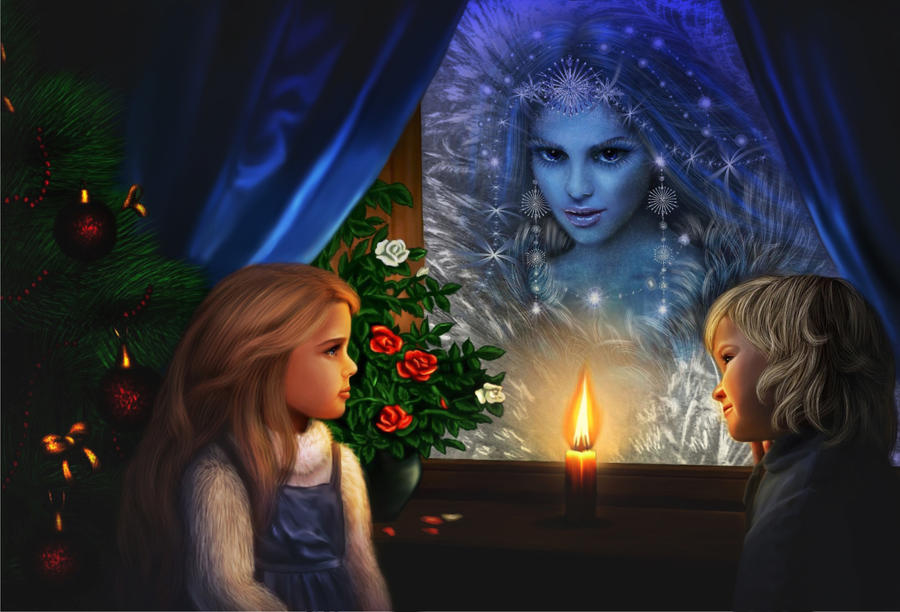
"Often at midnight she flies through the streets of the town, and looks in at the windows, then the ice freezes on the panes into wonderful shapes, that look like flowers and castles."
Snow Queen (2009)
by
lilok-lilok

About the Author

    Hans Christian Andersen was born on April 2, 1805, in Odense, Denmark. His mother was a laundrywoman, and his father was a shoemaker. Despite being poor, Hans' parents loved and spoiled him, encouraging him to use his imagination. Andersen grew up loving song and dance. Having a tall and bony figure made look a bit awkward, but Andersen least cared about his appearance.
    When Andersen was eleven years old, his father died of tuberculosis. Three years later, Andersen left for Copenhagen to become a stage artist at the Royal Theatre. Although he was rejected, a director named Jonas Collin became Andersen's patron, providing the future fairytale writer a scholarship to obtain basic education.
    After seven hard years of studying, Andersen graduated from university in 1828.
    Today, Hans Christian Andersen is famous for his fairy tales. Written between 1835 and 1850, Andersen's stories include The Ugly Duckling, The Little Mermaid, The Wild Swans, The Princess and the Pea, The Little Match Girl, Thumbelina, The Emperor's New Clothes, The Steadfast Tin Soldier, The Nightingale, The Red Shoes, The Tinderbox, and The Snow Queen.
    Dark and fantastic, Andersen's fairy tales had made him a household name among fairy tale fans, his stories read along those by Charles Perrault, the Brothers Grimm, Joseph Jacobs, and Gabrielle Suzanne Barbot de Villeneuve.
    Hans Christian Andersen died on August 4, 1875, but people around the world still read his fairy tales, many of which continue to be adapted for the stage and screen.

Summary of The Snow Queen 

๐Ÿ˜ˆFirst Story: Which Describes a Looking-Glass and the Broken Fragments๐Ÿชž

    In Inferno, the Devil makes a mirror that shows good and beautiful things as evil and ugly. The Devil and his demonic minions take the mirror around the world, enjoying the shocked and dismayed faces of the good people who look into the glass.
    The Devil then decides to use the mirror to fool God and His angels. The demons carry the mirror up to Paradise, but they laugh about their plot so much that they drop it.
    The mirror crashes on the Earth's surface, the glass shattering into billions of pieces, some as small as grains of sand. The glass fragments are blown all over the world, getting into people's eyes and hearts. Those who get fragments in their eyes see nothing but the evil and ugly sides of people and things, while those who get fragments in their hearts become as cold as ice.

๐Ÿซ›๐Ÿ‘ฆ๐Ÿป๐Ÿ‘ง๐Ÿผ๐ŸŒนSecond Story: A Little Boy and a Little Girl๐ŸงŠ❄️๐Ÿ‘ธ๐Ÿผ๐Ÿ
    
    In one big city live two children: a girl named Gerda and a boy named Kay. The two children are best friends and love each other dearly. Gerda and Kay live next door to each other, the roofs of their houses adjoining. Kay's and Gerda's families respectively grow sweet-peas and roses in window boxes on the gutters, the two plants forming an arch. Gerda and Kay have their own rooftop garden where they play together.
    On one snowy night, Kay's grandmother tells him and Gerda about the Snow Queen. A woman made out of ice, the Snow Queen leads the snow bees, snowflakes that look like bees, and is said to be seen wherever it snows the most. When Gerda becomes scared of seeing the Snow Queen, Kay promises to protect her by melting the Snow Queen by the stove.
    That same night after Gerda goes home, Kay is shocked to see the Snow Queen herself through his bedroom window. The Queen beckons Kay to come with her, but the boy instead hides under his blanket, shivering in fear.
    The seasons pass and Gerda and Kay continue to be friends. But on one pleasant day in summer, two fragments of the Devil's mirror pierce one of Kay's eyes and his heart, turning him into a naughty boy. Kay stops playing with Gerda, destroys their rooftop garden, and makes fun of his grandmother.
    Come the following winter, Kay sees everyone else as ugly and evil, with the only things he considers good and beautiful to be the snowflakes he inspects with a magnifying glass. Kay goes with his sledge to play in the market square. The boy sees a woman wearing a white fur-coat and riding a white sleigh carriage. Kay hitches his sledge to the woman in white's sleigh, and gets taken for a ride.
    The woman drives her sleigh at incredible speed, taking the boy with her. Outside the city, the woman reveals herself to be the Snow Queen and beckons Kay to sit beside her. The boy sits next to the Snow Queen and she kisses him twice: once to make him ignore the cold, and again to make him forget about Gerda and their families. The Snow Queen refuses to give Kay a third kiss because it would kill him and takes him to her kingdom.

๐Ÿง™๐Ÿผ‍♀️Third Story: The Flower Garden of the Woman Who Could Conjure๐ŸŒน

    Unaware that he has been kidnapped by the Snow Queen, Kay's family and neighbours organise a search party. Unable to find him, the people believe the boy has drowned in the cold river. Gerda's grandmother tries to comfort her, but the girl believes that Kay is still alive and decides to look for him herself.
    The following summer, Gerda goes to the same river where Kay is said to have drowned in. Gerda gives the river her red shoes, and it tells her that Kay did not drown. Gerda climbs into a boat and the river carries her away.
    An old Witch sees Gerda and pulls her ashore with her long crook. The Witch takes Gerda into her house which is surrounded by a flower garden where summer is eternal. Although she is not wicked, the Witch wants Gerda to live with her forever. The Witch feeds Gerda enchanted cherries and fixes her hair with a magical comb, erasing the girl's memories of Kay and makes all the roses in the flower garden sink underground.
    Time passes, and while playing in the garden, Gerda sees a rose in the Witch's hat and she remembers Kay. Crying over her missing friend, Gerda's tears warm the earth, making the roses reappear. The roses tell her that of all the dead people buried underground, Kay is not among them. Gerda escapes the garden and discovers it is already autumn.

๐Ÿฆ‍⬛๐Ÿคด๐ŸผFourth Story: The Prince and the Princess๐Ÿ‘ธ๐Ÿป๐Ÿฆ‍⬛

    Gerda meets a crow who claims that Kay is married to a Princess and lives in her palace. Aided by the crow's mate, Gerda travels to the palace and enters the royal couple's bedroom. But Gerda discovers that while he looks like him, the Prince is not Kay.
    The Prince and the Princess are at first startled by Gerda trespassing into their home, but pity her when she tells them her story.
    The Prince and the Princess give Gerda warm clothes to wear and a coach to ride on before sending her on her way.

๐Ÿ‘ง๐ŸพFifth Story: Little Robber-Girl๐ŸฆŒ
    
    While travelling through the woods, a gang of robbers steals the coach and brings Gerda to its castle.
    At the castle, the old robber-woman wants to eat Gerda, but is prevented by her daughter. Gerda becomes friends with the robber-girl and a captive reindeer named Bae. After Gerda shares her story, the robber-girl's pet doves say they had seen the Snow Queen kidnap Kay and whisk him away in the direction of Lapland.  Bae tells Gerda he knows where Lapland because it is his home.
    As the winter snow falls and the northern lights gleam across the night sky, the robber-girl frees Gerda and Bae, and the two travel north to Lapland.
    
๐ŸŸSixth Story: The Lapland Woman and the Finland Woman๐Ÿง–๐Ÿผ‍♀️

    Gerda and Bae make it to Lapland where a local woman offers them shelter. Upon hearing their story, the Lapland Woman tells Gerda and Bae that they must travel to Finland where the Snow Queen lives. The Lapland Woman then writes on a dried codfish directions to the house of a Finland Woman who might know the way to the Snow Queen's kingdom.
    After resting at the Lapland Woman's house, she sends Gerda and Bae on their way. Following the directions on the codfish, Gerda and Kay arrive at the Finland Woman's house.
    Upon hearing Gerda's story, the Finland Woman tells the girl that Kay is indeed in the Snow Queen's kingdom and cursed by the Devil's mirror shards, explaining his sudden change in personality. The Finland Woman tells Gerda which way to go before sending her away, and tells Bae that the girl's kind heart is the key to bringing Kay home.

❄️๐Ÿ‘ธ๐ŸผSeventh Story: Of the Palace of the Snow Queen and What Happened There At Last๐Ÿ‘ฉ๐Ÿผ๐Ÿ‘จ๐Ÿป

    In the middle of a frozen lake called the Mirror of Reason sits the Snow Queen. It is in her palace of ice and snow where the Snow Queen has been keeping Kay prisoner.
    Still cursed by the Devil's mirror, Kay has been trying to spell a certain word by using pieces of ice. The Snow Queen had promised Kay that she would free him and give him a pair of ice skates once he solves the puzzle. One day, the Queen leaves her palace to run an errand.
    Gerda arrives at the Snow Queen's palace, but is stopped by the snow creatures guarding it. Gerda cites the Lord's Prayer, her breath transforming into an army of angels that fend off the beasts, enabling her to the enter the palace.
    Gerda finds Kay alone and frozen. Seeing her friend alive, Gerda hugs and kisses Kay, shedding tears of joy that melt the mirror fragment in the boy's heart. Warmed up for the first time in years, Kay cries out the mirror fragment in his eye. Gerda's act of love breaks the spell, making Kay remember his best friend.
    Reunited at last, Gerda and Kay dance around, causing the icy puzzle pieces to spell out "eternity," the word the Snow Queen had commanded the boy to spell.
    Gerda leads Kay back home from the Snow Queen's kingdom, encountering the people and animals the brave girl had befriended during her adventure.
    By the time Gerda and Kay return home to the city, the two best friends have grown up and it is summertime once again.
    Kay's grandmother ends the story by citing Matthew 18:3:
    "Amen, I say to you, unless you become like little children again, you shall not enter the kingdom of heaven."

Symbols

Mirror๐Ÿชž
    The mirror is a recurrent symbol in many fairy tales, most famously in Snow White and the Seven Dwarfs and Beauty and the Beast.
    In The Snow Queen, the reflecting surface of the Devil's mirror can represent illusions that corrupt the soul (Lederer 1986, 6-7). The scene where the accursed mirror shatters on Earth's surface alludes to the fall of Lucifer and his fellow rebellious angels, a passage made famous in John Milton's poem Paradise Lost (Heiner, 2021).

Roses๐ŸŒน
    Roses appear in many of Andersen's writing, whether in titles (A Rose from Homer's Grave, The Rose Elf, The World's Most Beautiful Rose) and in the environments of Andersen's characters (in The Snow Queen, Little Ida's Flowers, and Inchelina).
    The roses in Gerda and Kay's garden symbolise passion and desire, but it is also, in the Christian imagery, the flower representing the Virgin Mary, the sacrificial power of love, the promise of eternal life in Paradise, innocence, and royalty (Heiner, 2021).

River๐ŸŒŠ
    The river is a symbol of life and fate, but Andersen found probably the inspiration for this story in his own past. Once, during his father's sickness, little Hans Christian was sent from his mother to a local wise woman, to ask about the man's destiny. The woman told him that if his father was going to die he would have met his ghost by the river (TS, 17-18).

Red๐Ÿ‘ 
    The colour red symbolises menstruation, and the double standard of awoken sexuality. Thus, by throwing her red shoes away, Gerda decides to stay pure (Zipes: 1993, 24; Lederer: 1986, 34-38).

Tears๐Ÿ˜ญ
    The tears Gerda sheds symbolise her love for Kay, calling back roses from underground and breaking the Devil's spell (Heiner, 2021).

Crows๐Ÿฆ‍⬛
    In Norse mythology, the god Odin has two ravens named Huginn (Thought) and Muninn (Memory) (Lederer: 1986, 47) . 
    Crows and ravens are generally associated with dreams, as shown in Edgar Allan Poe's poem The Raven.
    The two crows in The Snow Queen suggest that the tale can be read as a dream, in which the Princess and the Prince are imaginary versions of Gerda and Kay (Heiner, 2021).

Doves๐Ÿ•Š️
     Pigeons or doves are the birds of love (Heiner, 2021).

Reindeer๐ŸฆŒ
    In the shamanistic tradition, the reindeer is often the animal mother of the shaman, which leads and helps him in the realm of the spirits (Eliade, 1951).

Northern Lights


    Aurora borealis: From the Merriam Webster Dictionary: "an aurora that occurs in Earth's northern hemisphere; called also northern lights".
    For centuries, the people of the north had seen in the wonderful lights more than a natural extravagance: Inuit people thought that they were the torches of the dead, which indicated the path to the otherworld. In Medieval Europe, they were thought to be the reflections and the breath of heavenly warriors. The Finnish name for the northern lights is "revontulet" which means "fox fires": the Finns in fact believed that a supernatural fox was sweeping the arctic snows with its tail, causing sparks of light that shone in the sky.
    Andersen himself gives another poetical explanation for them in the tale The Phoenix (Heiner, 2021).

Ice and Snow๐ŸงŠ❄️
    While ice and snow are traditionally associated with winter wonderlands, they can also be symbols of fear and death due to how low temperatures could get during the coldest season of the year. 
    In The True Story of My Life, Andersen tells about his first encounter with a woman made of ice. Before he died, Anderson's sick father once stood at the frosted window and indicated "a figure as that of a maiden with outstretched arms. 'She is come to fetch me,' he said, in jest" (TS, 17-18; Lederer: 1986, 28).
    The Franks write: "As the modern Danish critic Villy Sorensen has observed, Andersen saw the snow queen's icy world as the proper home for someone whose heart has been replaced by chilly reason--a category in which Andersen certainly placed many of his contemporaries" (169) (Heiner, 2021).

Themes

Adventure๐ŸŒ
    Gerda's adventures take her to faraway lands, alluding to Andersen's fascination by travel to foreign countries.
    When done right, an author creates for the reader a map of real or imaginary places they could explore from the comfort of the bedroom (Shmoop, 2008).

Religion⛪
    Like the majority of his Danish compatriots at the time, Andersen was also into Christianity. This devoutness manifests in the writer's stories, including  The Snow Queen, The Red Shoes, and The World's Most Beautiful Rose (Shmoop, 2008).
    Before she could enter the Snow Queen's palace, Gerda cites The Lord's Prayer, a well-known prayer that calls for God to bless His children with their needs, to forgive them for their sins, and to guide them away from evil.
    Gerda's search for her missing friend even alludes to Jesus' Parable of the Lost Sheep. Just as the shepherd in Jesus' parable leaves his flock to find the missing sheep, Gerda leaves behind her family and home to find and rescue Kay.
    The message of the Parable of the Lost Sheep is redemption. Just as Jesus redeems sinners, Gerda does a similar action when she breaks the curse Kay is under.
    At the very ending of the fairy tale, Kay's grandmother cites Matthew 18:3, a Biblical verse that says only those who are humble and dependent on God can enter Paradise.

Love❤️
    While acts of true love are usually the tools needed to lift fairy tale curses, Hans Christian Andersen himself never got a happy ever after.
    Per Andersen's letters and diaries, the Danish writer's relationships were one-sided.
    It is said that the seed for The Snow Queen was sown when Andersen fell in love with Swedish opera singer Jenny Lind. Sadly for Andersen, his heart got broken when Jenny turned him down and insisted that they remain friends. Even though Jenny and Andersen remained close, the rejection still hurt the writer, prompting him to create the cold-hearted Snow Queen. As a counterpart, Andersen included the fiery Devil in what would become his longest fairy tale, which he eventually published in 1844.
    Because he desired for his own true love, Andersen's portrayals of love are creative and diverse to say the least. In his stories, Andersen wrote about everything from romantic love to platonic love, familial love, spiritual love, and more.
    All these forms of love cause some of Andersen's characters to suffer, but also be inspired to accomplish great deeds. Furthermore, numerous obstacles are shown to get in the way of love, such as class differences, evil people's desires, and even God's will. So, even if his actual experiences of love were pretty one-sided, Andersen's tales make him seem like a bona fide love expert (Shmoop, 2008).

The Snow Queen in Popular Culture

    Since its publication in 1844, The Snow Queen has been one of Andersen's most popular fairy tales. For decades, The Snow Queen has been depicted in art and adapted multiple times for the stage and screen.
    In 2013, Disney loosely adapted The Snow Queen into Frozen, an animated fantasy adventure musical film directed by Chris Buck and Jennifer Lee, and featuring music composed by Christophe Beck and songs by Robert Lopez and Kristen Anderson-Lopez.
    Disney's Frozen takes place in Arendelle, a kingdom that's home to Princess Anna (Kristen Bell, Veronica Mars) and her older sister, Queen Elsa (Idina Menzel, Wicked), who can conjure ice and snow.
    When Elsa runs away, trapping her own kingdom in an eternal winter, Anna goes on an adventure to bring her home and lift the curse, accompanied by the iceman Kristoff (Jonathan Groff, Glee) his reindeer friend Sven, and the summer-loving snowman Olaf (Josh Gad, The Book of Mormon).

Elsa: "The cold never bothered me anyway."

    Through trial and error, an act of true of love is what's needed to bring back summer and repair the bond between the two royal sisters.
    When it premiered on November 27, 2013, Disney's Frozen was a box office hit, becoming one of the highest-grossing animated films of all time, and winning the 2014 Academy Awards for Best Animated Feature Film and Best Original Song.
    Whether or not Frozen has made people interested in reading The Snow Queen is still debatable. But what is clear is that an act of true love is all it takes to have a happy ending.


References
  1. Andersen, H. C. (2018). Dark Tales: The Snow Queen: A Graphic Novel. Canterbury Classics.
  2. Buck, C. & Lee, J. (Directors). (2013). Frozen [Film]. Walt Disney Pictures.
  3. DisneyMusicVEVO. (2014, February 11). Idina Menzel - Let It Go (from "Frozen") (Sing-Along Version) [Video]. YouTube. https://www.youtube.com/watch?v=Dr57W6R1qVE
  4. Hans Christian Andersen. (2023). Famous Authors. https://www.famousauthors.org/hans-christian-andersen
  5. Heiner, H. A. (2021). Snow Queen Annotations. SurLaLune Fairy Tales. https://www.surlalunefairytales.com/s-z/snow-queen/snow-queen-annotations.html
  6. lilok-lilok. (2009, November 19). Snow Queen [Image]. DeviantArt. https://www.deviantart.com/lilok-lilok/art/Snow-Queen-144097268
  7. Shmoop Editorial Team. (2008, November 11). Andersen's Fairy Tales Love. Shmoop. https://www.shmoop.com/study-guides/literature/hans-christian-andersen/themes/love
  8. Shmoop Editorial Team. Shmoop Editorial Team. (2008, November 11). Andersen's Fairy Tales Roses. Shmoop. https://www.shmoop.com/study-guides/literature/hans-christian-andersen/analysis/roses
  9. Shmoop Editorial Team. Shmoop Editorial Team. (2008, November 11). Andersen's Fairy Tales Setting. Shmoop. https://www.shmoop.com/study-guides/literature/hans-christian-andersen/analysis/setting

Monday, November 22, 2021

Tale as Old as Time๐Ÿฅ€: An Analysis of Madame de Villeneuve's ๐Ÿ‘ฉ๐ŸฝBeauty and the Beast๐Ÿฆ

Open a book and open up your mind
-- Jem and The Holograms

Dedication:

To Gabrielle-Suzanne Barbot de Villeneuve for writing Beauty and the Beast.

To Paige O'Hara, Susan Egan, and Emma Watson for showing us that true beauty comes from within.

To Angela Lansbury and Celine Dion for giving us a song as old as time.

In loving memory of Howard Ashman (1950-1991).

I. About the Author
    Gabrielle-Suzanne Barbot de Villeneuve was a French author. She was born in 1695 in La Rochelle. In 1706, she married an aristocrat named Jean-Baptiste Gaalon de Villeneuve. Six months into their marriage, she requested a separation of properties from her husband as he had squandered much of their family inheritance. In 1711, Gabrielle-Suzanne became a widow at the age of 26, lost her family fortune, and was forced to work to support herself. Eventually she made her way to Paris where she became close friends with the controversial playwright Claude Jolyot de Crรฉbillon. Influenced by the styles of fairy tale writers such as Madame d'Aulnoy and Charles Perrault, Madame de Villeneuve had also written her own fairy tales. She died in Paris on December 29, 1755.
    Her greatest legacy is that she is the author of Beauty and the Beast.

II. Summary of the Fairy Tale

๐Ÿ Chapter 1: There Was Once a Merchant๐Ÿš️
    A rich merchant lives in a great city with his twelve children: six sons and six daughters. The family of thirteen lives a luxurious lifestyle at first. Then one day, the family's house burns down along with their possessions and the merchant loses all his trading ships to either shipwreck or to pirates.
    The family's friends cut off ties the moment they become poor, and the merchant's colleagues even spread rumours that the burned house and stolen ships are his punishments for spoiling his children. Dismayed by their neighbours' heartlessness, the family moves to the countryside to live in a cottage the merchant owns.
    To survive, the siblings split the chores between themselves and live on whatever they can sow. Not used to hard work, the sisters wish that they are rich again, except for the youngest. She adapts to her new lifestyle much better than her sisters and is more than happy than to comfort her father and brothers by helping them with the chores and would entertain them by playing the musical instruments salvaged from the fire. The youngest daughter is not only kind, but also hardworking, and charming, and her name is  Beauty. Because of her looks and nature, the country folk would always inquire about her, much to her sisters' jealousy.
    Two years after moving to the countryside, the merchant receives news that one of his ships has been recovered along with precious cargo on it. But with the harvest season coming soon, the merchant decides to go to the docks alone. He commands his sons to look after the farm while he is away and asks his daughters what gifts they want should his trip be successful. Still being greedy after all their time in the countryside, the eldest five demand gowns and jewelry. When asked what she wants, Beauty requests for a rose as it is her favourite flower and she has not seen one since they left the city.
    The next day, the merchant leaves his family for the city. Six months of travel, however, prove fruitless. When he arrives at the docks, he learns that his colleagues, believing him to be dead, have split the cargo between themselves and left him nothing. The father has no choice but to go home empty-handed. As it is the middle of winter, a severe snow storm forces him to take shelter in the woods.

๐ŸฐChapter 2: The Palace of the Beast๐ŸŒน
    When morning comes, the merchant arrives at a magnificent palace surrounded by beautiful gardens with orange trees and many life-like statues. Entering the building, the father is fed and treated very well, although there is no one to be seen. Nevertheless, the merchant is grateful for his mysterious host. The next morning, the father, still unable to meet his host, decides to resume his journey home. While walking in the gardens, he comes across a bower of roses and remembers his promise to give Beauty one. No sooner than he plucks one flower, his host, a terrifying Beast, appears behind him and tells him that as punishment for stealing one of his precious roses after accepting his hospitality, the merchant must die.
    The father begs to be free and tells the Beast that he only wants to give the rose to his youngest daughter. The Beast agrees to let the merchant go home and give Beauty the rose, on the condition that he returns to the palace in one month with one of his daughters. Should the merchant break his promise, the Beast will hunt him down and kill his family. The father is distressed at making the deal, but cannot think of another way to see his children again. The following morning, the father is given a magic horse which carries him and the rose to the farm in a few seconds.
    Upon coming home, the merchant gives Beauty her rose and tells his children of the deal he has made with the Beast. Shocked by this pact, the six sons tell their father they would storm the palace and kill the Beast, but he forbids them from committing such a misdeed because he has decided to keep his end of the bargain. When asked which one of them should go to the Beast, the five greedy sisters declare that it should be Beauty since she is the one who has wished for a rose. Beauty, out of her love for her father, agrees to go to the Beast’s palace. The father is so moved by his youngest child's sacrifice that, remembering a prophecy about Beauty saving his life one day and making their family happy, allows her to accompany him to the palace by the end of the month. The greedy sisters are delighted to be rid of her, although the brothers are saddened at the idea of never seeing Beauty again.
    One month later, a magic horse appears to take father and daughter to the Beast's palace. After bidding her siblings farewell, Beauty and her father ride the horse to their destination. Along the way, the merchant begs Beauty to go home, but she insists on meeting the Beast, believing he may not be as horrifying as her father describes. By nightfall, the two arrive at the palace where Beauty is greeted by a spectacular fireworks show and even jokes that the preparations for her funeral are beautiful.

         ๐Ÿ‘ฉ๐ŸฝChapter 3: Beauty Meets the Beast๐Ÿฆ
    In the palace, Beauty meets the Beast, although she is scared of him at first. When asked if she has come on her will and would she be his guest, Beauty agrees. The Beast tells the merchant to leave the following morning and must not, under any circumstances, return to the palace. Still, father and daughter are allowed a final evening together and are permitted to fill trunks with gifts and gold for Beauty's siblings. While filling the trunks with the goods, Beauty advises her father not to let her siblings know about the money in case it would cause more problems; her father agrees. The next morning, the merchant packs the gold and leaves the palace with two magic horses: one for him to ride on and the other to carry the gifts. Beauty is left in the palace with the Beast. Entering her room and thinking she will never see her family again, Beauty cries herself to sleep.
    On her second night in the palace, Beauty dreams she is in a garden where she meets a handsome youth beside a canal. The Unknown, which he is, tells Beauty that he loves her and wishes for her to be happy in the Beast’s palace. A mysterious lady also appears in the dream, warning Beauty not to judge others by their appearances. The next day, Beauty explores the palace. In one room, she finds all the walls covered in mirrors and a bracelet with a portrait of the Unknown on it. In a hallway full of paintings, she finds a life-size portrait of him. In a third room, she plays with some musical instruments and in the fourth, which happens to be a vast library, she reads books like she used to do during her studies back in the city. That evening, Beauty is having dinner when the Beast appears and converses with her. During their talk, Beauty perceives the Beast to be stupid. Out of the blue, he asks her to marry him. Although shocked by this unexpected proposal, Beauty is told that she could either accept or reject it. Beauty rejects the marriage proposal and the Beast bids her goodnight and leaves her after somewhat wholeheartedly accepting the rejection. Later, Beauty again dreams about the Unknown who is mysteriously sad and would not tell her why.
    The next day, Beauty explores the gardens which are full of flowers, trees, and fountains. Beauty is surprised to find herself in one garden identical to the one in her dreams. Although the Unknown does not appear, Beauty is convinced that the Beast is keeping him a prisoner in the palace.          
    In the following days, Beauty explores rooms full of songbirds, parrots, and monkeys. The birds entertain her with their singing, the parrots with their speeches, and the monkeys volunteer to be her servants. In her room, the parrots serve as translators for the apes who perform a play for Beauty. 

     ๐Ÿฆ๐ŸฆœChapter 4: Beauty Explores the Palace๐Ÿต
    Beauty wants to ask the Beast about the Unknown, but decides not to. In another room, Beauty finds glass windows that project realistic plays and operas like the ones she used to watch in the city. Every night at dinner, the Beast asks Beauty to marry him, but she always rejects his proposals as she fears that he will eat her one day. Still, the Beast just bids her good night after being rejected.
    In another one of her dreams, Beauty tells the Unknown that she cannot stand the Beast's nightly proposals and confesses that she loves him. However, the Unknown persuades her to marry the Beast as it is clear that he loves her. The youth warns Beauty not to be deceived by others' appearances. He tries to explain to her how to free him, but everything gets confusing as the Unknown and the Beast keep switching places in the dream garden and Beauty fails to make any sense of her illusions.
    During the day, Beauty would wear new dresses her wardrobe provides for her, spend time with her animal friends, read books in the library, and watch the latest plays the theatre room has to offer. On one of her nightly meetings with the Beast, she wants to ask him about the Unknown, but instead asks him if they are the only inhabitants in the palace. He replies that, with the exception of the animals, he and Beauty are the only people in the palace. In her latest dream, the Unknown threatens to kill the Beast. Alarmed, Beauty tells him she would rather die than see her ugly host harmed, and claims that even though she continues to reject the Beast's marriage proposals, she is nevertheless grateful for him taking good care of her. The dream ends with the mysterious lady's voice congratulating Beauty on seeing the Beast for his kindness, rather than his ugliness.
    In the weeks that follow, Beauty no longer finds her animal companions, her activities, and the plays entertaining. She  becomes so sad that the Beast asks her what the matter is. Beauty confesses that she is homesick and wishes to see her family. The Beast reluctantly agrees to let Beauty go visit her family, on the condition that she return to the palace in two months. He also gives her a magic ring which she must turn on her finger on the eve of her destination and lets her fill more trunks with gifts for her family. Grateful for the Beast's permission, Beauty promises to return upon the appointed time and packs her family's gifts. Before going to bed, Beauty turns the ring and dreams of her beloved Unknown lying as if he were dead and accuses Beauty of leaving him forever. Beauty promises that she would only be away for a while and to free him from the Beast when she returns to the palace. When asked if she truly loves the Beast, Beauty says she is only doing her end of the bargain. The dream ends without the mysterious lady nor her advice.

๐Ÿ’Chapter 5: Beauty Returns Home๐Ÿ 
    Beauty awakes to find herself in her family's new house. Upon getting dressed, Beauty discovers her family's gifts inside an adjacent room and surprises her family members who are shocked as they are not expecting to see her again. Although her father and brothers are happy to see her, her greedy sisters are upset. When left alone with Beauty, the merchant tells her that when he came home from the palace on the day he left her, he did not plan to use the gold right away. Perceiving the gold as the price for sacrificing Beauty's freedom, he sent it, along with the magic horses, back to the palace. But the next morning, he finds the money in his wardrobe. Believing this strange phenomenon to be a random act of kindness by the Beast, the merchant had used the gold to buy the new house, slaves to do their work, and provide Beauty's siblings with their needs and wants.
    Beauty then tells her father that she must return to the Beast's palace in two months, and tells him of what she has experienced there and of her dreams. After listening to his daughter's stories, the merchant advises Beauty to marry the Beast the next time he proposes to her. He reasons that the Beast has done a great act kindness to Beauty's family and obviously loves her. Beauty, however, still cannot stand the idea of marrying someone who, despite being kind, is ugly and only appears to her in the evening to propose to her. She also admits that she is still in love with the Unknown. The merchant warns Beauty to follow the mysterious lady's advice of not judging others' appearances as he fears that should the Unknown exist in real life, he might only harm her, and that there are men whose hearts are ugly compared to their handsome faces.
    During Beauty's visit, she does not dream of the Unknown and her family's new friends and neighbors visit her every day, charmed by her looks and manners. The greedy sisters' suitors are so enamored with Beauty that they leave their original objects of affections and compete for her hand in marriage. Beauty persuades them to return to her sisters. But her words fall on deaf ears and the five jealous sisters wish for her to return to the Beast as soon as possible. On the last day of her visit, Beauty bids her family goodbye. However, her father, her brothers, and her unwanted suitors beg for her to stay a little longer. Seeing the sad look in her father's eyes, Beauty agrees much to her sisters' annoyance. That night, Beauty dreams of the Beast lying still in a cave and of the lady warning her to return to the palace soon, otherwise, the Beast will die. Waking up from her nightmare, Beauty firmly decides to leave her family again, much to her father and brothers' sadness, her unwanted suitors' grief, and her sisters' gladness. Before going to bed, Beauty turns the ring.
    The next morning, Beauty wakes up to find herself back in the palace and is happy to see her animal friends again. She spends the day deciding on whether to accept the Beast's next marriage proposal or confess to him about her love for the Unknown. Despite her conflicting emotions, Beauty has missed the Beast very much. She is, therefore, displeased when he does not appear during dinnertime so she enters the gardens to find him. Suddenly she remembers her nightmare and finds the Beast lying unconscious inside a cave. With the help of some monkeys, Beauty revives the Beast who is happy to see she has returned. Happy to see him alive, Beauty tells the Beast she loves him. Later that evening, Beauty dreams of the Unknown telling her how happy she will be with the Beast. However, Beauty is annoyed that he is not fighting for her. The lady also reappears and tells Beauty that victory is at hand.
    The next day, Beauty goes to the opera room to forget about the Unknown and goes to have dinner. When the Beast proposes to her the nth time, Beauty accepts him. After a dazzling firework show congratulating the couple on their engagement, Beauty sleeps with the Beast beside her.

        ๐Ÿ‘ฉ๐ŸฝChapter 6: Beauty Meets the Prince๐Ÿคด๐Ÿผ
    In her dreams, Beauty is again annoyed that the Unknown is not going to fight the Beast for her love, but the lady tells her that the truth will be revealed come morning. When Beauty wakes up the next morning, she finds sleeping beside her not the Beast, but rather the Unknown, and realizes they are the same person.
    A parrot announces the arrival of two women. Beauty goes to greet them and recognizes one of them as the mysterious lady in her dreams. The dream lady turns to her companion, a Queen, and tells her that Beauty is the one who has broken the spell her son, the Beast-turned-Prince, had been under for years. The Queen is thrilled to have Beauty as her daughter-in-law until she finds out that she is a merchant's daughter and not a princess. When the Queen complains to her companion, a Fairy, about Beauty's class and asks whether there is a princess suitable for the Prince, she is told that there is no princess worthier than Beauty. The Prince awakens and is reunited with his mother. The Fairy tells the Prince about his mother's rejection to his engagement to Beauty. The Queen offers Beauty a marriage to a member of the royal court, but not the Prince's hand. Beauty decides to leave the Prince so as not to embarrass him. Dismayed, the Prince begs the Fairy to turn him back into a Beast so he can be with Beauty. When the Queen still refuses to give the couple her blessing, the Fairy reveals that Beauty is not a merchant's daughter at all, but rather the long-lost Crown Princess of the Fortunate Island and their niece, the daughter of the Queen's brother and the Fairy's sister. Shocked by this revelation, the Queen asks Beauty to forgive her and gives the couple her blessing. The Queen and the Fairy Aunt leave the happy couple alone to invite Beauty's true father, the King of the Fortunate Island.
    When Beauty asks the Prince the events that had led to his curse, he tells her the story of his life.

๐ŸฆChapter 7: The Beast's Story๐ŸŒน
    The Prince's father died before he was born, leaving the Queen a widow. Mother and son's time together was cut short when an enemy invaded the kingdom. The Queen decided to lead the royal army and reluctantly left the Prince under the care of his Wicked Fairy Godmother. For fifteen years, the Queen battled with her enemy many times, hoping to see her son again. Meanwhile, the Wicked Fairy raised the Prince as if he were her own son and even allowed him to call her Mother. For some years, though, the Wicked Fairy left the Prince to be looked after by some of her kind and returned soon after in a new light. She told the Prince that she wished to marry him, even though he was a child at that time. Nevertheless, the Wicked Fairy resumed looking after the Prince
    When he was all grown up, the Prince wished to help his mother save the kingdom. The Wicked Fairy accompanied him to seek the Queen's blessing. At the battlefield, the Queen was both overjoyed to see her son again after many years and distressed over the possibility of the enemy taking him hostage or killing him. However, the Prince aided his mother in defeating the enemy and the royal family returned home. At the summer palace, where he would meet Beauty, the Wicked Fairy asked the Queen for permission to marry the Prince. But the Queen proudly rejected the proposal as the Fairy was old and ugly. Agreeing with his mother, the Prince asked his godmother what she would like to have as a reward for raising him. Angered at being rejected, it was then that the Wicked Fairy turned the Prince into a Beast and declared that only a maiden's act of true love could make him human again. Before leaving the kingdom, the Wicked Fairy warned the shocked Queen that should anyone else knew of the spell, it would never be broken.
    Saddened by their situation, mother and son tried to kill themselves. However, the Fairy Aunt appeared to help them break the curse. To ensure that only the Queen knew of the spell, the Fairy Aunt turned all the servants into statues and sent the Queen back to the battlefield, promising to look after her son. With the Fairy Aunt's help, mother and son were able to communicate with each other during the time of the curse. To lessen the Prince's loneliness in the palace, the Fairy Aunt summoned a troop of Genies to serve him and would visit him from time to time. On the day the merchant planned to take the rose to Beauty, the Fairy Aunt appeared to the accursed Prince to tell him of his guest's youngest daughter as the one destined to break the spell. Following the Fairy's advice, the Beast made the deal with the merchant. When Beauty arrived, the Beast fell in love with her immediately, but he had to act and to speak stupidly and must not tell her about the curse. To break it, Beauty must love him for his heart, rather than for his looks and brains. It was also the Fairy Aunt who arranged for Beauty to see the Prince's true self in dreams and had built the enchanted rooms Beauty would explore. It is also revealed that some of the Genies had gone on to become Beauty’s animal friends. Throughout that time, the Beast was happy having Beauty around and missed her when she left to visit her family for two months. When she failed to return on time, the Beast was so heartbroken, he attempted to starve himself to death. He became unconscious just before Beauty found him in the cave.
    The Prince finishes his story by telling Beauty that he is happy to marry her as she is graceful both on the outside and on the inside.

๐ŸคดChapter 8: The Fairy Reveals All๐Ÿ‘ธ๐Ÿฝ
    The King of the Fortunate Island arrives at the palace where he is greeted by his sister, the Queen, and his nephew, the Prince. The Fairy Aunt then introduces her brother-in-law to Beauty, his daughter whom he had believed to be dead.  The Fairy Aunt restores the statues to their living, breathing selves and tells her family the story of Beauty's true identity.
    Sixteen years prior, on the Fortunate Island, the King had married the Fairy Aunt’s sister and they had a daughter. Two years after the Princess's birth, the Queen persuaded the King to go on a hunting trip. While he was away, all the fairies, including Beauty's aunt and mother, were summoned to one of their triannual assemblies wherein they must report to their Queen all the tasks they had performed thus far. During the assembly, the Queen of the Fortunate Island was tried for marrying a human and having a child with him. One of the charges pressed against her was the fact that she was not yet an Elder, a Fairy aged 1000 and above. The laws of Fairyland forbid non-Elder Fairies from marrying humans and having children with them. Also, the young fairy had neglected the duties she was supposed to perform. Among her prosecutors were two Elders: the Prince's Wicked Godmother and the Mother of Seasons who declared that, as part of the young fairy's punishment, her daughter would marry a Beast. The poor Fairy Queen of the Fortunate Island was then stripped of her powers and locked away in a deep dungeon.
    Back on the Fortunate Island, the Queen's servants became concerned as she had not come out of her room for days. When they find her room empty, her subjects frantically looked everywhere for her for they loved her dearly and were worried how the King would react to her disappearance. After hours of fruitless searching, the people decided to fake their Queen's death. They informed the King and a mock funeral was held for the missing Queen. Despite his grief, the King was happy that he still had his daughter to look after.
    When the Princess turned three years old, the Wicked Fairy arrived at the kingdom disguised as a widowed queen in exile and wished to form an alliance against her husband's murderer and enemy. In exchange, she would marry the King and help him raise his daughter. But even after the King helped the Wicked Fairy reclaim her kingdom and punish her enemy, he refused to marry her as he still loved his wife. However, he remained the Fairy's ally and hired her to be the Princess's governess. Believing the Princess to be the barrier to the King's heart, the Wicked Fairy paid a greedy couple to kill the child.
    Meanwhile, the Fairy Aunt wanted to stop the Wicked Fairy, but she was torn between her duties to Fairyland and her love for her sister. Thinking it was the only way to save her niece, the Fairy Aunt decided to undergo the Terrible Act, a magic spell mastered by Elders and which enables a Fairy to transform into any shape they desire. It is named so because even though all Fairies can perform it, they must be Elders to do so, lest they become serpents. Even though she was only 990 years old at the time, the Fairy Aunt mastered the spell by transforming herself into a bear. Wasting no time, the Fairy Aunt went to the woods where the hired killers had taken the Princess. Still in her furry disguise, the Fairy Aunt killed the would-be murderers, saving her niece. She then drenched her niece's clothes in the hired killers' blood before carrying her away to safety. When some shepherds reported the grisly discovery, the Wicked Fairy was satisfied, believing that the Princess had indeed been killed.
    The Fairy Aunt decided to leave her niece with a non-royal family to avoid attracting the Wicked Fairy's attention. In a countryside, she found a hut wherein slept three women and a sick child. The Fairy Aunt took pity on the little one and wanted to help it, but the child died soon after. Discovering that the dead child was a girl the same age as her niece, the Fairy Aunt switched the children. After burying the dead child, the Fairy then returned to the cottage to find the three women waking up. Disguising herself as a beggar, she asked the trio for food and shelter which they gave her. The women explained that they were nurses and that their charge was their master's twelfth and youngest child who had been sick since birth. Believing fresh air to be the cure, their master, the merchant, sent her to the countryside with the nurses to look after her. For the past three years, the nurses had tried in vain to make their charge better. After telling their story, they went to look at their charge and were amazed to see a glowing healthy little girl, not suspecting she was not their master's true child.
    At sunrise, the nurses returned to the city with the hidden princess. Disguised as a fortune teller, the Fairy Aunt followed them to the merchant's house where she delivered the prophecy about the little girl bringing fortune to her substitute family and insisted that she be named Beauty.
    The Fairy Aunt then enlisted a good Elder Fairy to protect her heartbroken brother-in-law from the Wicked Fairy whom he had banished for failing to look after the Princess. Seeing that she would never have the King's love, the Wicked Fairy returned to the Prince with plans to marry him instead. Years later, the Fairy Aunt arrived at the moment the Prince turned into a Beast. His situation delighted her as she recognized the two problems-her niece's destiny to marry a Beast and the Prince's curse-as two halves of one solution. Eventually, the Fairy Aunt united the two, and exposed the Wicked Fairy's crimes in the Fairyland court. Just like the Queen of the Fortunate Island, the Wicked Fairy was then stripped of all her magic, never to harm the royal family ever again.
    Back in the present day, the Fairy Aunt reveals that she has been telling her sister all the recent news about the King, who still misses her and has never remarried, and about Beauty.

๐Ÿ‘ฐ๐ŸฝChapter 9: A Happy Ending๐Ÿคต๐Ÿผ
    The King is grateful for all the Fairy Aunt has done and wishes to see his wife again. The Fairy Aunt says she cannot grant his request; because her sister had broken the rigid laws of Fairyland, there is a slim chance she would ever be set free. A great fanfare is then played for the unexpected arrival of Beauty's long-lost mother, the Queen of the Fortunate Island. The Fairy Aunt and the King are happy to see her. When asked how she is free, the Fairy Mother replies that she owes it to the Queen of Fairyland. The Fairy Queen has a daughter cursed to become a serpent on her 100th birthday. The monarch was desperate to alter her daughter's fate. Upon hearing this situation, Beauty's mother volunteered to undergo the transformation instead, thus earning her freedom and becoming an Elder. More than happy to see his beloved wife again, the King gives the Prince his blessing to marry Beauty.
    With the whole royal family reunited, the Fairy Aunt summons Beauty's substitute family to the palace for the wedding. Seventeen guests arrive at the palace: the merchant, his six sons, the five greedy sisters, and the five suitors. The Fairy Aunt reveals to the merchant Beauty's true parentage and he is surprised to meet the Prince who had been previously the Beast. With her bridegroom's and their parents' permissions, Beauty is allowed to have the merchant and his children as extended members of her family and make them members of her court. Although the suitors are disappointed that they will never claim Beauty, they nevertheless marry her sisters who remain jealous of the Princess. Beauty and the Prince's wedding is soon celebrated with grand festivities. After traveling around the world in a magic chariot given by their Fairy Aunt, the royal couple move to the palace previously owned by the Prince's father. From there, they rule the kingdom and pay occasional visits to Beauty's parents on the Fortunate Island and to the summer palace where the Genie animals are more than happy to serve them.
    Beauty, her Prince, and their family live happily ever after. To ensure their love story is never forgotten, the Prince's mother has it written down in books so that the whole world will know the tale of Beauty and the Beast.
           
III. Themes
·         Love
Beauty is beloved not because she is pretty, but also because she is gentle and kind. The Beast is also kind, thus earning her affection as true love is necessary in breaking the spell. In addition to romantic love, familial love is also shown in the fairy tale. Beauty and her substitute father are devoted to each other to the point where she trades places with him as prisoner in the Beast's palace. Beauty's biological parents, the King and Queen of the Fortunate Island, show their love for her by welcoming the merchant and his children to the family as it is love and not blood that makes one. Sibling love is also shown in Beauty's care for her substitute brothers and the two Fairy sisters' devotion to each other in times of trouble. Love means seeing a person's inner being. The story shows that even though love comes in many different forms, it always remains beautiful.

·         Appearances
Love is not about appearances in the fairy tale. In fact, appearances can indeed be deceiving. Beauty's sisters, though pretty, are selfish. The Beast, though ugly, has a heart of gold. Even Beauty, charming inside and outside, is more than she appears since she is not a merchant's daughter, but a princess. Beauty also needs to see the connection between the Beast's ugly looks and his kindness to lift the curse.

·         Sacrifice
Beauty sacrifices her freedom to save her substitute father. The Beast has to learn how to sacrifice-to set her free even though he loves her-before the curse can be lifted. His mother, the Queen, has sacrificed her chance to be with him to protect the kingdom. The act, in the story, is a pure and clear expression of love: giving one's self for another's sake. It is also the best way for the couple to break the Wicked Fairy’s spell.

·         Identity
The Beast's struggles to regain a human identity is what drives the plot. People form their identities in their relationships. It is their interactions with others that shows their true colors. Identity is also largely determined by external factors, and the characters can only adapt to what has been imposed on them by others like the Wicked Fairy's curse on the Prince and Beauty having to deal with her sisters' jealousy and the Queen's pride.

·         Exile
The Beast, at first, lives completely apart from civilization; stuck in his palace with only the Fairy Aunt and the Genies for company. He has been separated from the rest of humanity by the Wicked Fairy and has isolated himself. In the end, the Beast overcomes his exile when Beauty comes along.

IV. Symbols

·         Cottage ๐Ÿ 
The cottage represents the simple and carefree country life or a humble life (Olderr 1986). This is the type of life the merchant and his children are least accustomed to living for the cottage represents their fall from a grand estate to a simple farm.

·         Roses ๐Ÿฅ€
Roses not only symbolize, completion, perfection, beauty, female sex organs, the heart, and love (Olderr 1986), they also represent three elements in the fairy tale. First, Beauty's request for a rose is among the best-known scenes in the story. Ironically, it will be the most dangerous and costly gift her father tries to produce. Second, roses also stand in for death which is how the Beast feels when Beauty fails to return from her visit to her family: if she cannot break the curse, then he might as well be dead. Mintz (1969-70) says that the rose's thorns represent the Beast's masculinity, while the seeds represent Beauty's femininity. Third, roses also symbolize mystery: blossoming slowly to reveal their beauty. While it keeps up with the fairy tale's theme of love, it represents a different sort of mystery: the mystery surrounding the Beast and how he came to be that way. Even after the mystery gets solved with the breaking of the spell, it represents until the end Beauty and the Beast's love for each other.

·         Woods ๐ŸŒณ
According to Jungian psychology, the woods represent the feminine principle and is identified with unconsciousness. The tree branches block the sun's rays; the sun representing in turn the male principle. The woods also symbolize the dangerous side of unconsciousness: its ability to destroy reason (Cirlot and Matthews) and is a recurring image in fairy tales.

·         Snow ❄️
Snow represents death, blindness, nothingness, purity, chastity, frigidity, and virginity (Olderr 1986).

·         Orange trees ๐ŸŠ
The orange trees symbolize the Beast's generosity (Olderr 1986).

·         Gold ๐Ÿฅ‡
Gold represents virtue, intelligence, superiority, Heaven, riches, idolatry, truth, marriage, and fruitfulness (Olderr 1986).

·         Canal ๐ŸŒŠ
A canal can symbolize deceit, spiritual guidance, and the morning (Olderr 1986).

·         Mirrors๐Ÿชž
Mirrors symbolize truth and represent the heart.

·         Garden ๐Ÿ’
A garden symbolizes the consciousness, the soul, nature subdued, feminine fertility, happiness, Paradise, salvation, purity, the world, and the place of mystic ecstasy (Olderr 1986).

·         Birds ๐Ÿฆ๐Ÿฆœ
The parrots and the songbirds represent amorous yearning, air, wind, time, immortality, the female principle, aspiration, prophecy, love, and freedom (Olderr 1986).

·         Ring ๐Ÿ’
A ring represents continuity, wholeness, marriage, an endless cycle, a contract, unity, power, bond, fertility, love, eternity, justice, and authority (Olderr 1986).

·         Cave
A cave represents secrets, security, impregnability, unconsciousness, the womb, mother, Hell, resurrection, burial, fertility, the human mind, the heart, refuge, and shelter (Olderr 1986).

·         Transformations
People's true selves sometimes disappear beneath the surface. The greedy sisters, for example, are courted by young men because they are pretty even though they are nasty underneath. The Beast's former handsomeness vanishes beneath the curse. The Queen’s pride makes her partially responsible for the spell her son goes under and nearly ends his engagement to Beauty. In all cases, one must learn to recognize the hearts of those they meet and look past their faces. Beauty serves as the antidote for the Beast's transformation. She is the only character who is graceful both inside and out and she does not show any difference between her inner self and her outer self. That is the harmony she brings to the palace, and which enables her to see that the Beast is as charming as she is. The Beast's transformation lasts only as long as it needs to; long enough for him and Beauty to fall in love.

·         Fairies ๐Ÿงš๐Ÿผ‍♀️
Fairies represent the supra-normal powers of the human soul; latent possibilities; the personification of stages in spiritual development; and the lesser spiritual moods of the universal spirit (Olderr 1986).

V. Background of the Fairy Tale
    Madame de Villeneuve had written La Belle et la Bรชte or Beauty and the Beast in 1740. She was said to had drawn inspiration from the Greek myth of Eros and Psyche. Beauty and the Beast was first published in French in "La jeune amรฉricaine, et les contes marins", and contains over a hundred pages and many subplots. de Villeneuve's story did not remain hers for long. In 1756, Madame Jeanne-Marie Leprince de Beaumont had abridged and rewritten the original novella-length text to publish the version most commonly retold. While de Villeneuve's primary audience is adults, de Beaumont's is children, so she added minor alterations to the text:
        In de Villeneuve’s original version, the Beast asks Beauty, "May I sleep with you tonight?" The question, while risquรฉ, is neither suggestive nor erotic; rather it implies Beauty's control and choice over her own body and sexuality, something that was not legally hers or that of any woman in an arranged marriage. So in her version, de Beaumont changed the Beast's question to "Will you marry me?" - a familiar refrain in retellings of the story.
        The Beast in de Villeneuve’s story is depicted as stupid as "Bรชte" is a French slang term for a silly or foolish person. In de Beaumont's version, he is depicted as being wise.
        de Beaumont had also left out Beauty's dreams and true parentage, and the Beast's side of the story.
    Both versions were translated into English. de Villeneuve's variant was translated into English twice: first by J. R. Planchรฉ in 1858, and again by Ernest Dowson in 1908. While Dowson's translation is faithful to de Villeneuve’s original text, Planchรฉ's is more entertaining; although it borrows elements from de Beaumont's version, it is the one analyzed in this blog post. On the other hand, de Beaumont's version is the best known and is the one adapted into a number of plays, comics, and films, one of the most well-known being Disney's 1991 Oscar winner. de Villeneuve's version would have been lost had it not been reprinted for free online reading, adapted into a faithful graphic novel, and illustrated by MinaLima to commemorate 2017 live action remake of Disney's version.
    In the end, Beauty and the Beast is a tale as old as time: a story that continues to be told and retold to every generation. 


VI. References
  1. Condon B. (Director). (2017). Beauty and the Beast [Film]. Walt Disney Pictures.
  2. de Villeneuve, G. S. B. (2017). Beauty and the Beast, The. HarperCollins.
  3. Hahn, D. (Producer), Trousdale, G., & Wise, K. (Directors). (1991). Beauty and the Beast [Film]. Walt Disney Pictures.
  4. Heiner, H. A. (2013, October 8). Annotations for Beauty and the Beast. SurLaLune Fairy Tales. http://www.surlalunefairytales.com/beautybeast/notes.html
  5. Heiner, H. A. (2013, October 8). History of Beauty and the Beast. SurLaLune Fairy Tales. http://www.surlalunefairytales.com/beautybeast/history.html
  6. Kearney, M. (2012). Megan Kearney's Beauty and the Beast. http://www.batb.thecomicseries.com/comics/2/
  7. Richert, W. (2015). My Beauty, My Beast: A Graphic Novel with the Original Beauty and Beast. The Invisible Kingdom.
  8. Shmoop Editorial Team. (2008, November 11). Beauty and the Beast Symbols and Tropes. Shmoop. http://www.shmoop.com/beauty-and-the-beast/symbols-tropes.html
  9. Shmoop Editorial Team. (2008, November 11). Beauty and the Beast Themes. Shmoop. http://www.shmoop.com/beauty-and-the-beast/themes.html